Article · Field note 27
One word, many biological jobs
Bioluminescence is light produced by a living organism through a chemical reaction. In the ocean it occurs in microbes, jellyfish, comb jellies, squid, shrimp, fishes, and other groups. A luminous flash is easy to describe and difficult to interpret: the same basic ability can help one animal find food, let another blend into the background, and allow a third to startle a predator. The meaning depends on the species, the location of the light, and what else is happening in the water.
NOAA’s bioluminescence explainer notes that marine light is often blue because blue wavelengths travel well through seawater, although some emissions fall in other parts of the visible spectrum. This pattern is not an aesthetic choice. A signal is useful only if it can travel through the surrounding water and be detected by an animal whose eyes are tuned to it. The deep ocean’s visual environment is built from those constraints.
A light organ or a cloud of light
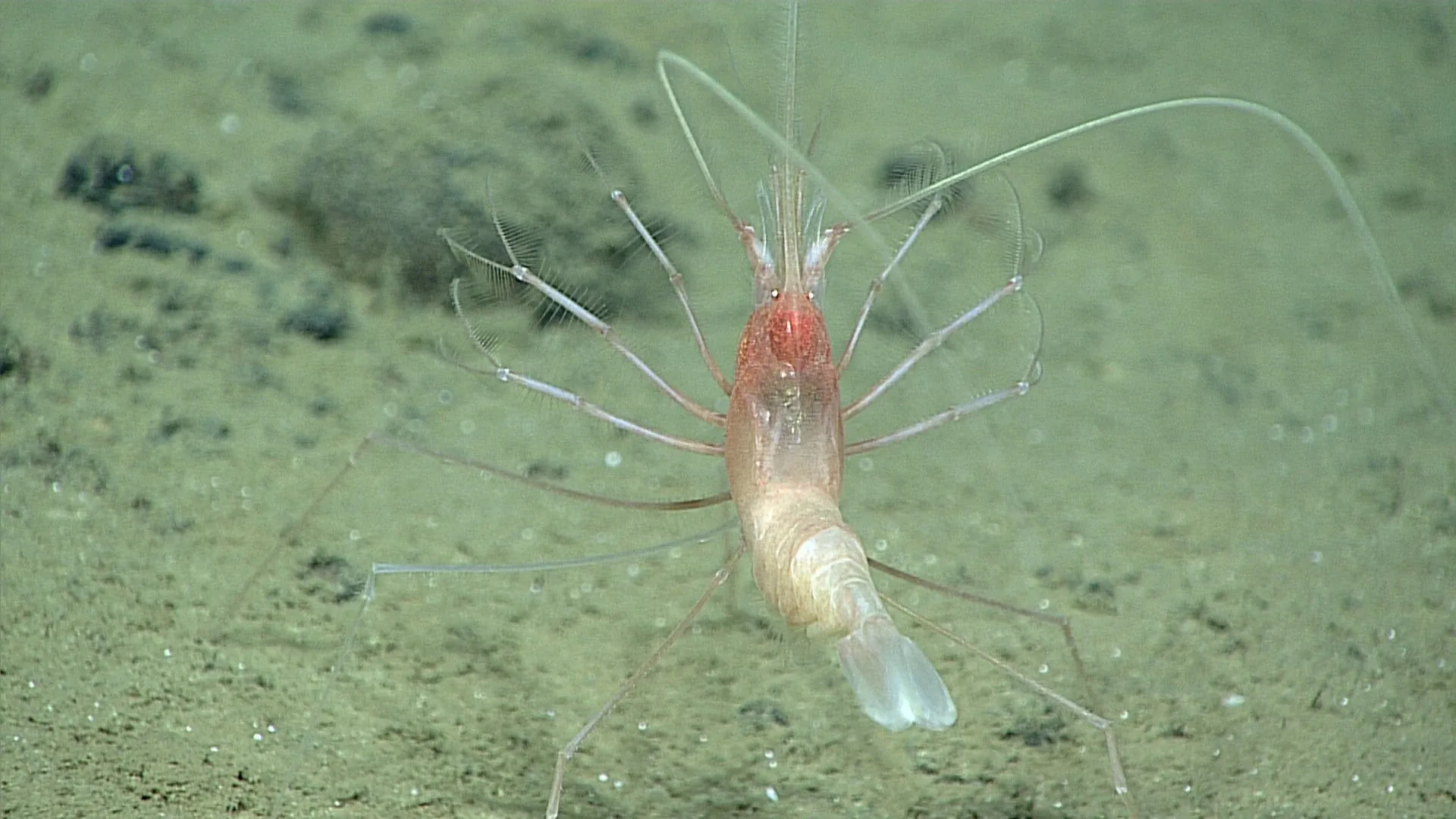
Some animals concentrate light in specialized organs called photophores. Their arrangement may be on the belly, flank, head, or tail, and its pattern differs across taxa. Other animals release luminous material into the water. A shrimp may expel a glowing secretion; a squid may use a luminous cloud to redirect attention. Microbes can produce light on their own or live in a host’s light organ. Similar-looking glows can therefore come from different biological machinery.
Light production can involve chemical substrates and enzymes, or a partnership with luminous bacteria. In bacterially generated light, the animal supplies a protected organ and its physiology can regulate the relationship, while the microbes produce light through their metabolism. In self-luminous systems, the animal’s own tissues contain the components needed for the reaction. These broad descriptions do not tell us the exact pathway in every species; that requires chemical, anatomical, and molecular evidence.
A silhouette that disappears from below
In the upper midwater, some animals are visible to an observer below them because their bodies interrupt the faint light coming from the surface. Counterillumination reduces that silhouette: light emitted from photophores on the underside can approach the brightness and color of the background. A classic study of living squid observed downward-directed photophores responding to overhead illumination (study record). Later work has shown that matching the background involves more than switching on a lamp; the signal can vary with viewing angle, spectrum, and distance.
Counterillumination is most relevant where residual downwelling light remains. In deeper darkness there may be no surface glow to match, and a different strategy may be useful. This is why it is inaccurate to say simply that “deep-sea animals use light for camouflage.” Some do, in particular parts of the water column; others produce light for other purposes, and many species do not glow at all.
Finding prey and partners
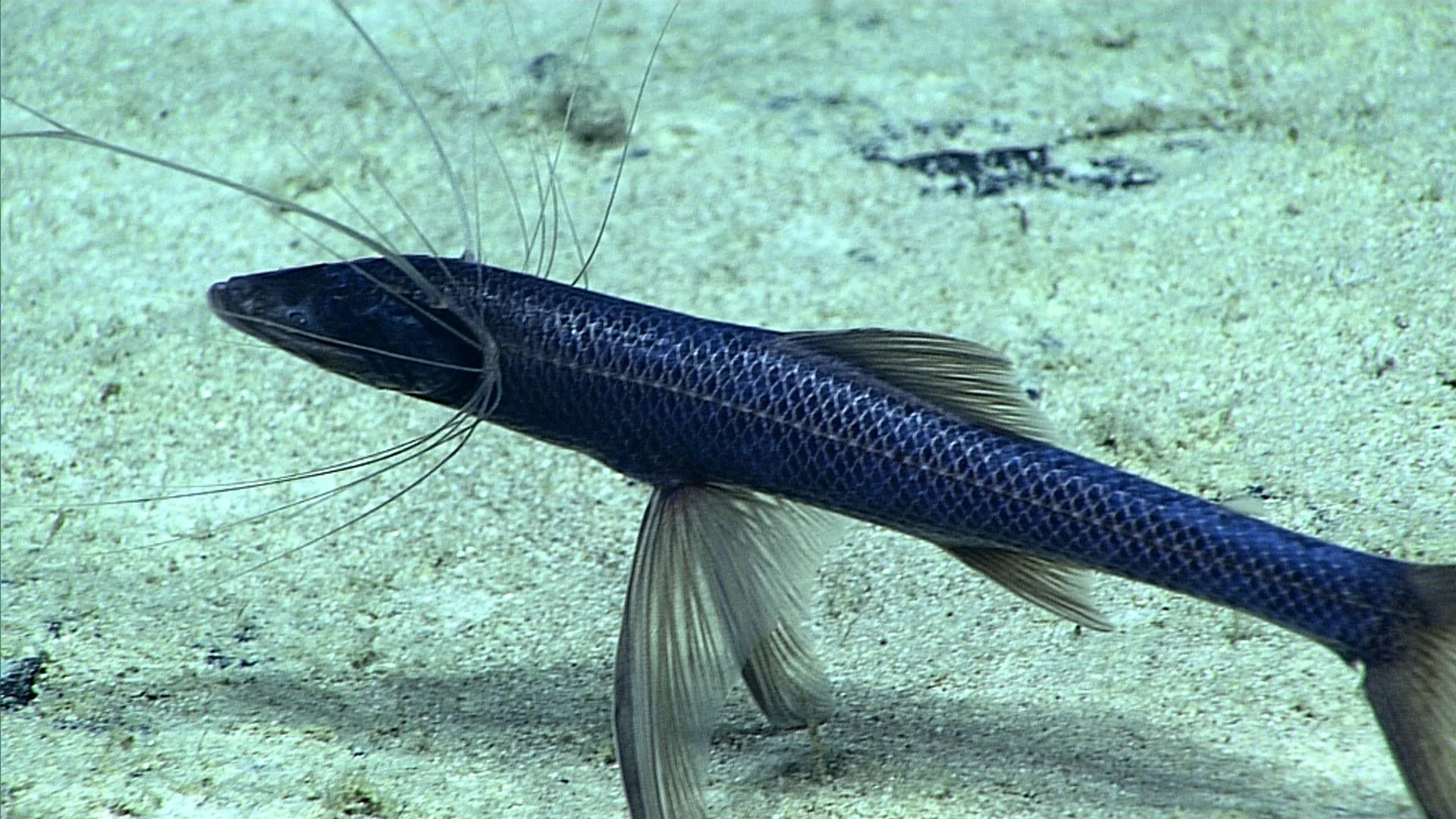
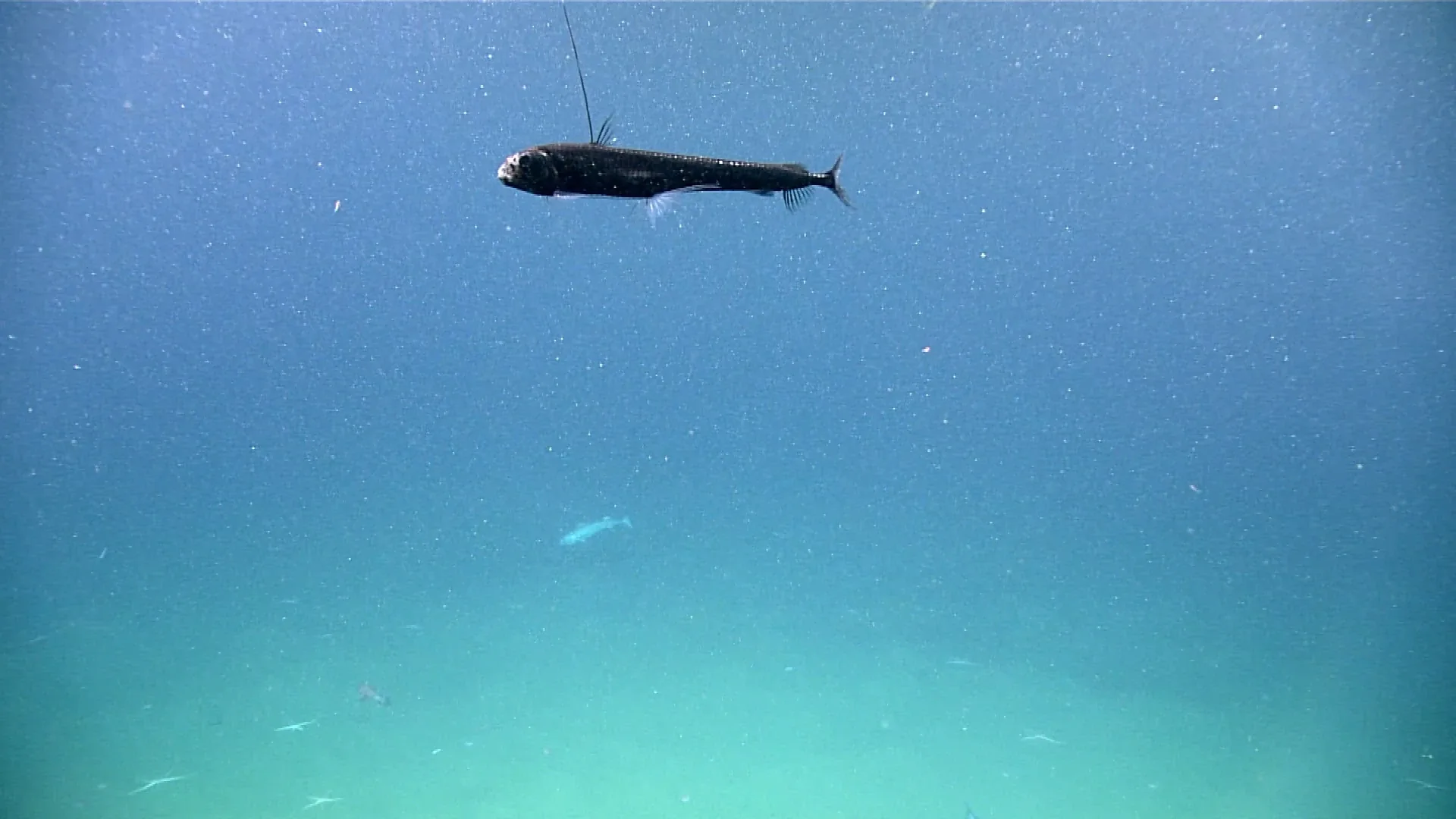
Light can reveal an animal or a nearby object to a viewer. Some dragonfishes produce far-red light and have visual systems sensitive to wavelengths that many potential prey may not detect well. Flashlight fishes can use light to inspect the nearby environment. Anglerfish lures are commonly discussed as tools for prey attraction and possibly mate-finding, but the role varies across species and can be hard to observe in the wild. Researchers distinguish a plausible function from one demonstrated by behavior, anatomy, or experiments.
Bioluminescent signals may also contribute to communication. A flash could help animals recognize potential mates or coordinate behavior, especially when individuals are otherwise difficult to locate. The challenge is to identify a signal’s sender, receiver, and effect. Seeing two luminous animals near one another does not prove that the light coordinates them. Playback experiments, controlled observation, and field video can strengthen the claim.
Defense through surprise or misdirection
A flash can startle a predator, while a luminous secretion can create a temporary cloud that hides an animal or redirects an attack. Some organisms may cause a “burglar alarm”: a prey animal’s light attracts a larger predator that could attack its attacker. These defenses are known or proposed for different taxa, and the strength of the evidence varies. A recent review of marine eukaryote bioluminescence catalogues many proposed functions and highlights how often a mechanism remains inferential (review).
That variation matters when interpreting footage. If a fish flashes once as an ROV approaches, the light could be a response to disturbance, an ordinary signal, or a camera artifact. A single frame cannot distinguish those explanations. Researchers may need a sequence, repeated encounters, knowledge of the animal’s sensory biology, and controls for how the vehicle’s lights affected the scene.
A striking statistic with a local boundary
In a study of Monterey Bay footage, MBARI researchers reviewed animals larger than one centimeter observed during 240 ROV dives from the surface to 4,000 meters. They concluded that about three-quarters of the animals in that data set could produce light. The study summary from MBARI explains both the finding and its geographic and observational basis. It is an important estimate for a defined region and sampling set, not a global percentage for all deep-sea life.
A tool for asking better questions
Bioluminescence is not a single deep-sea trick. It is a family of signals and defenses that evolved in many lineages. Location and chemistry provide clues; behavior and experiments test the function. Scientists continue to discover luminous species and revise what is known about old ones, especially as cameras can now capture organisms in conditions closer to their natural environment.