Food webs5 min read
Marine Snow: The Slow Delivery System Beneath the Sunlit Ocean
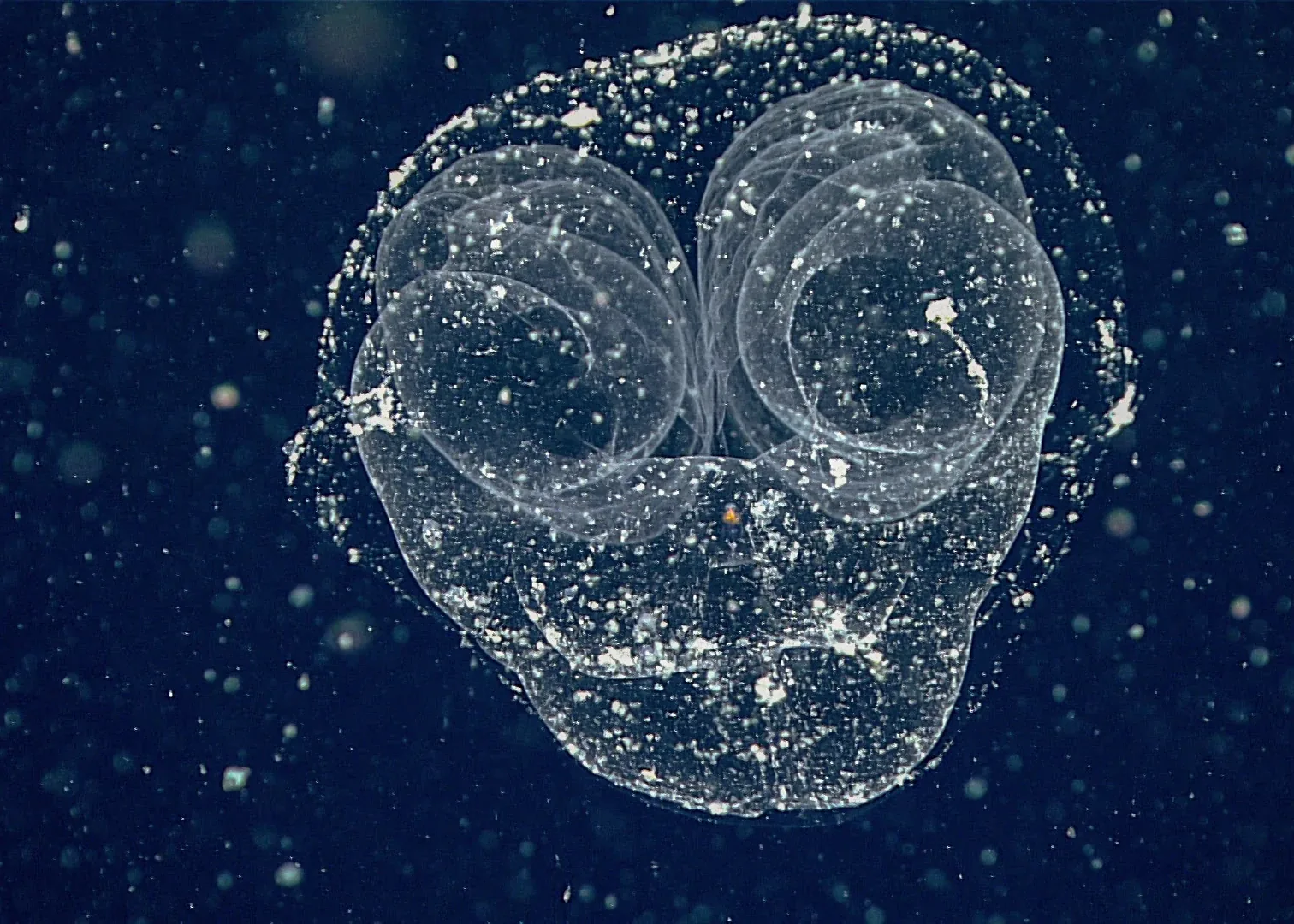
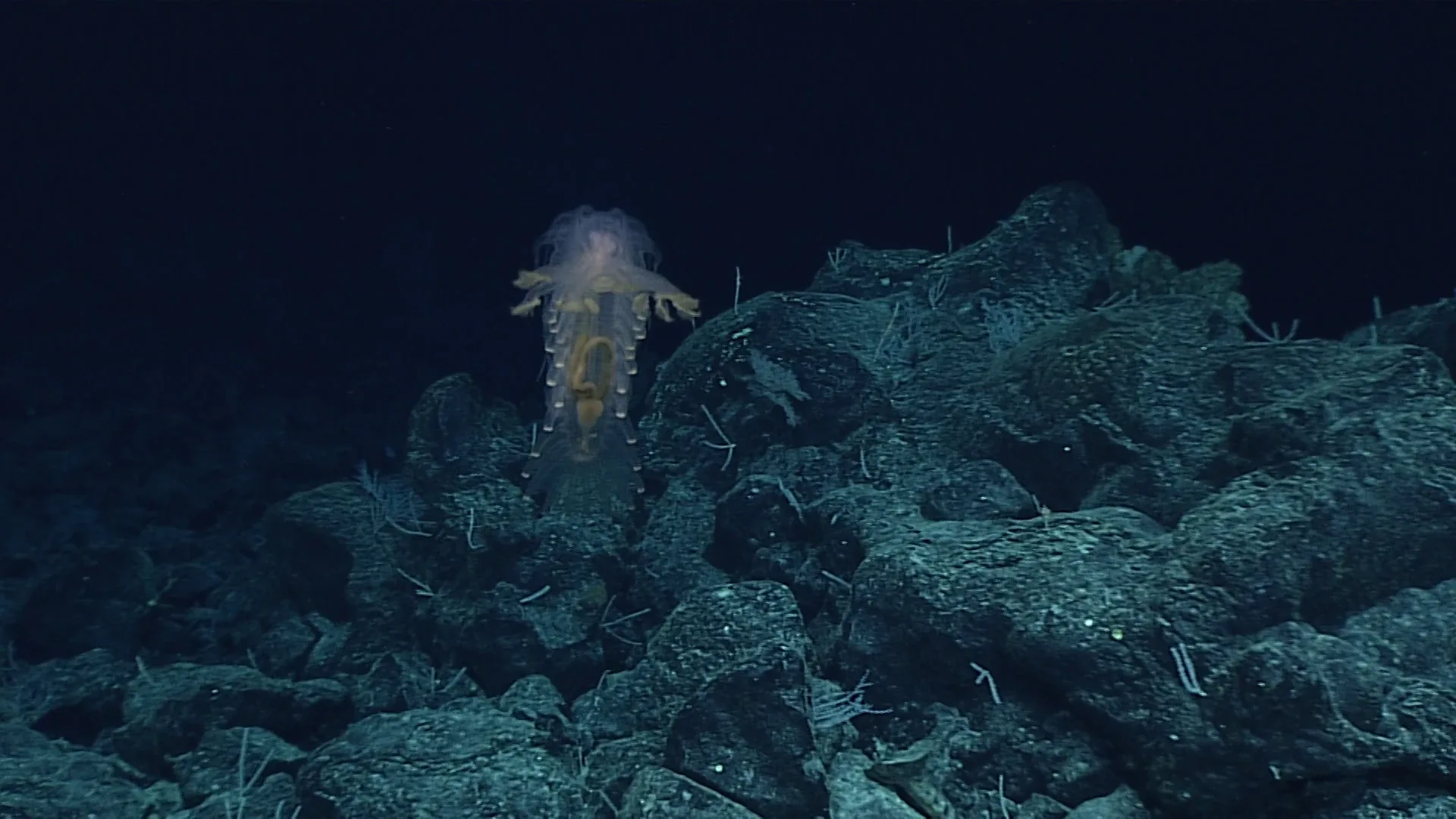
Falling particles carry surface production downward. Their size, speed, and decomposition determine how much reaches the animals below.

Falling particles carry surface production downward. Their size, speed, and decomposition determine how much reaches the animals below.
Falling particles carry surface production downward. Their size, speed, and decomposition determine how much reaches the animals below.
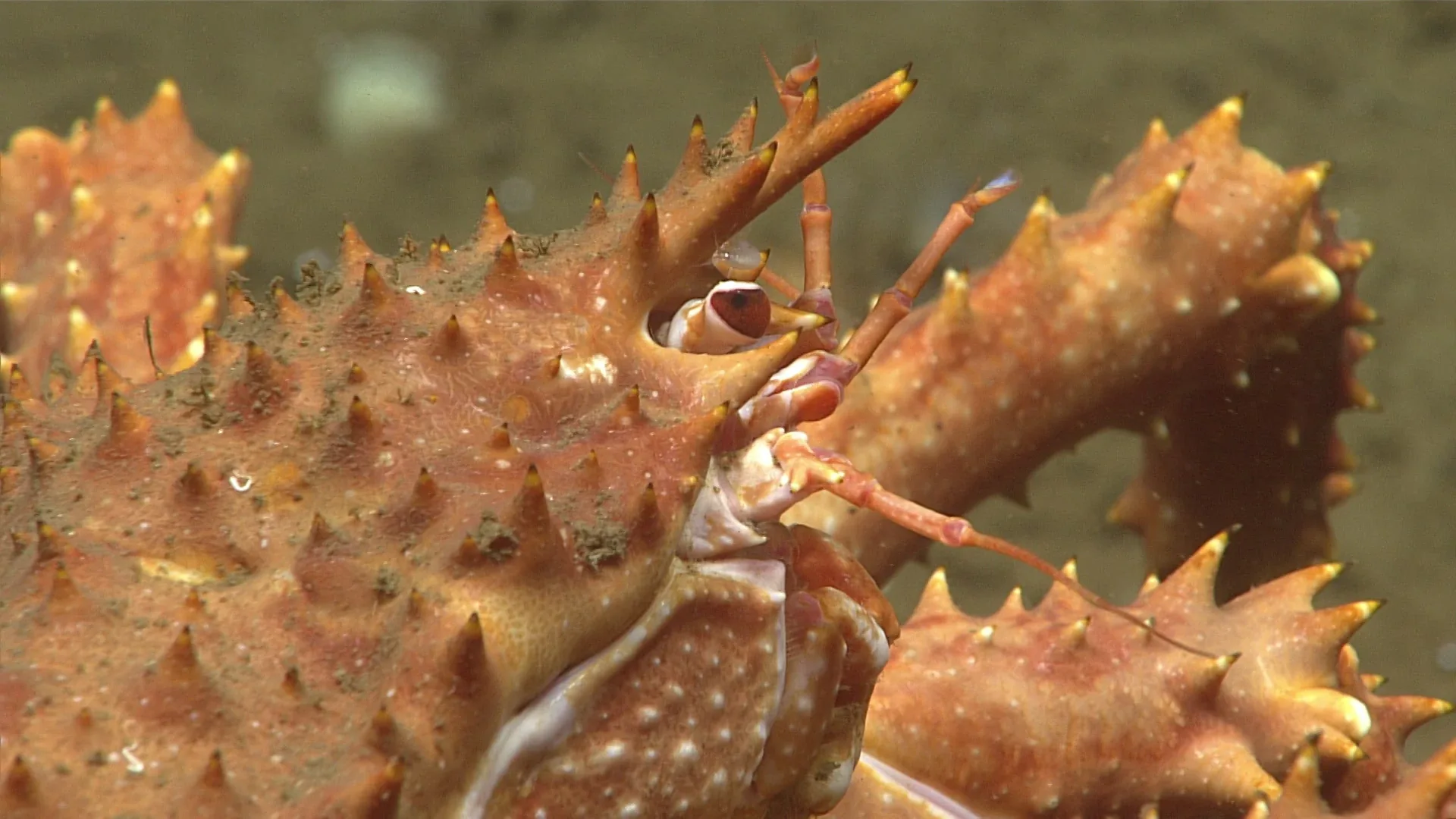
Carrion is rare and temporary, so scavengers need to detect it, reach it, and compete for it. Different animals approach the same food pulse in different ways.
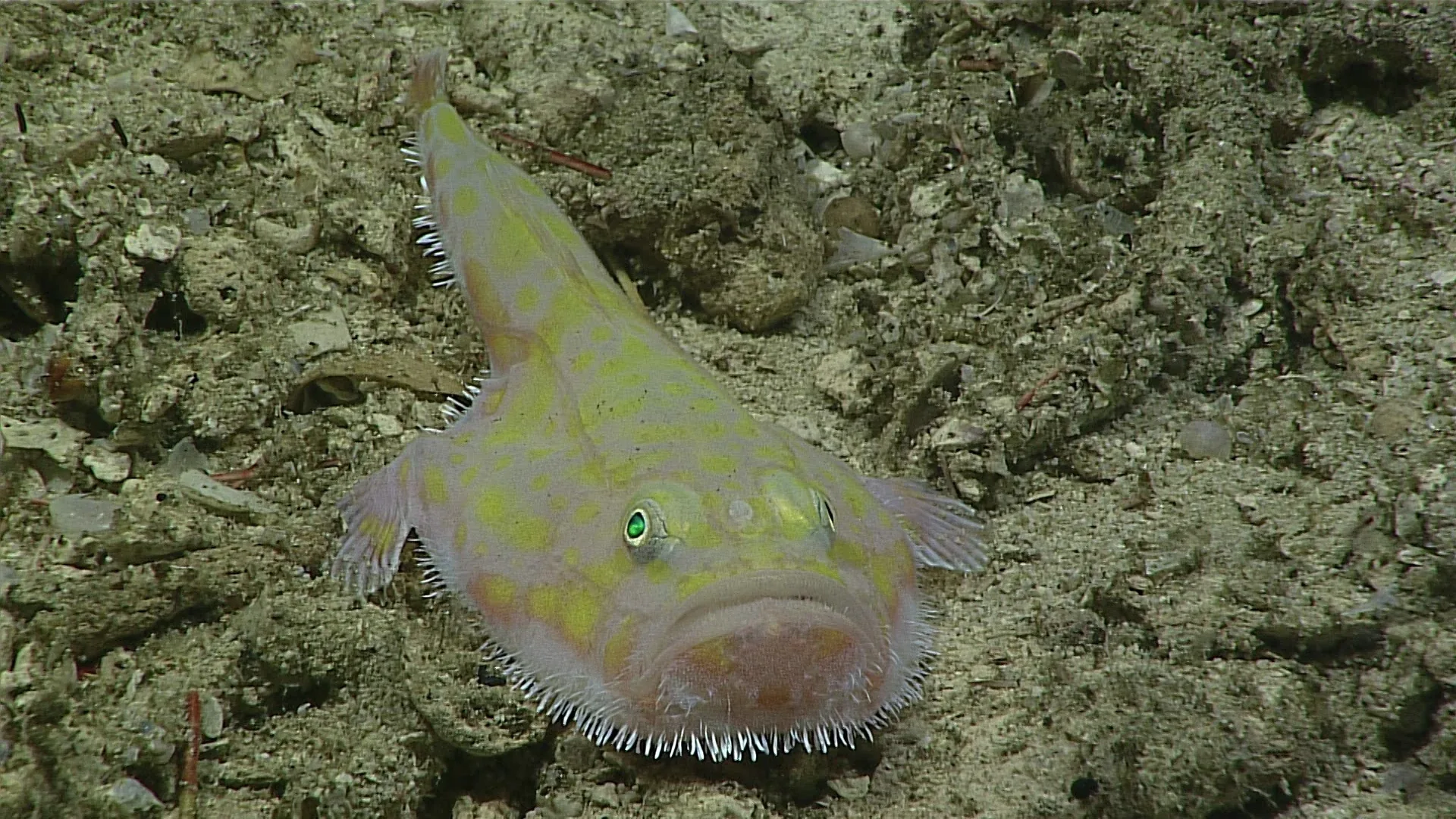
Deep-water predators do not all chase prey through black water. Some use ambush, sensory cues, or feeding structures that suit a low-encounter environment.
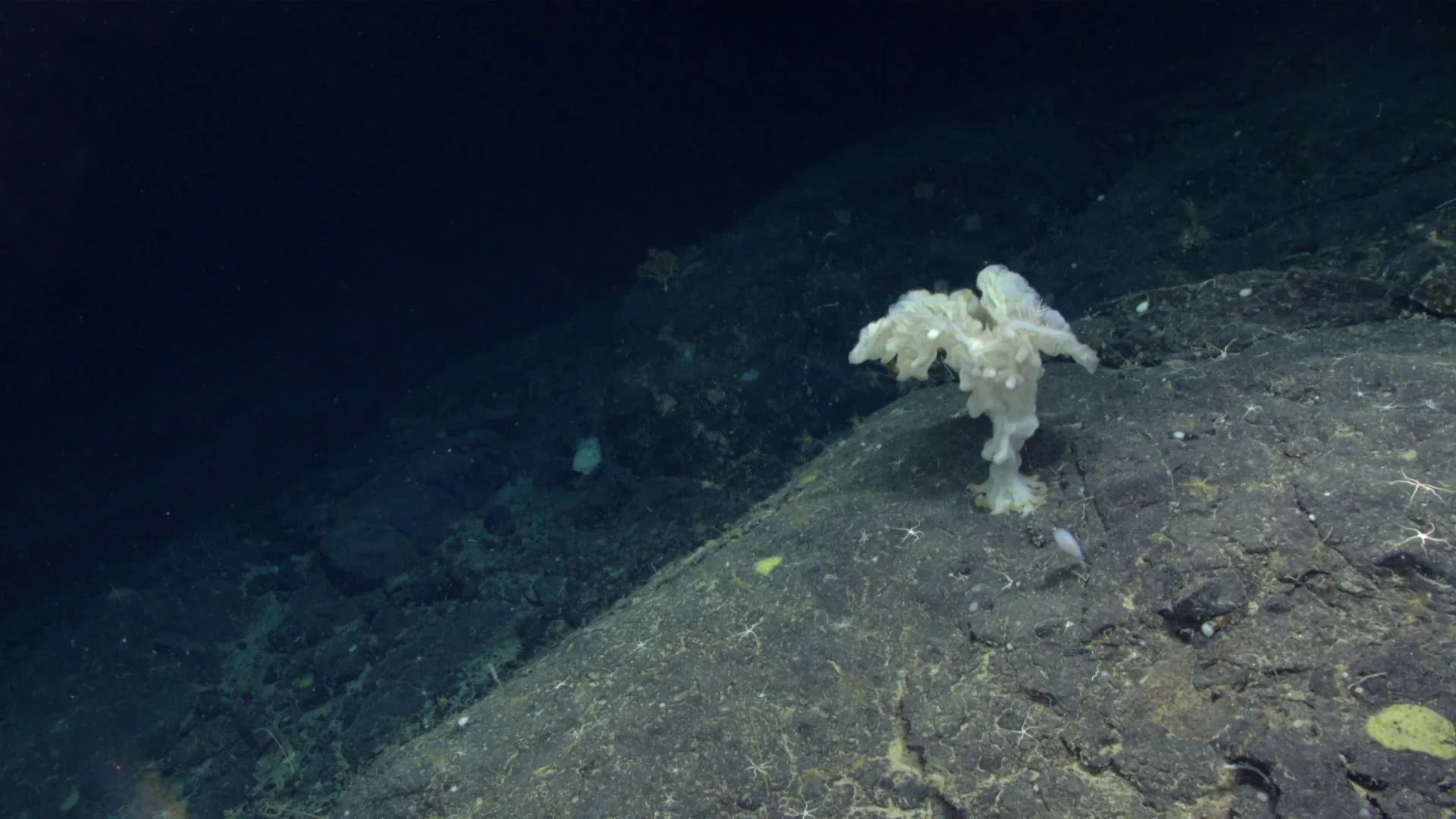
Sponges and corals encounter food through moving water. Their place on a ridge or canyon wall changes the supply they can intercept.
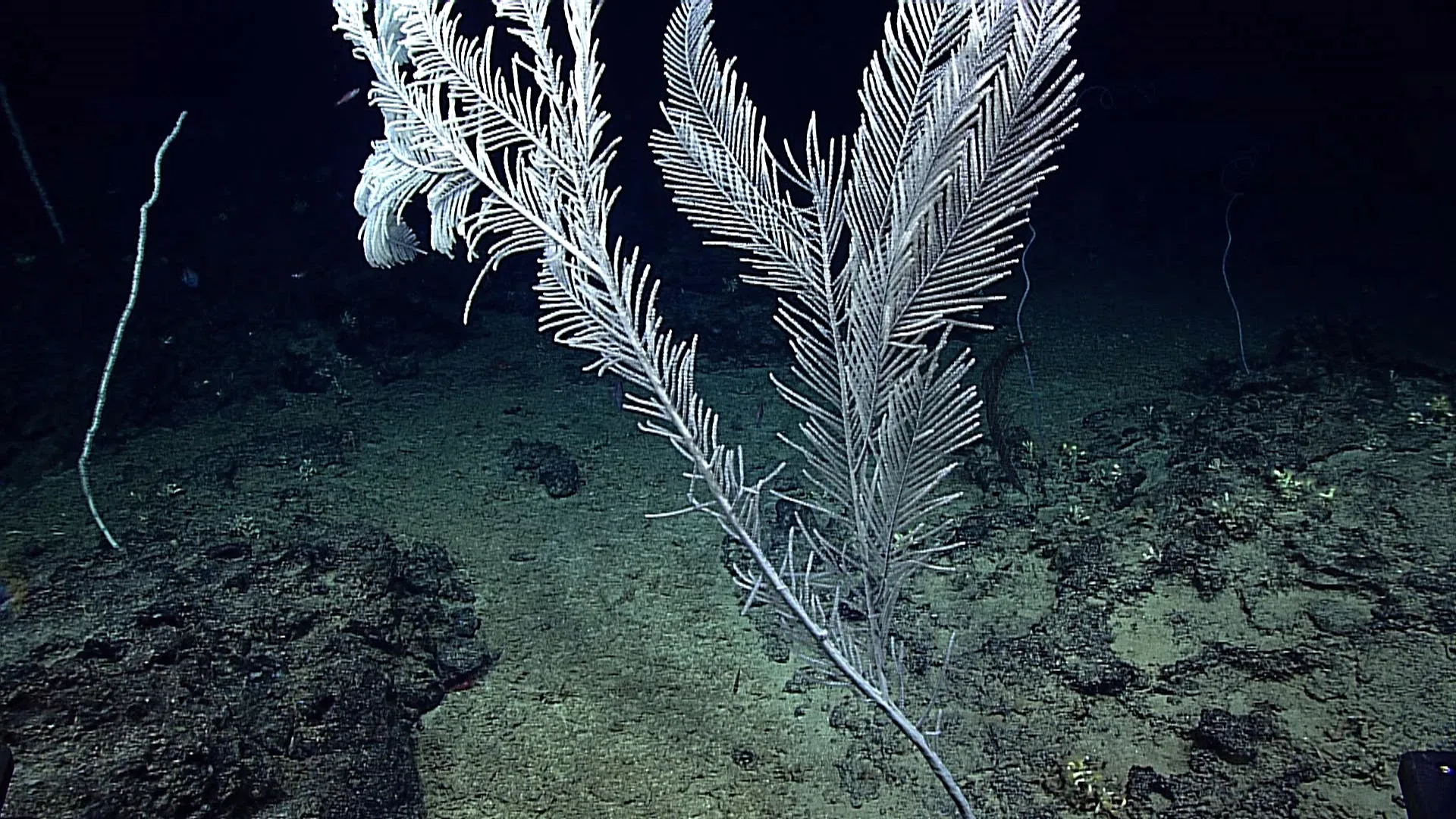
A coral colony alters local structure and provides attachment points, refuge, or feeding surfaces. Which benefits occur depends on the coral and its neighbors.
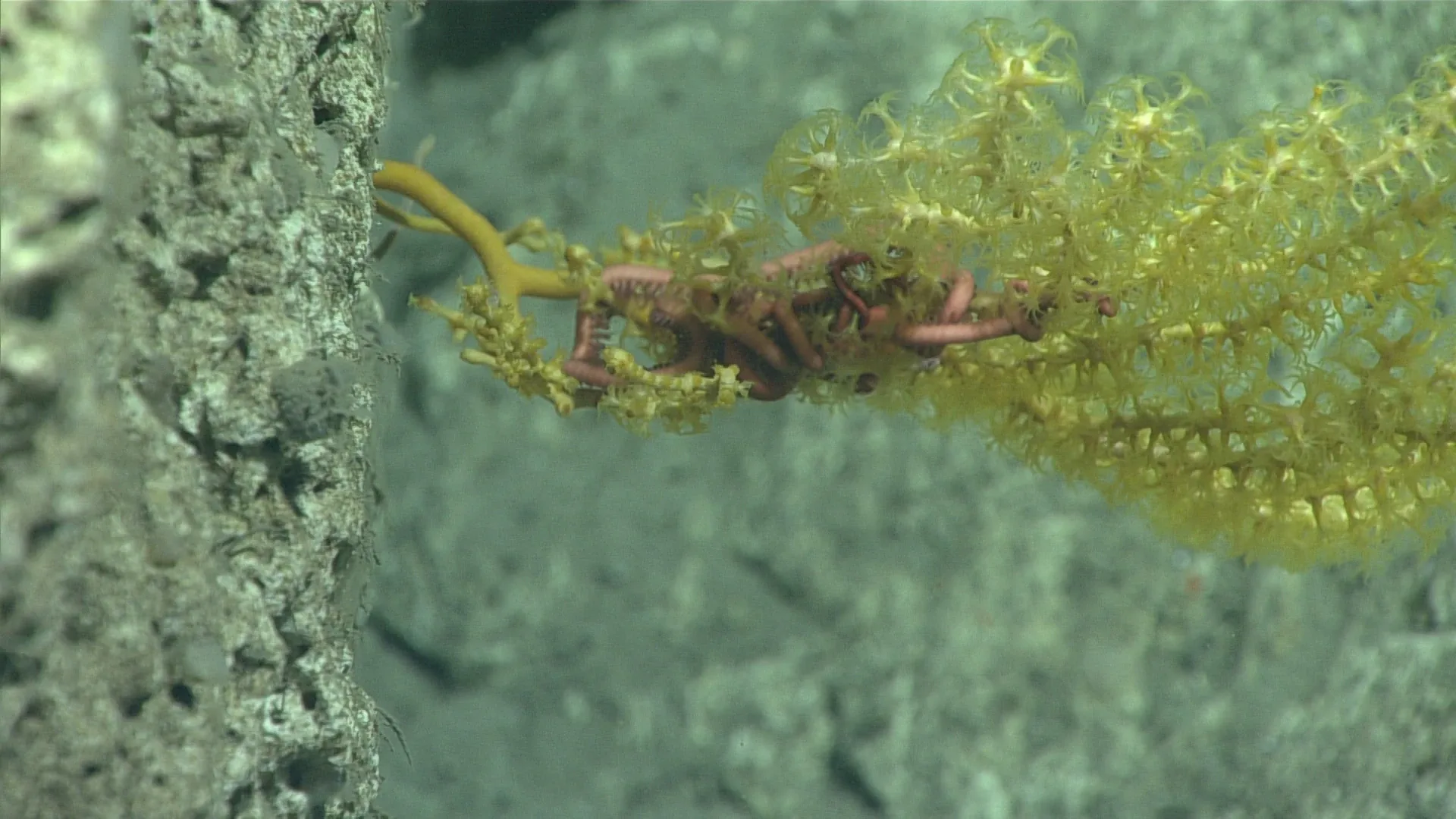
A branched coral can host animals that perch, cling, or feed nearby. The relationship should be described from observation, not inferred from proximity alone.