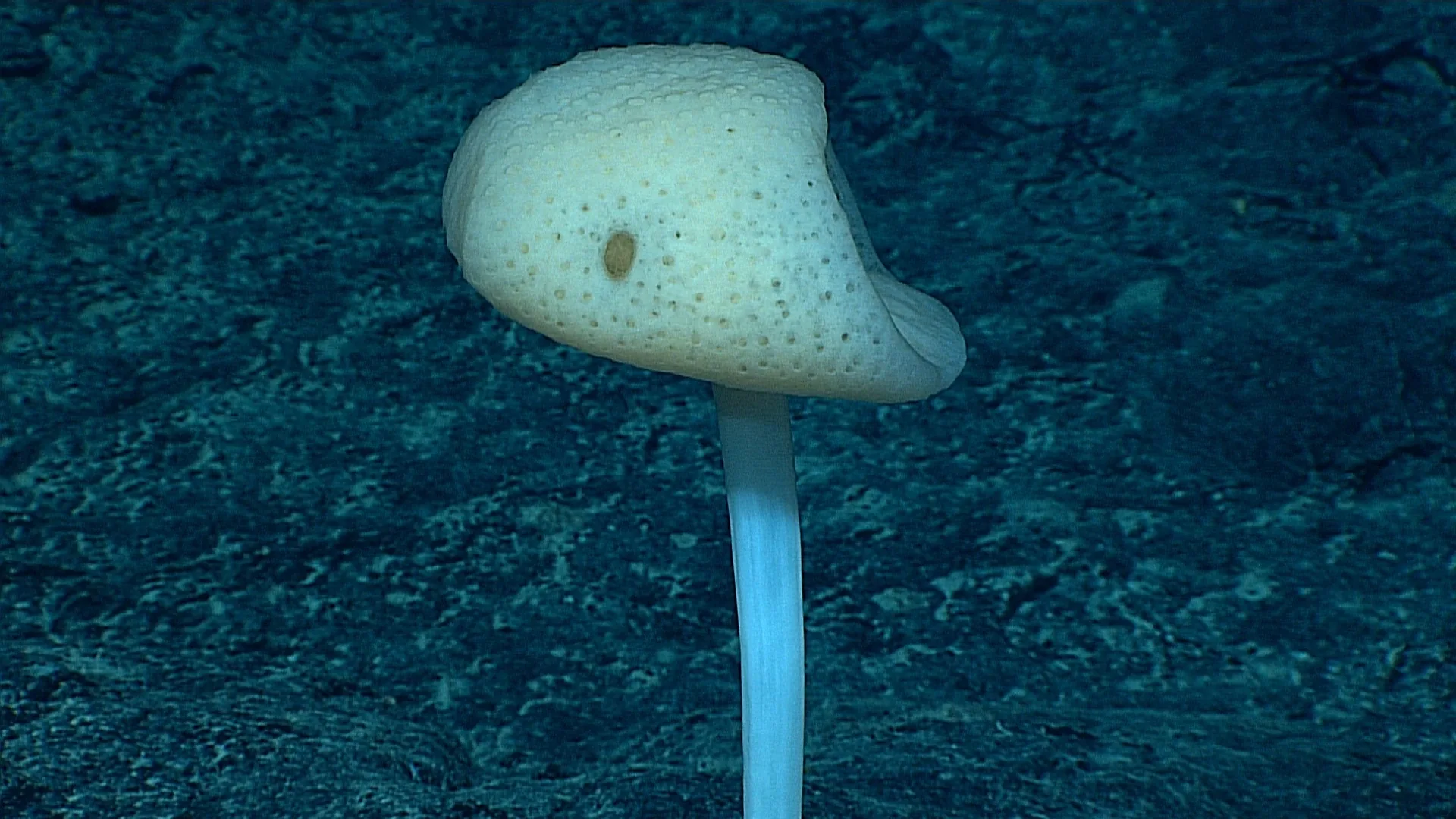
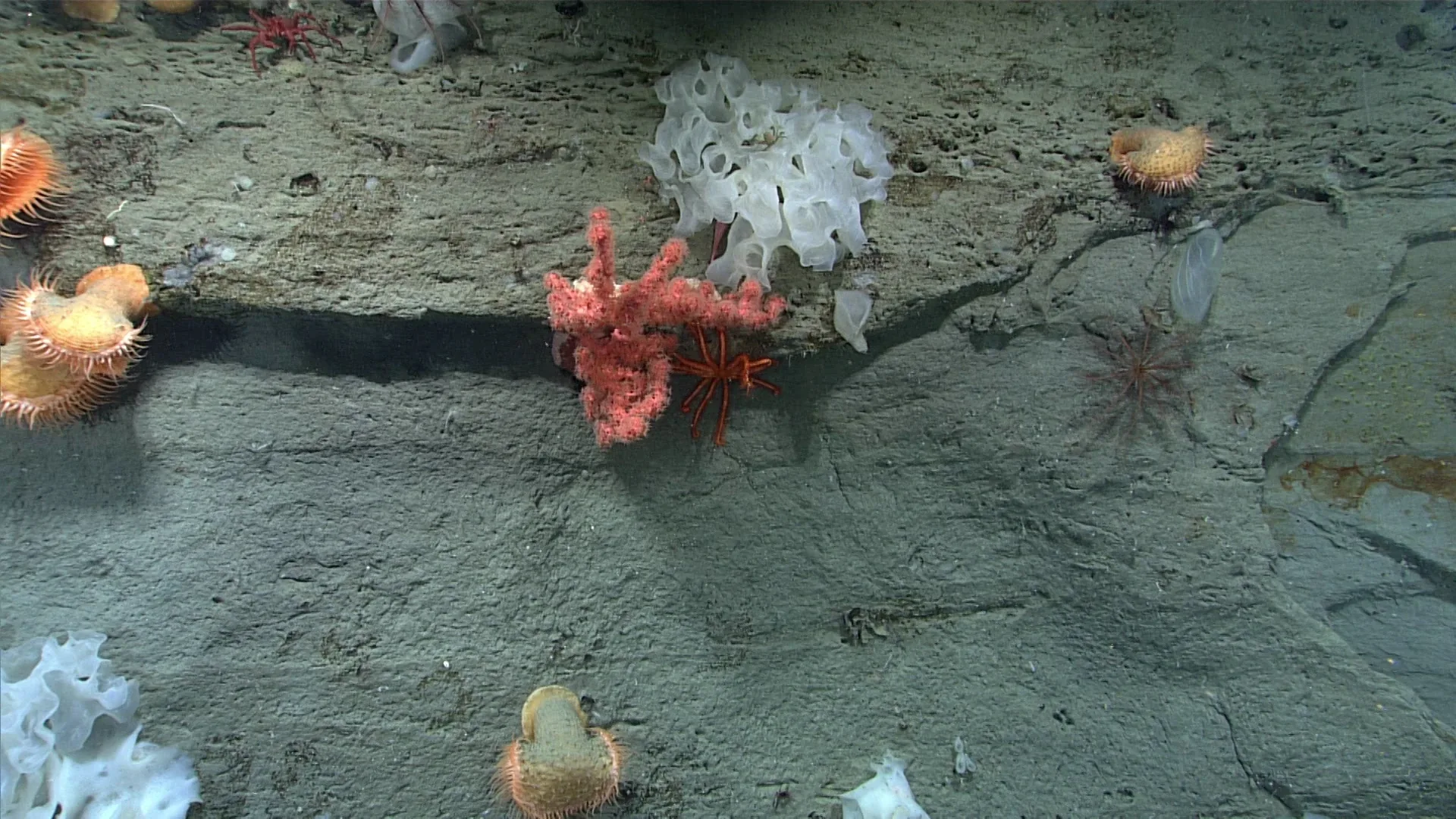
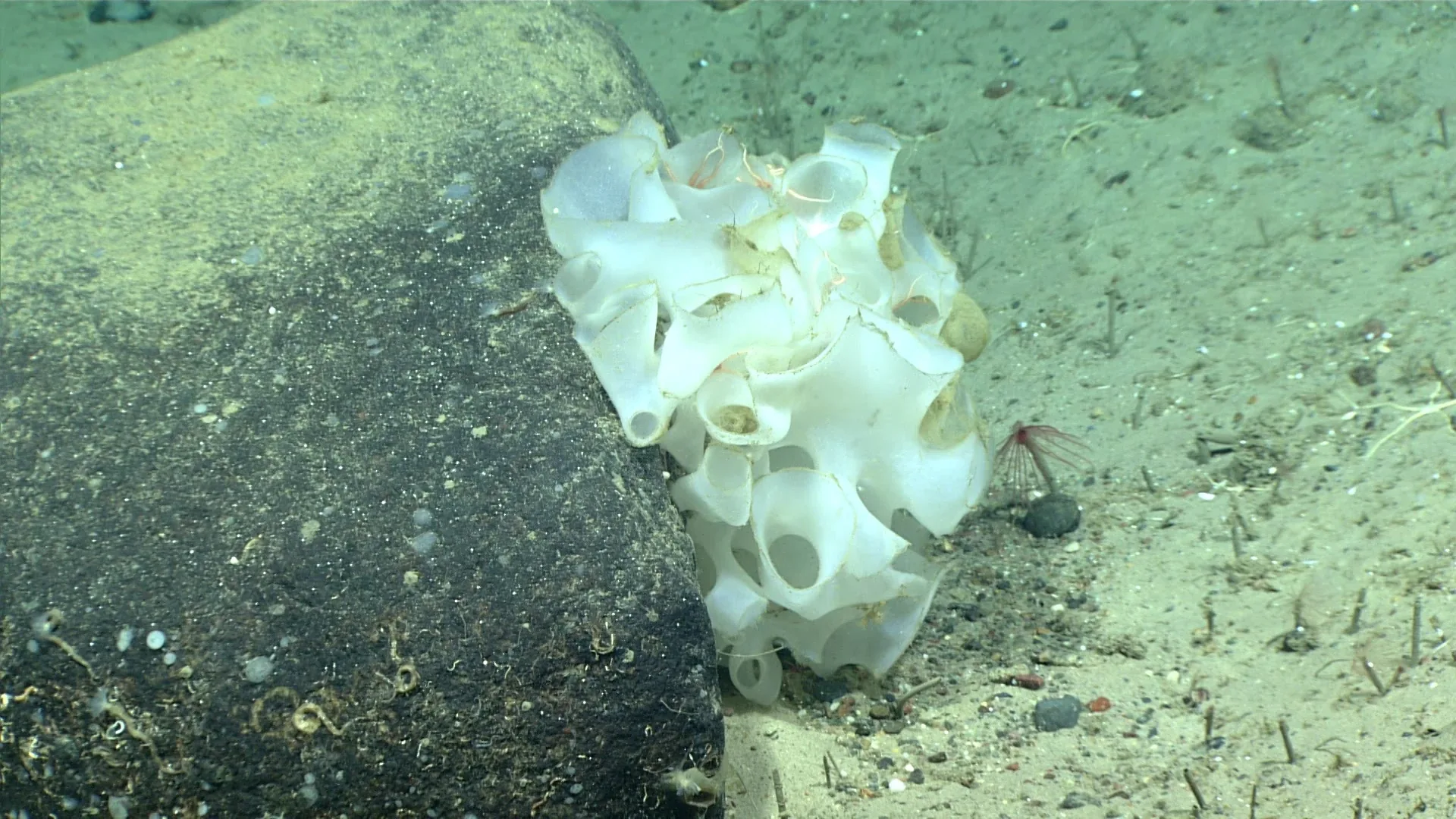
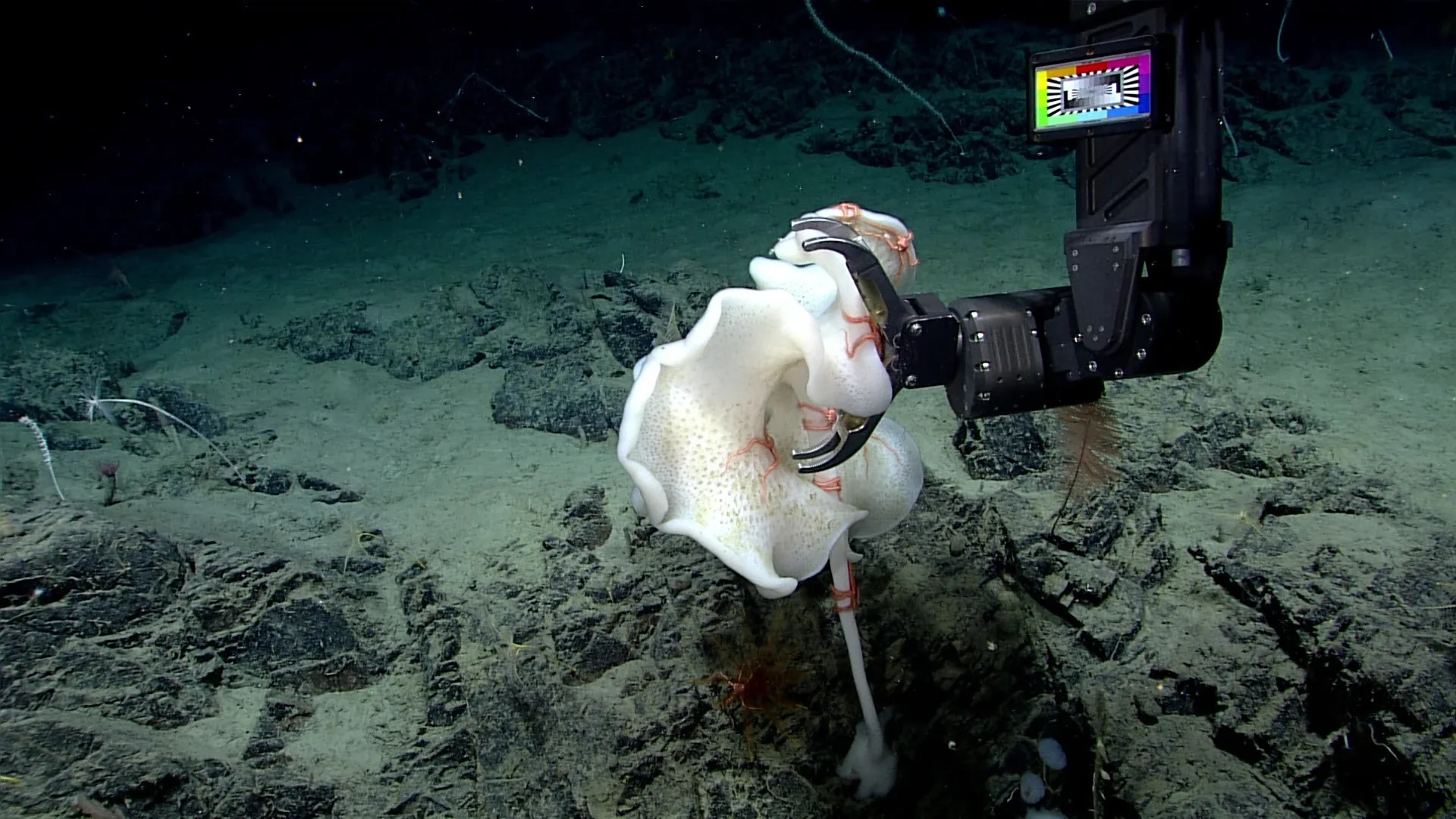
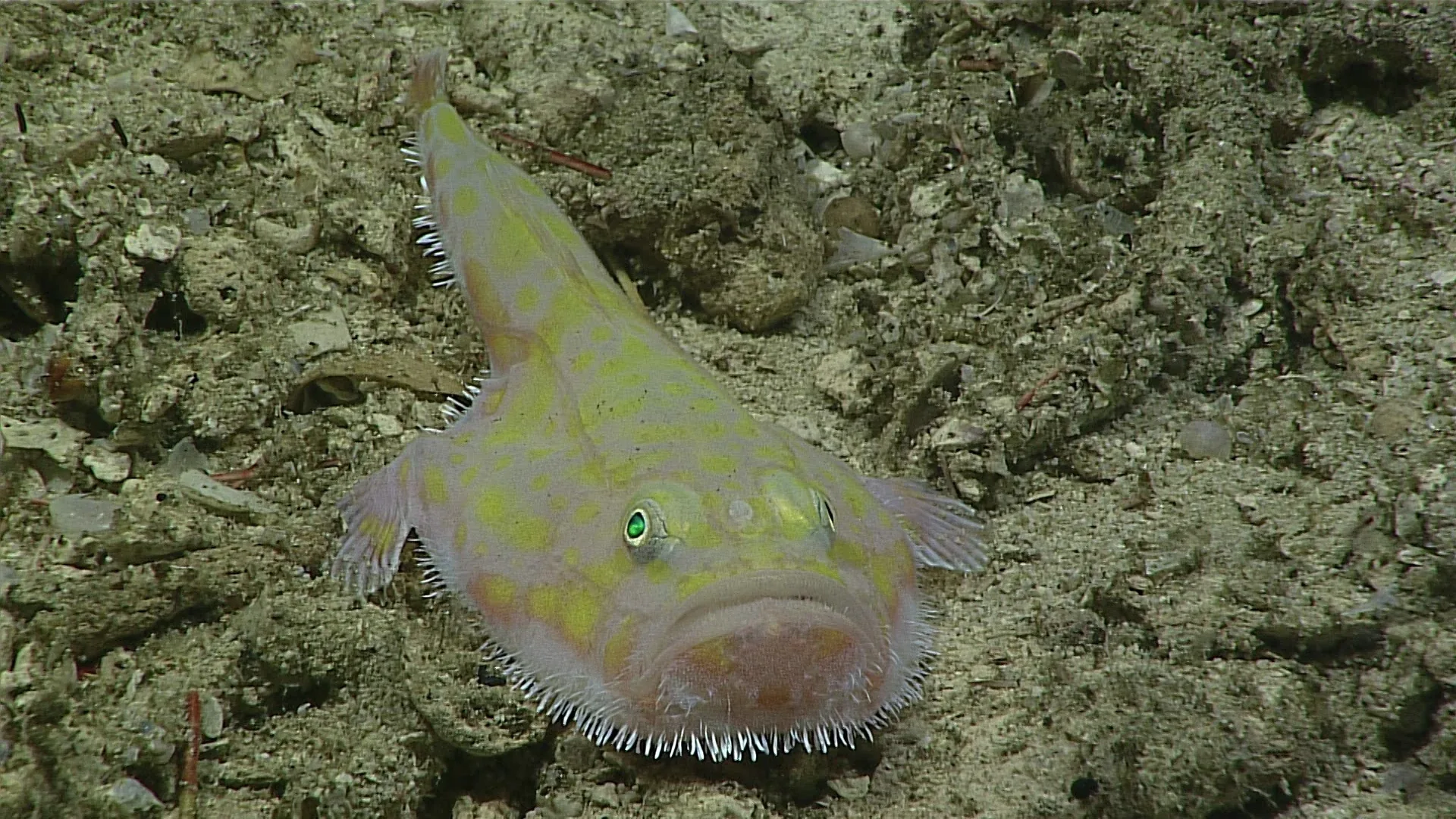
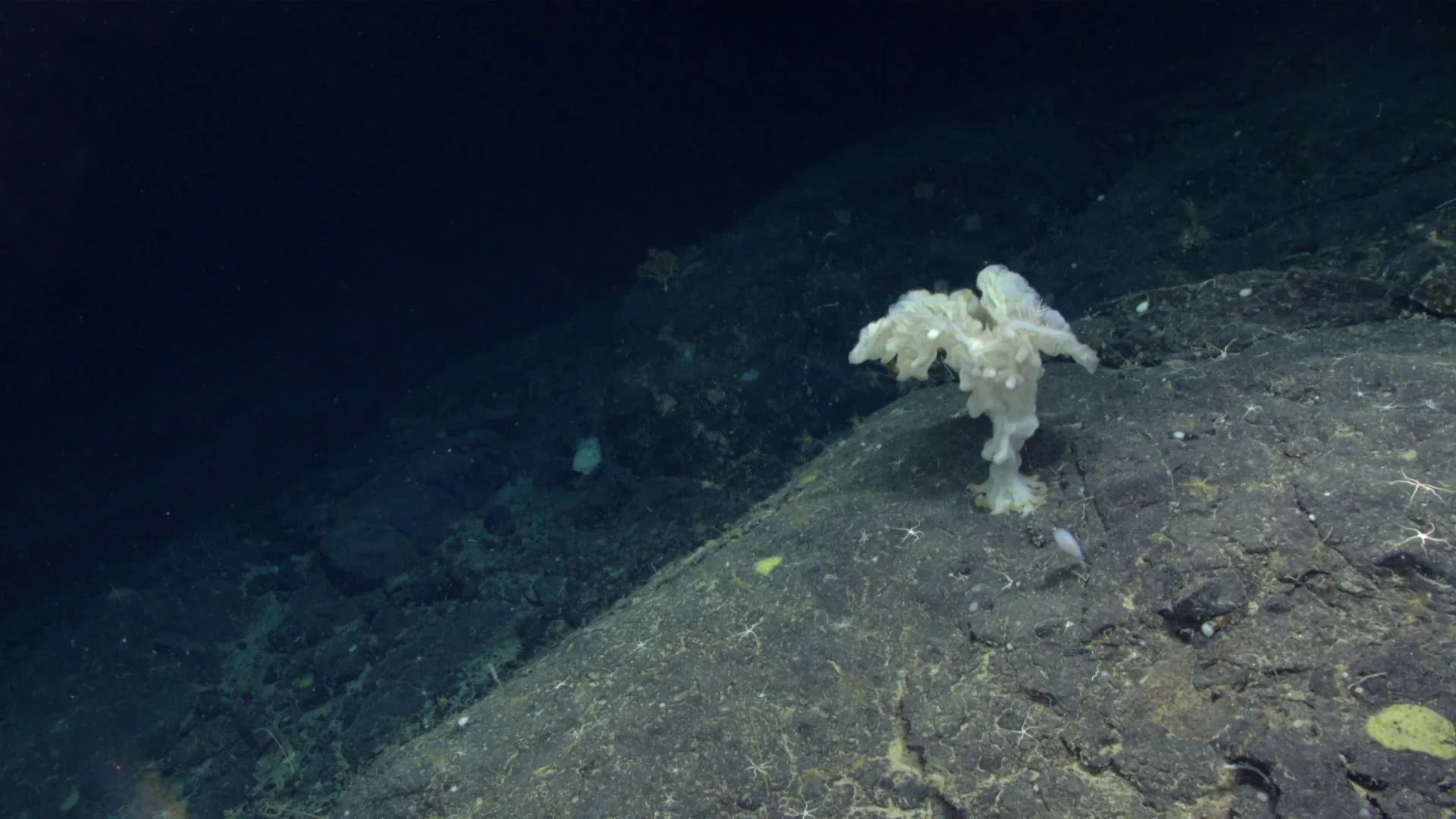
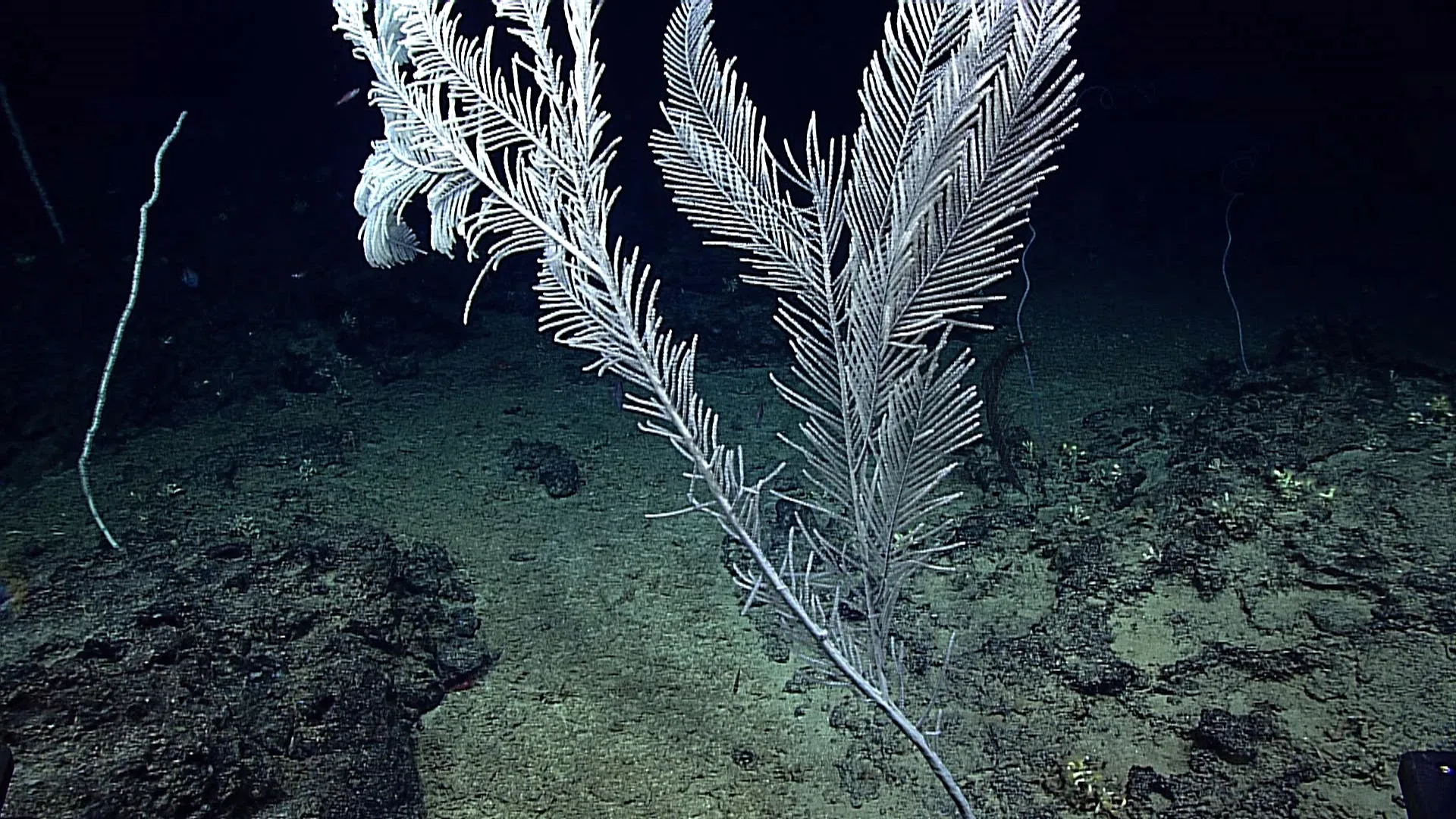
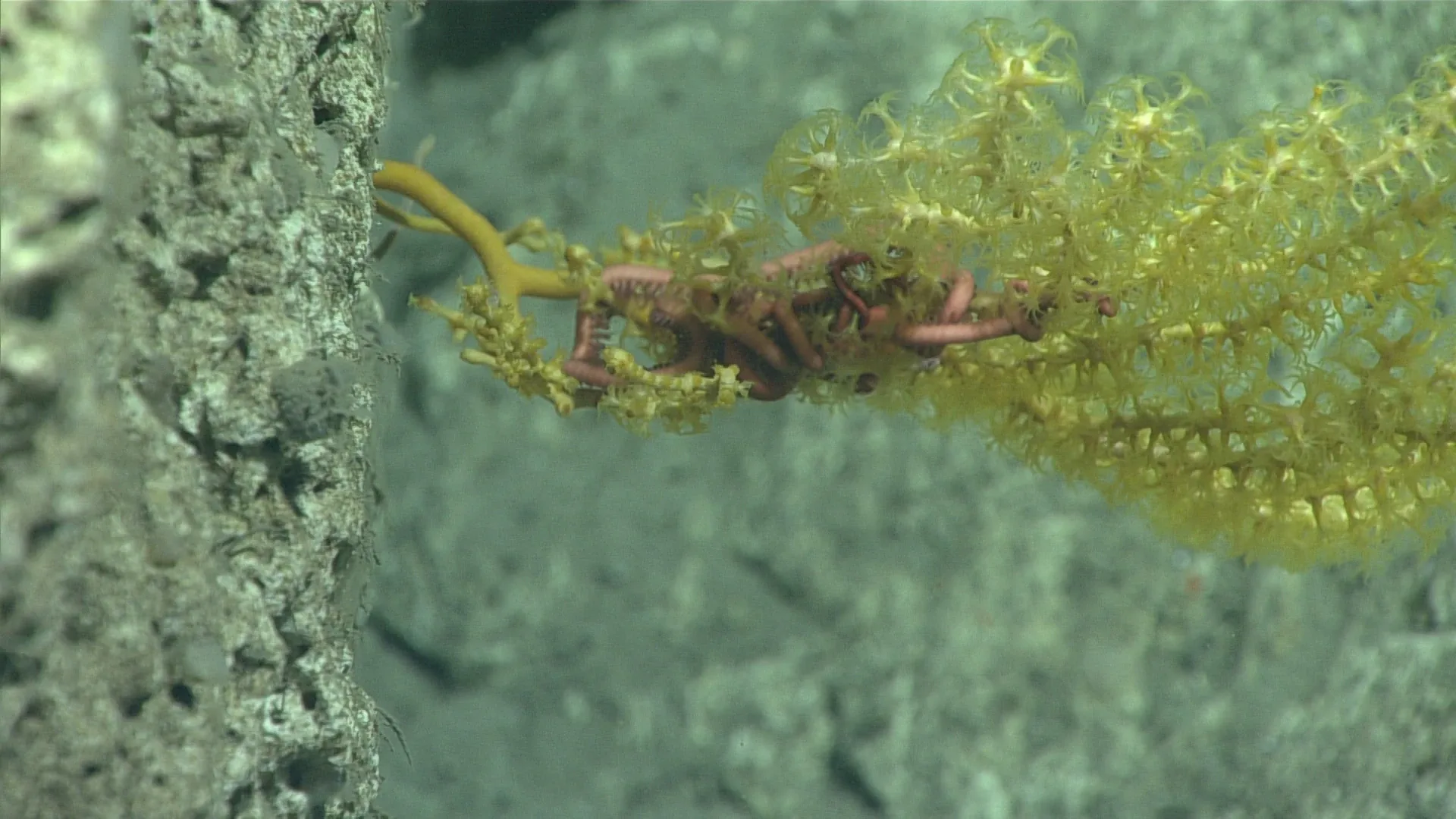
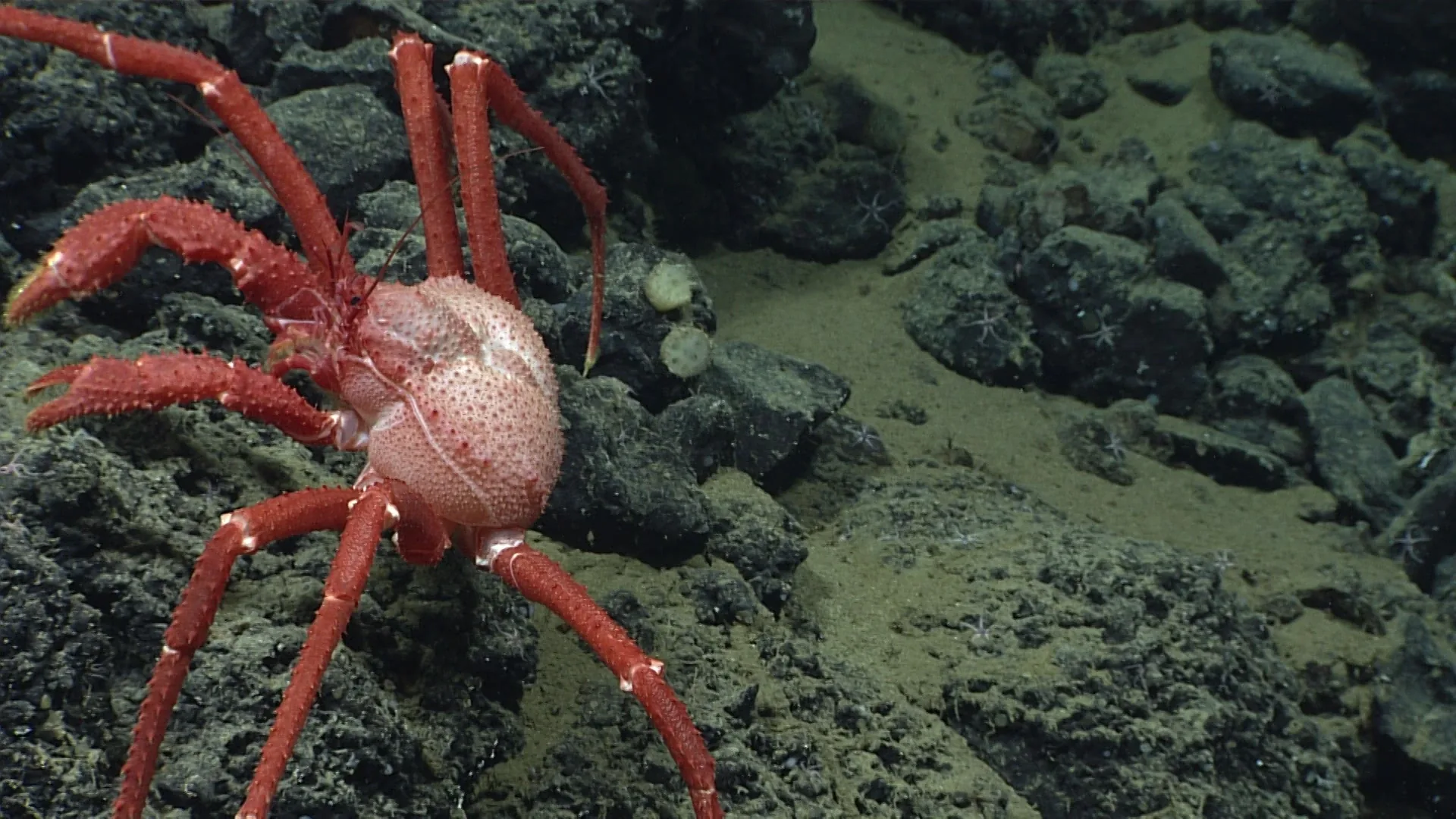
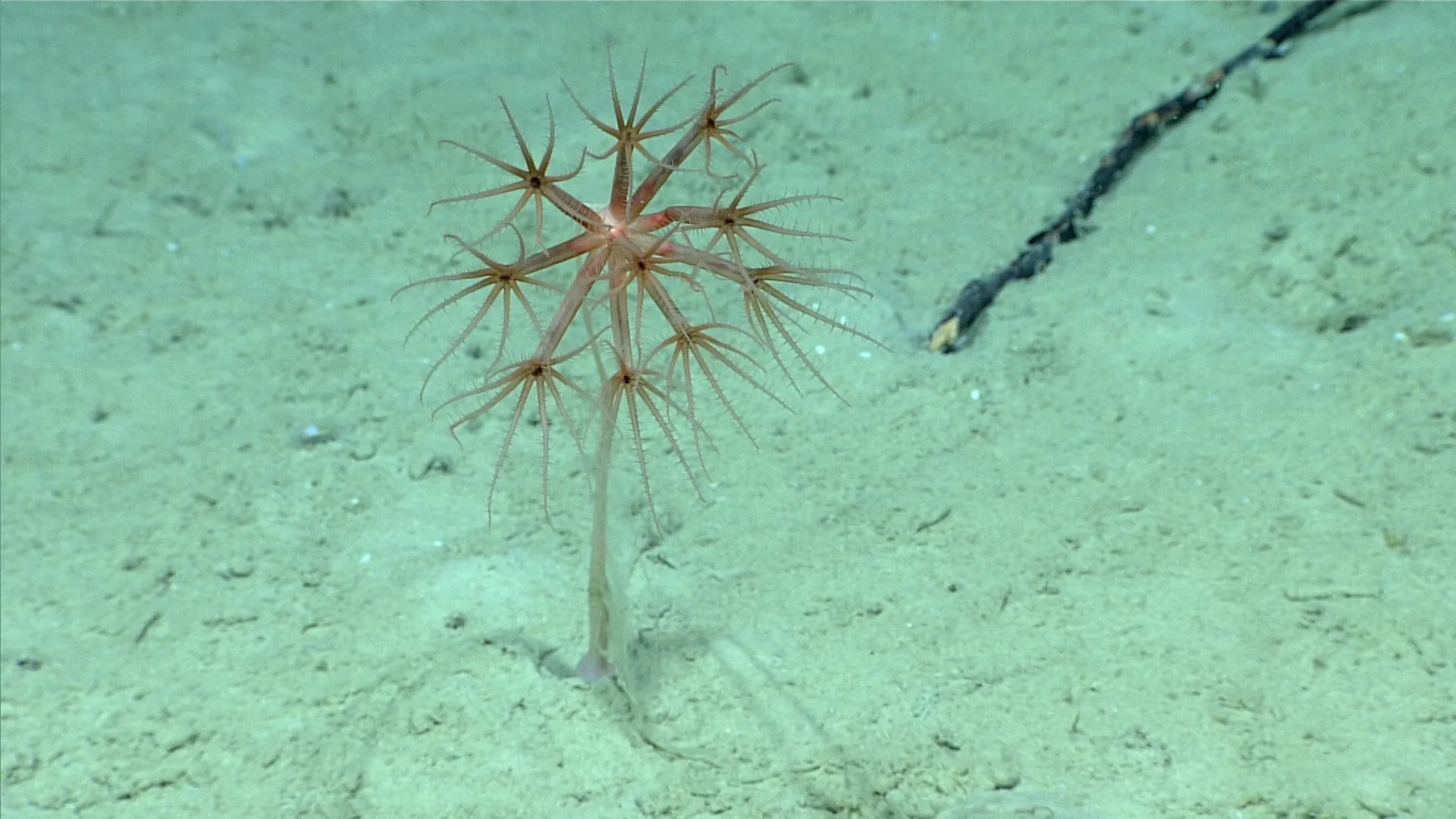
A glass sponge’s nickname is memorable. Its scientific story is more useful: repeated observations, a collected specimen, and a description that made the name testable.
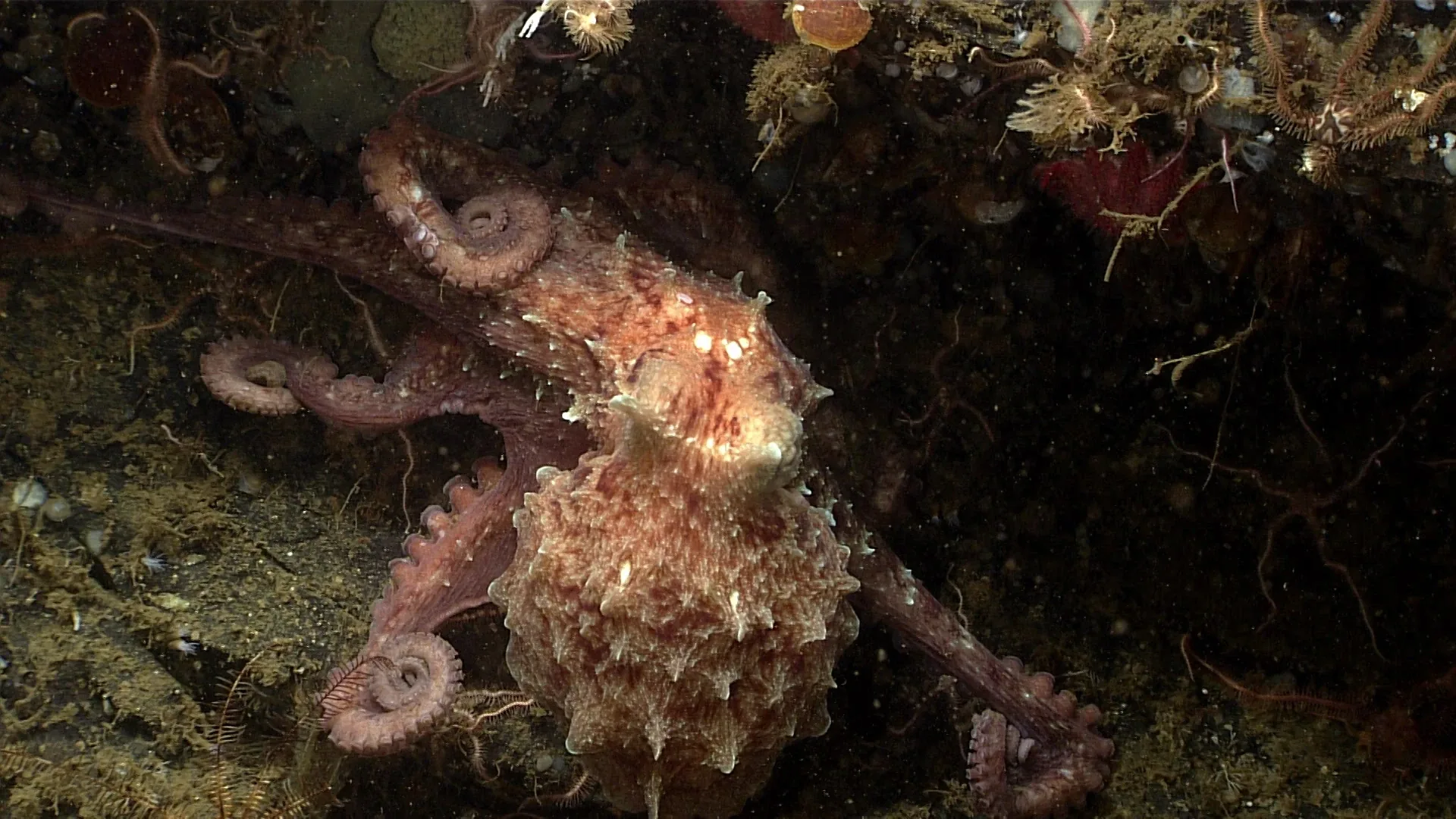
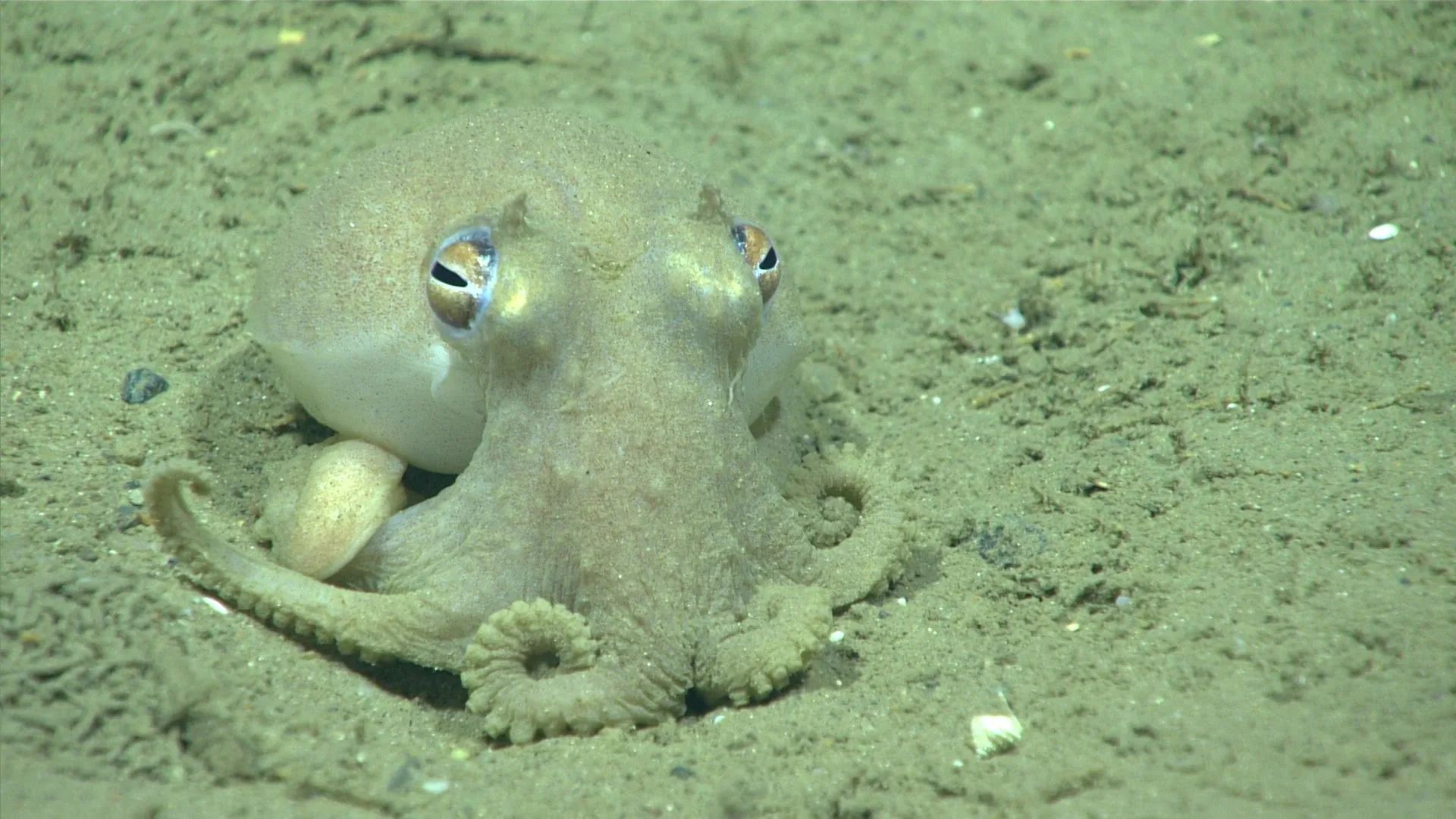
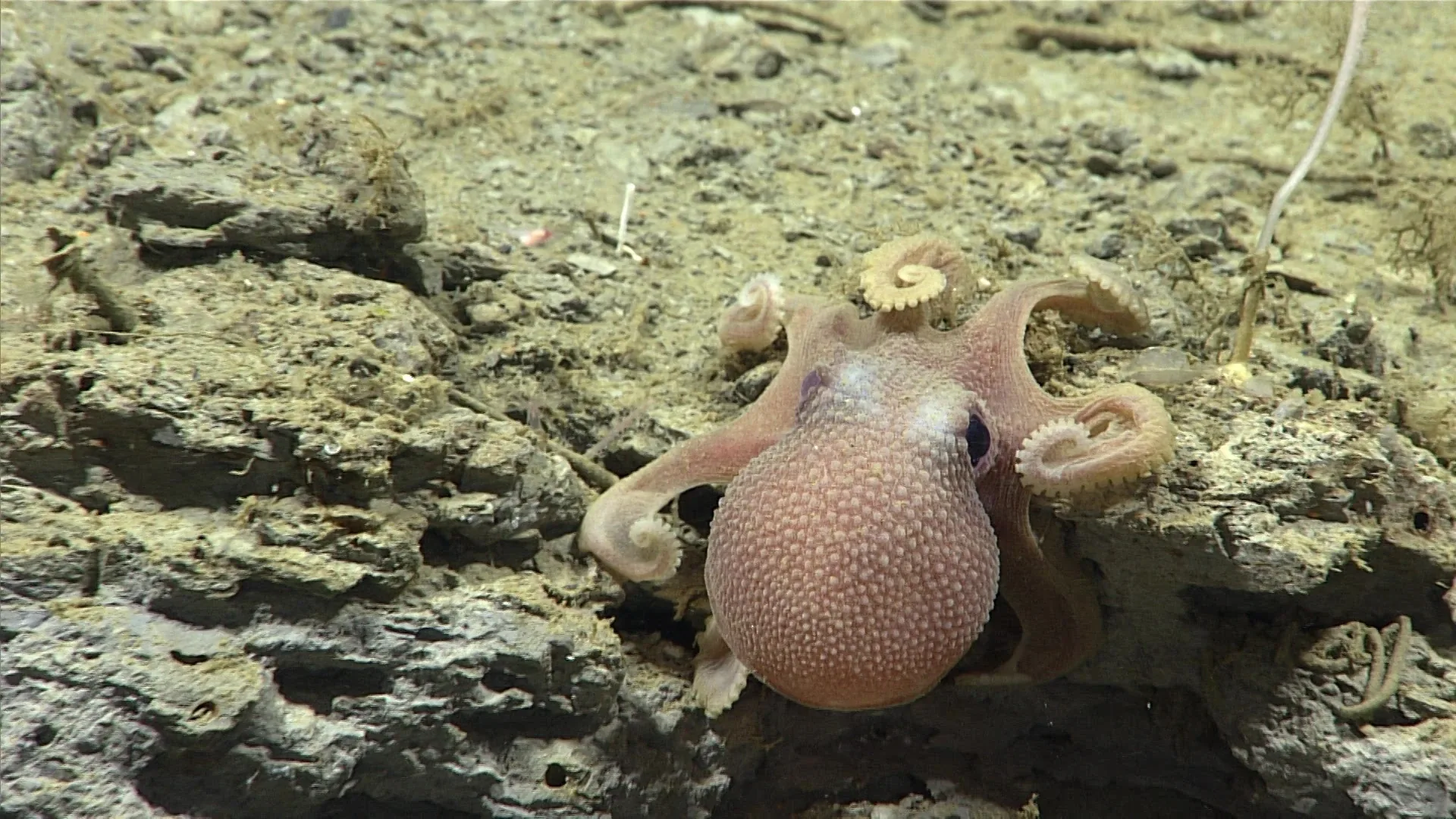
A familiar Pacific octopus can occupy a much larger depth range than a shore-side encounter suggests. Here is how to separate its well-known coastal life from a deep observation.
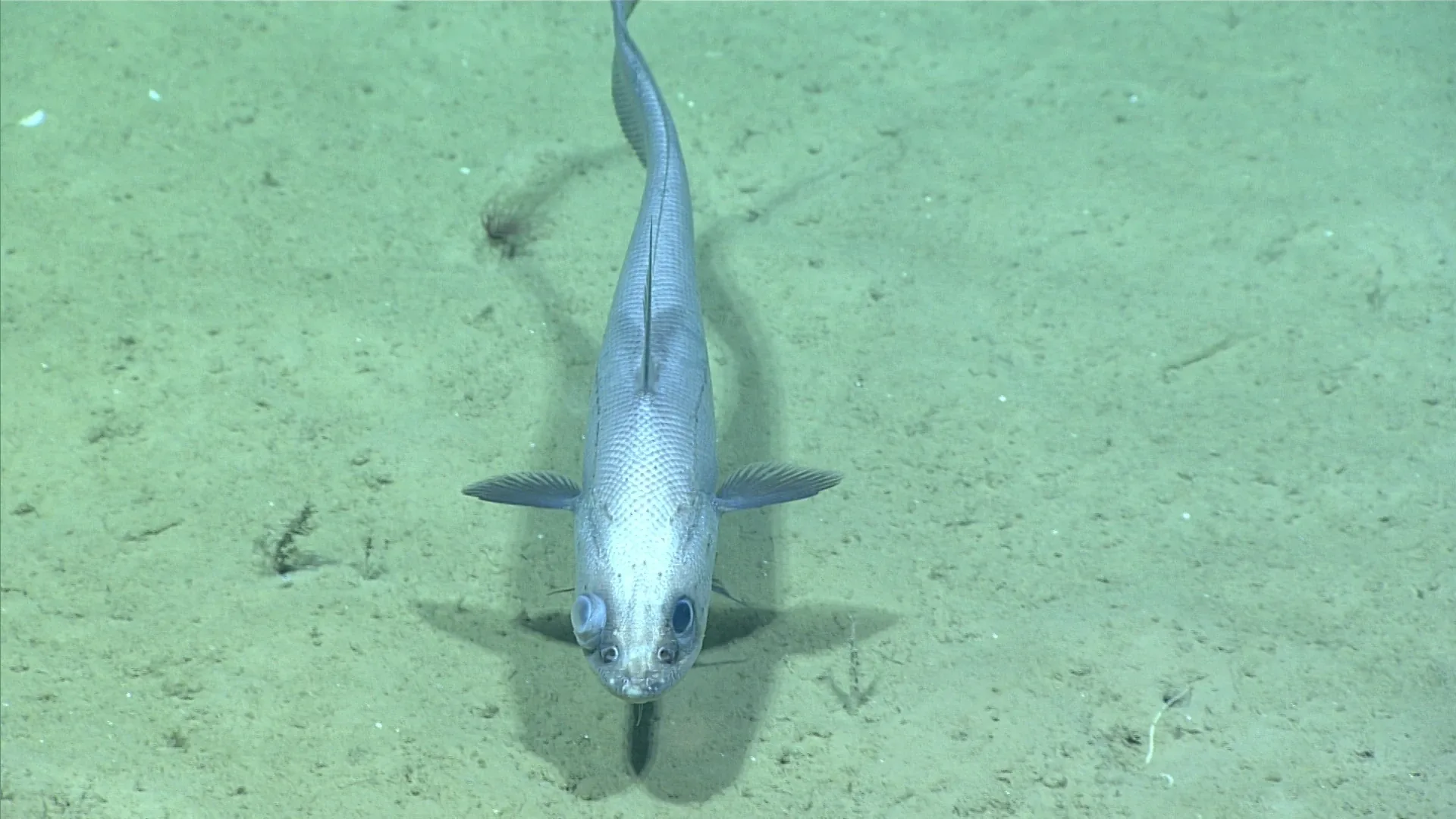
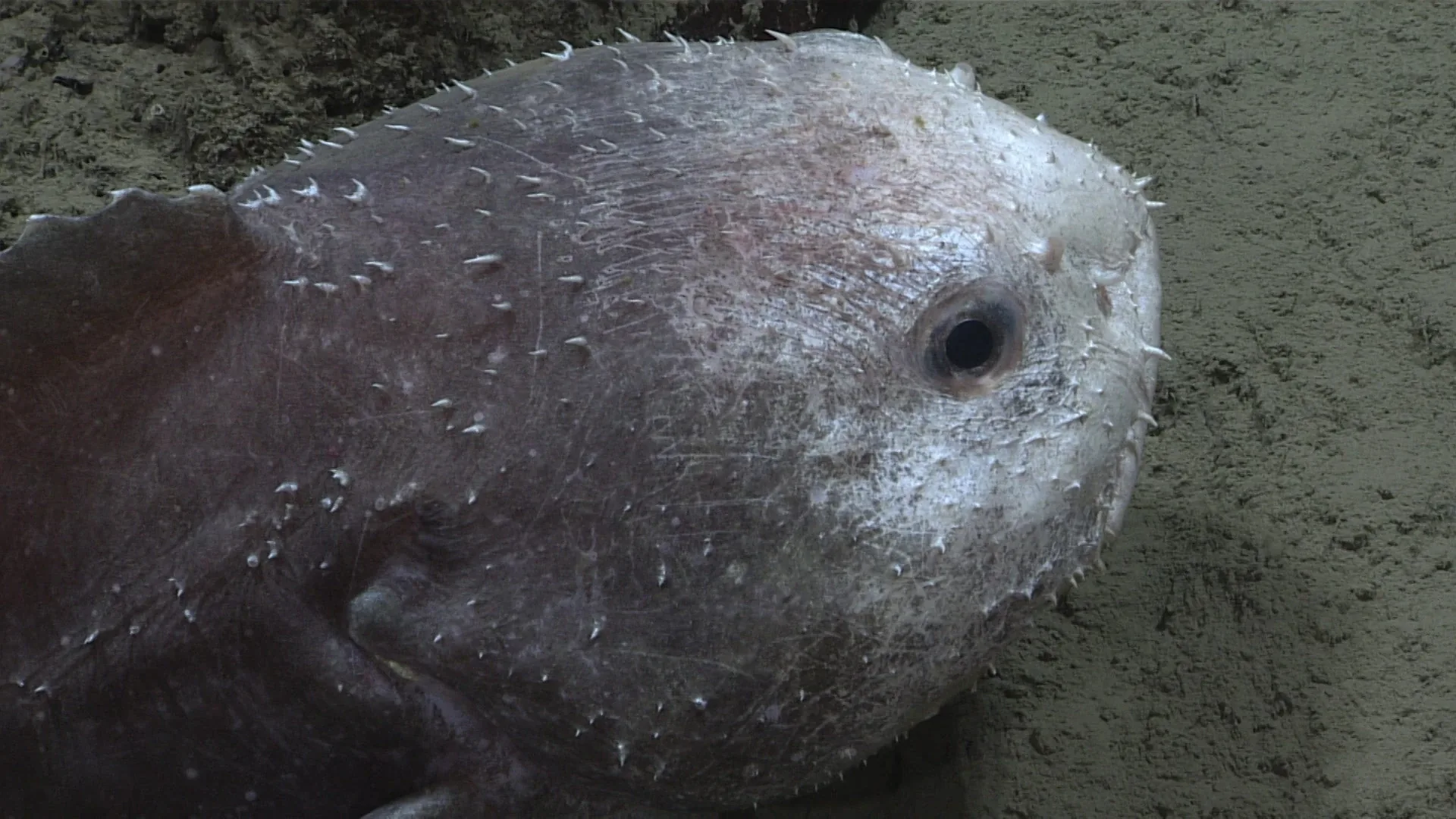
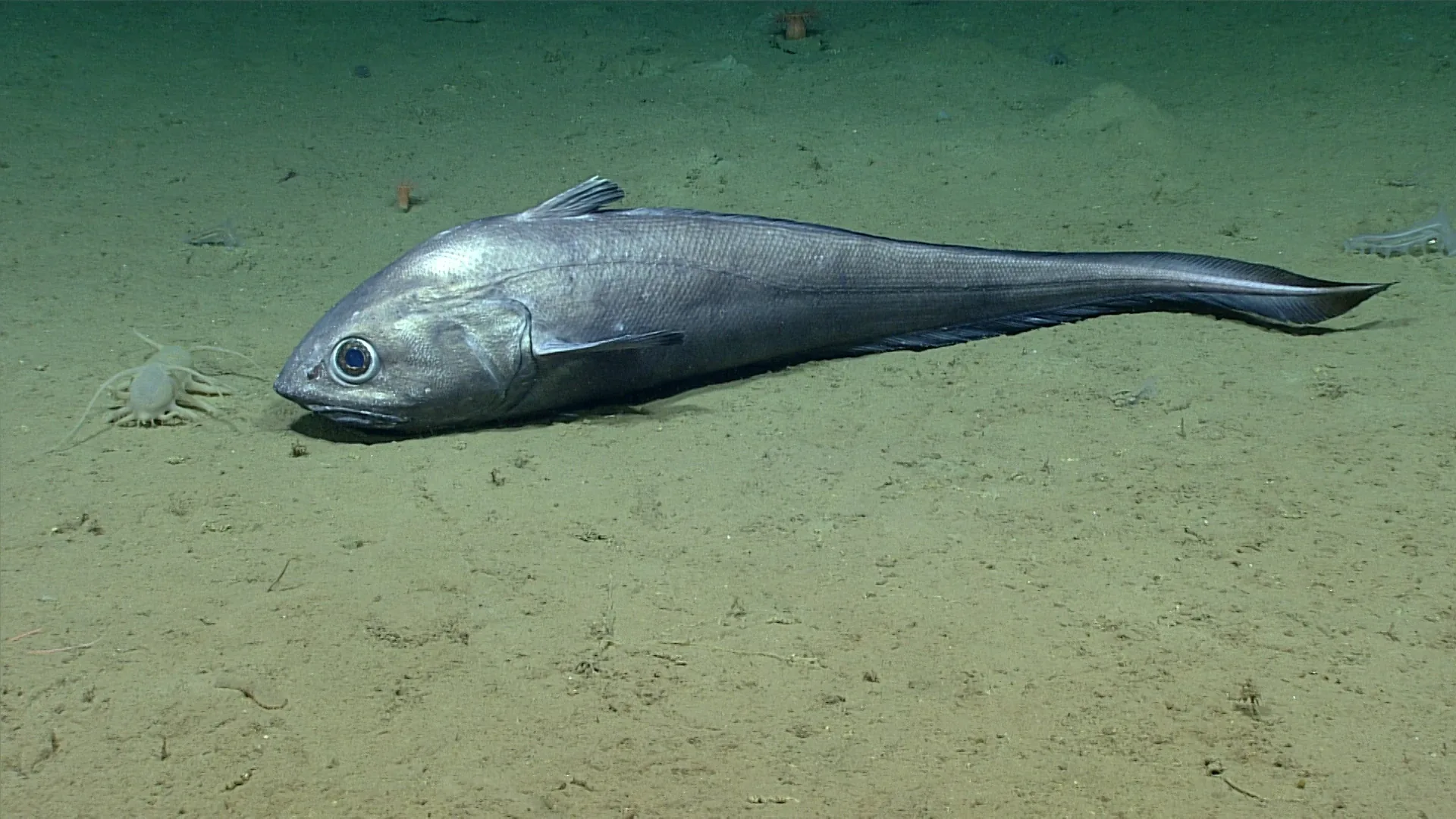
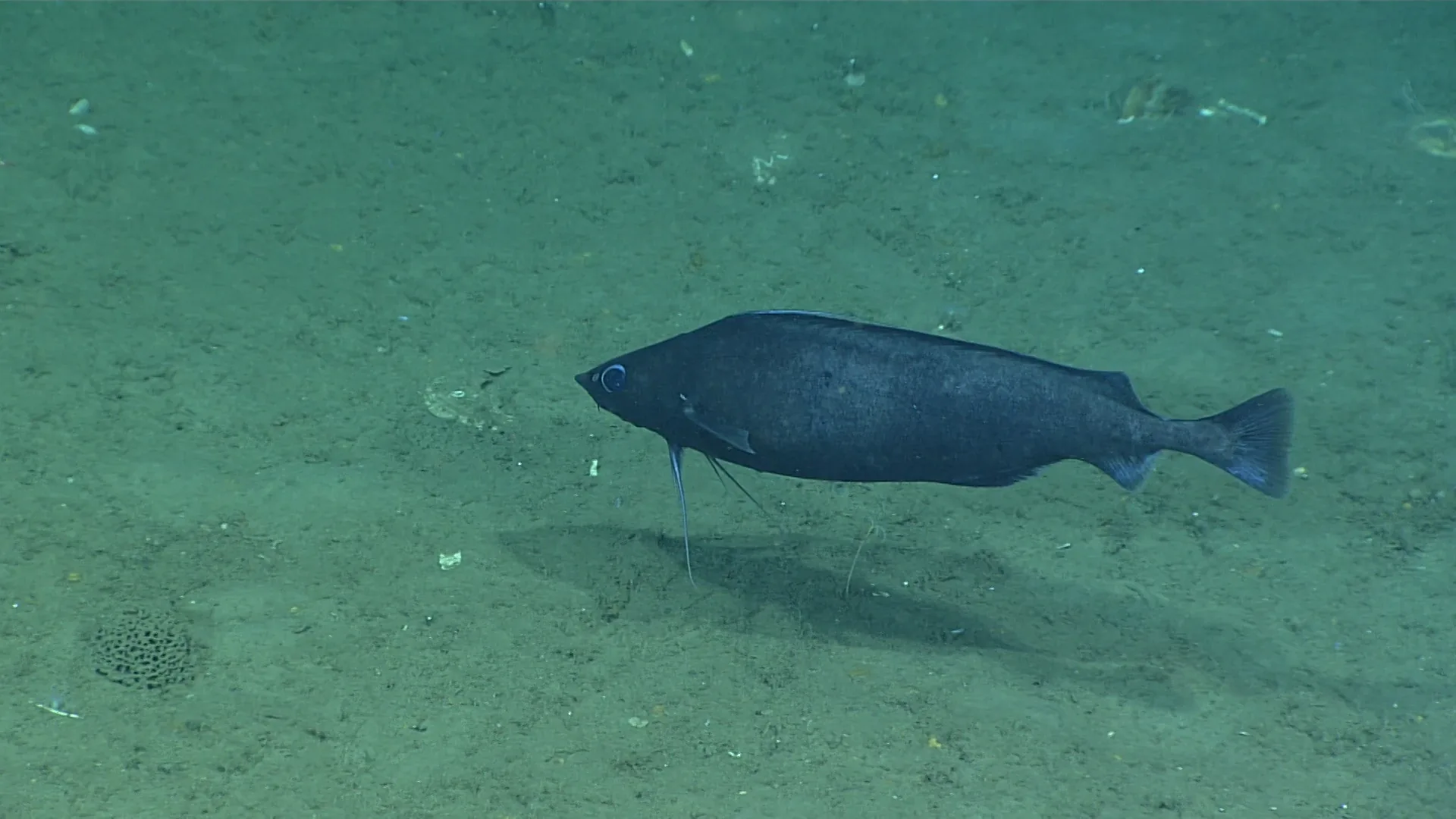
A grenadier photographed on the slope invites questions about energy, movement, and scavenging. The image is a documented encounter, not a complete account of its life.
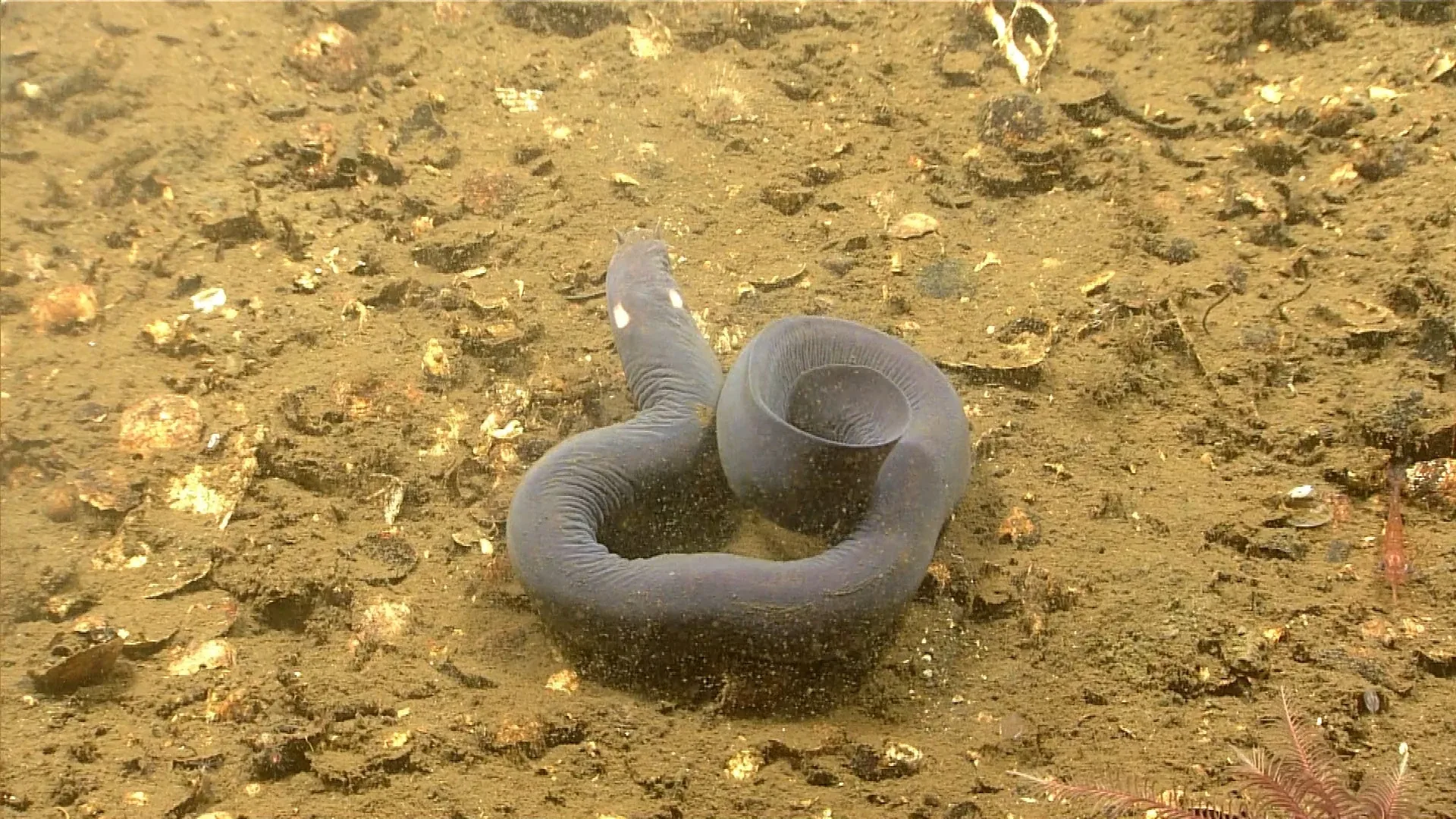
Eptatretus deani is the black hagfish. Its feeding mechanics and a related species’ slime experiments reveal different solutions to life near the bottom.
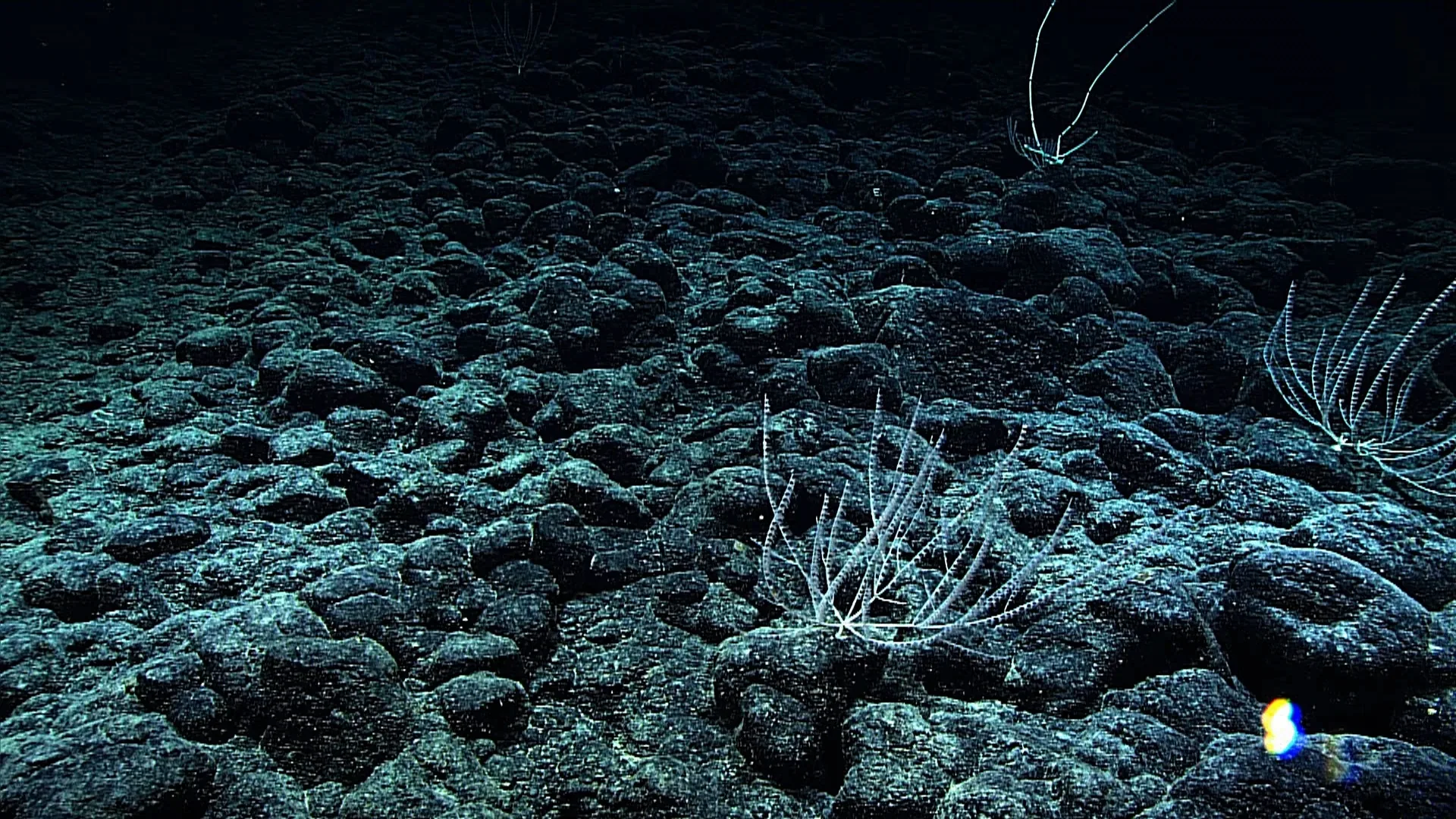
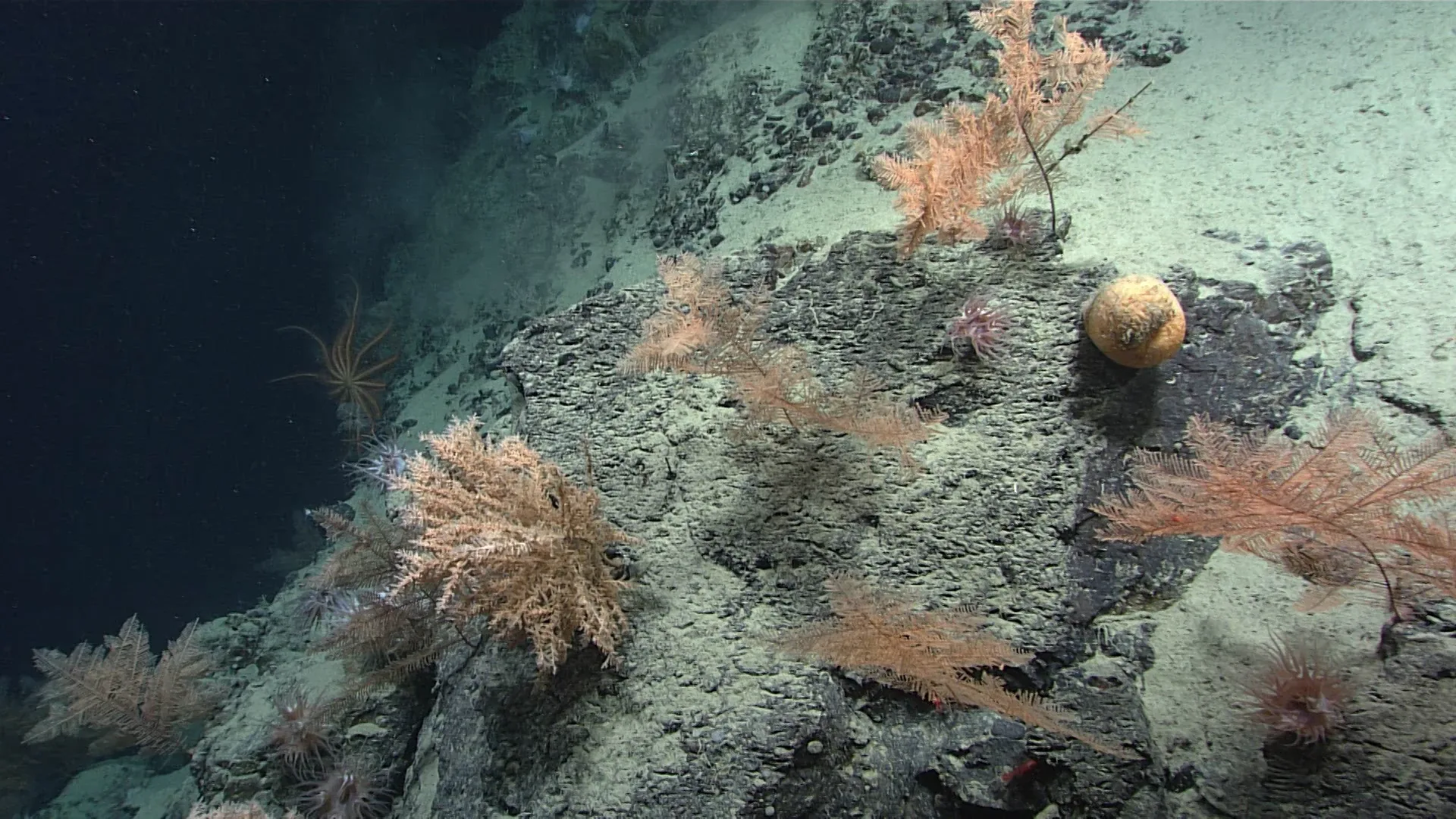
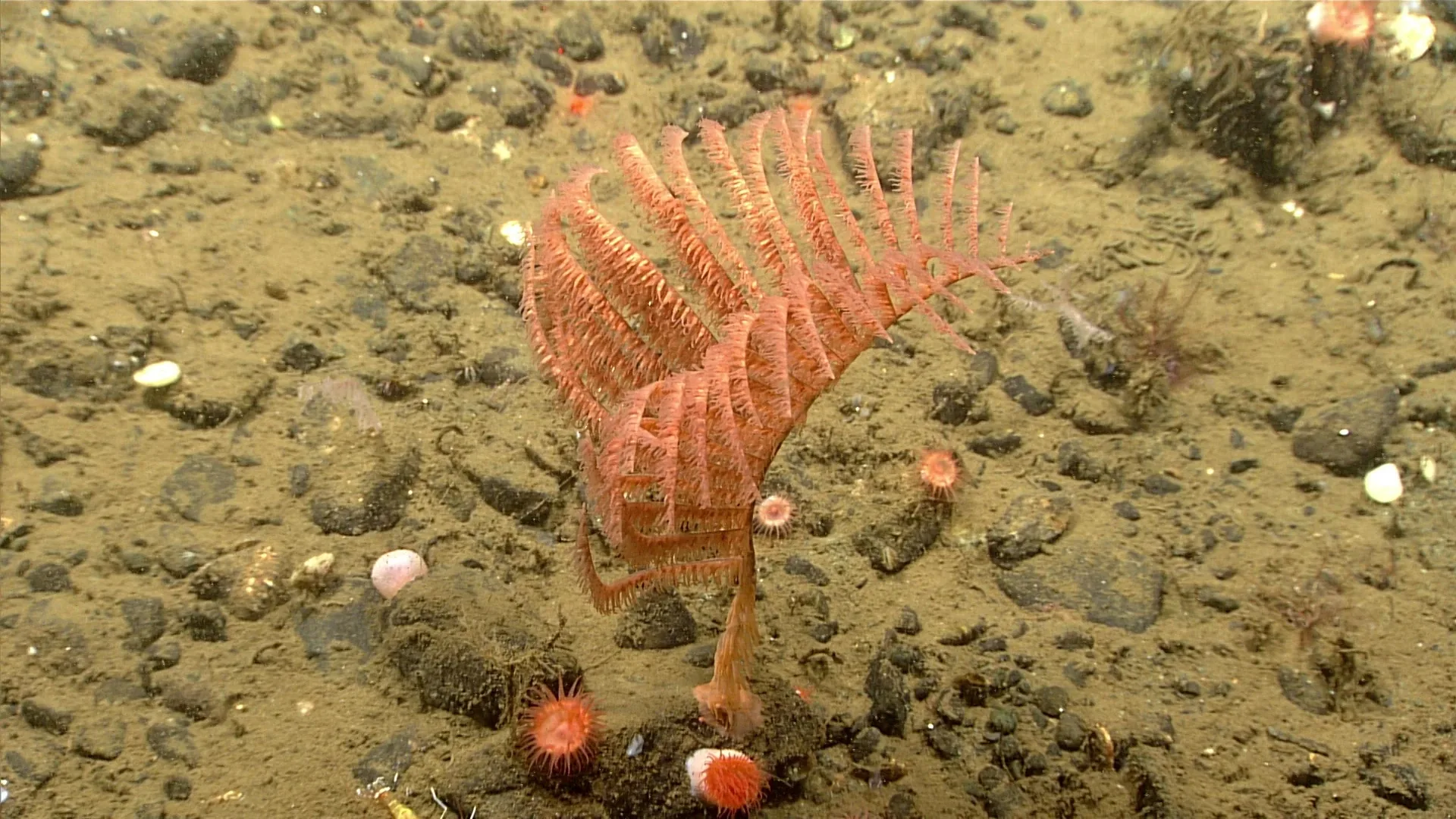
Paragorgia arborea can look like a shrub in a still image. Its branches are living coral tissue, and their shape changes the way other animals use a deep reef.
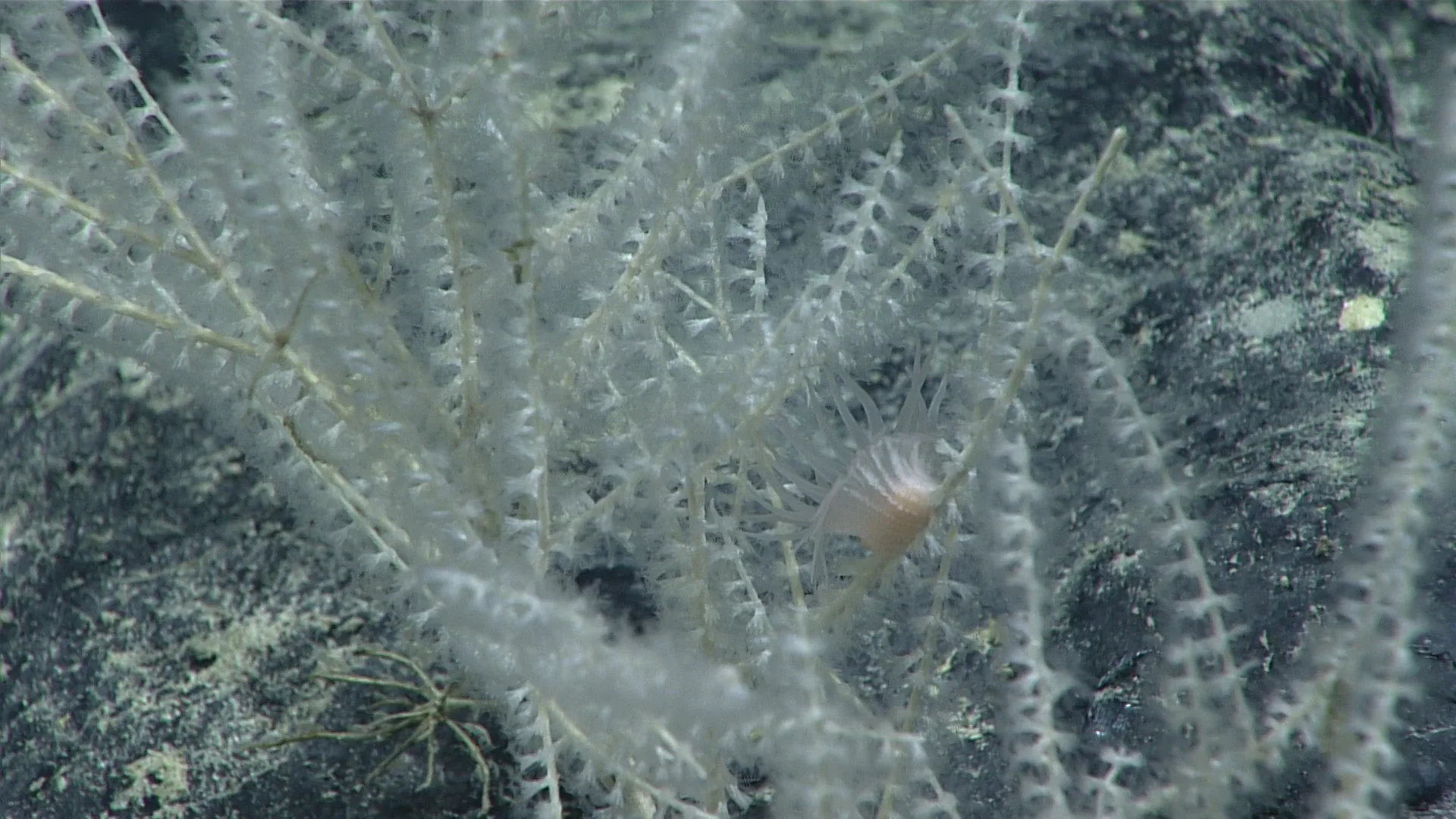
Primnoa pacifica is a deep-water octocoral whose branches become part of the seafloor habitat. A careful profile distinguishes the colony from the community around it.
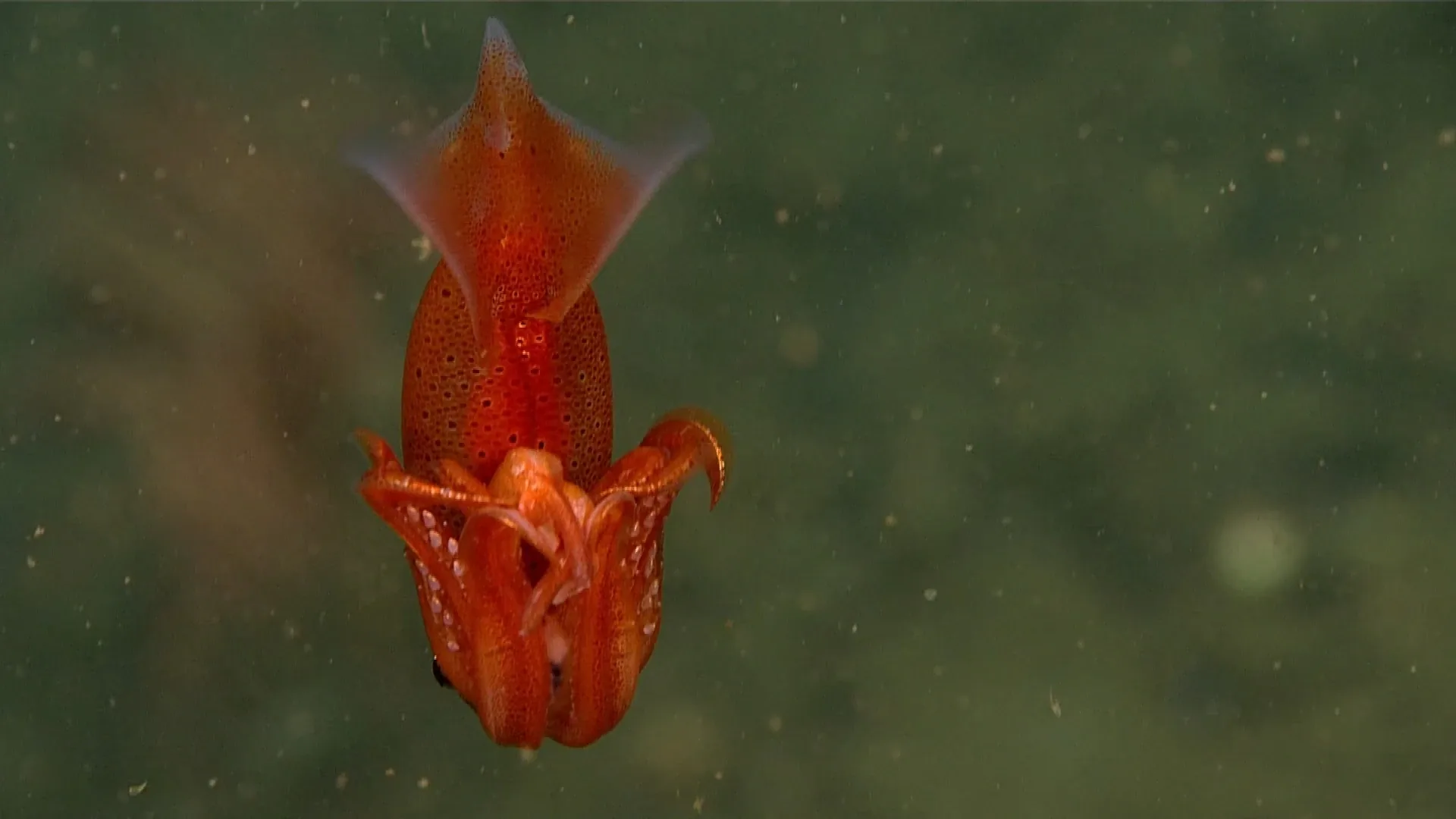
A squid can pass through an ROV’s field of view without becoming a benthic resident. The NOAA record for Gonatus pyros is a useful lesson in habitat labels and camera encounters.
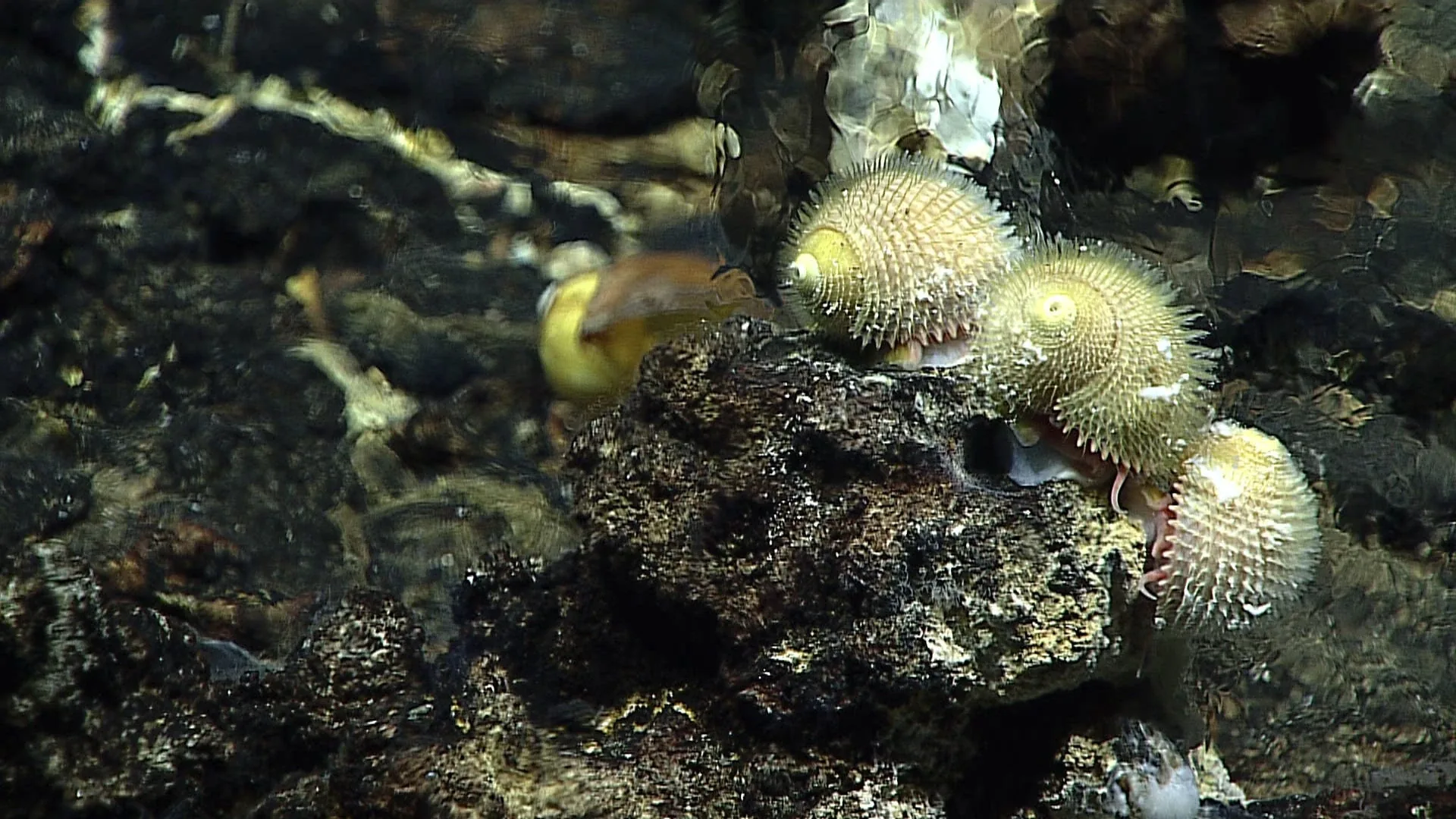
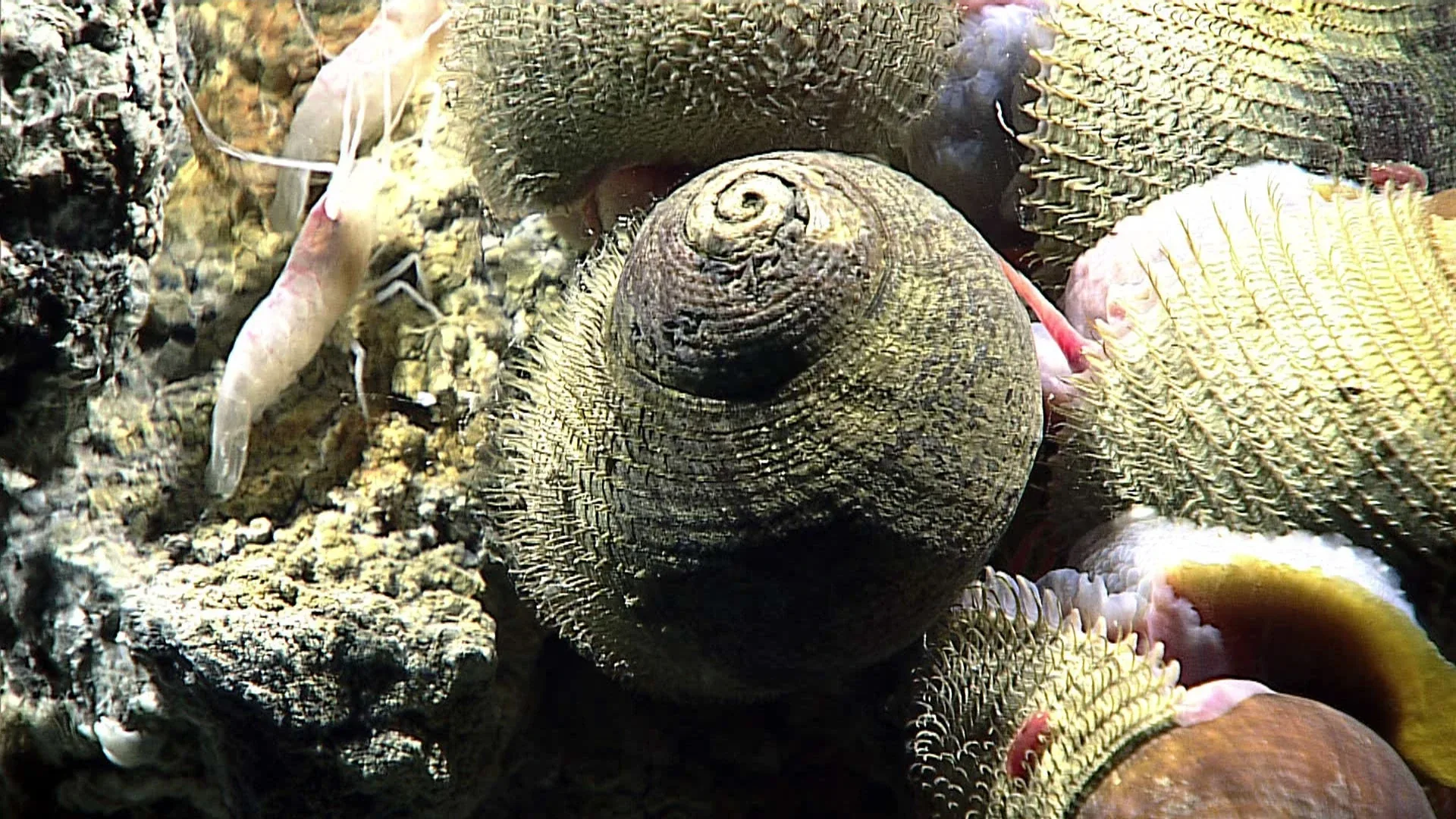
The NOAA image record locates this vent-associated snail at Chamorro Seamount. Its more remarkable story involves microbial partners and a food web that does not begin with sunlight.
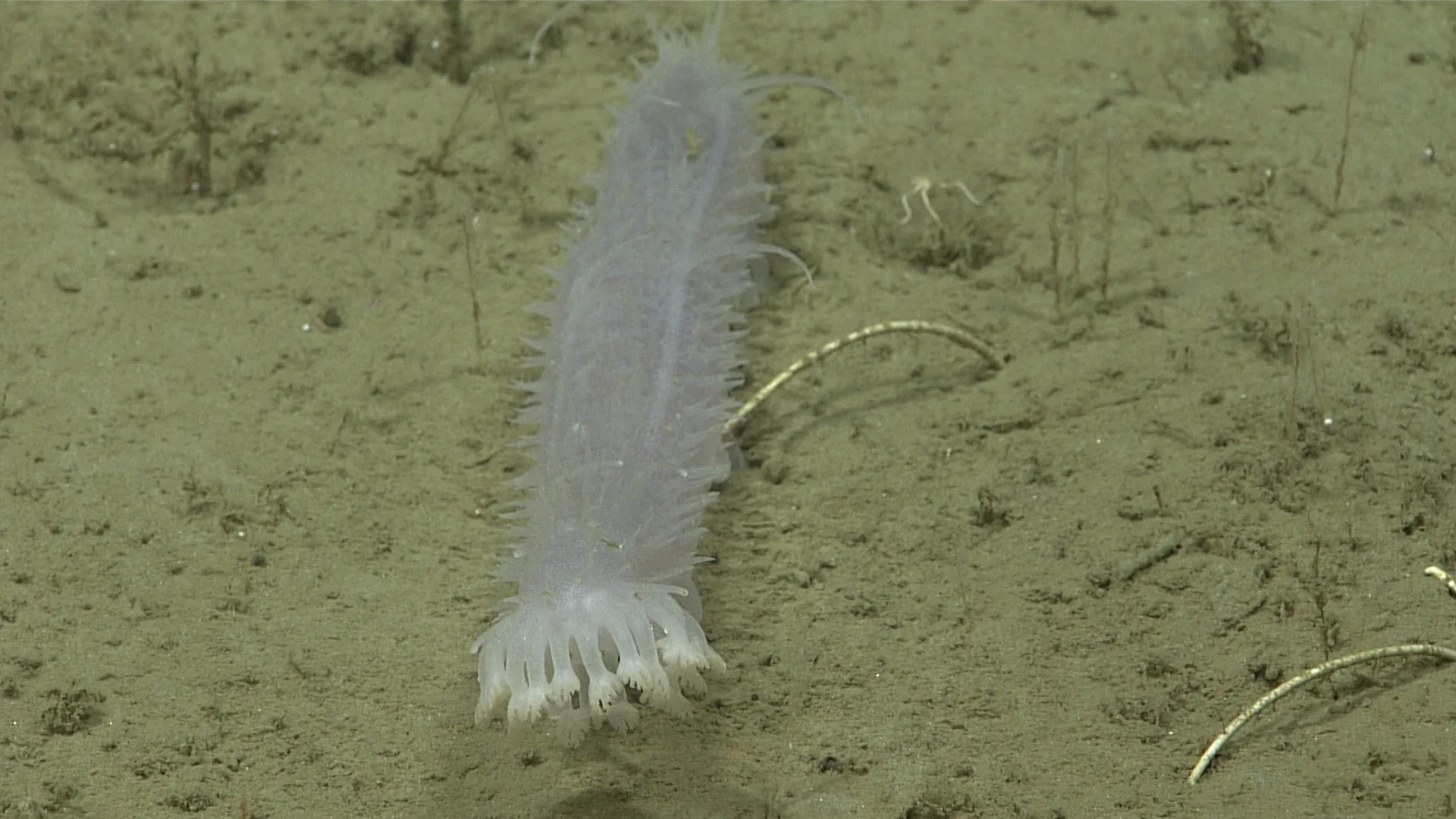
Pannychia moseleyi is an elasipod sea cucumber. Its profile connects the unusual form of deep-sea holothurians to the slow arrival of food on the bottom.
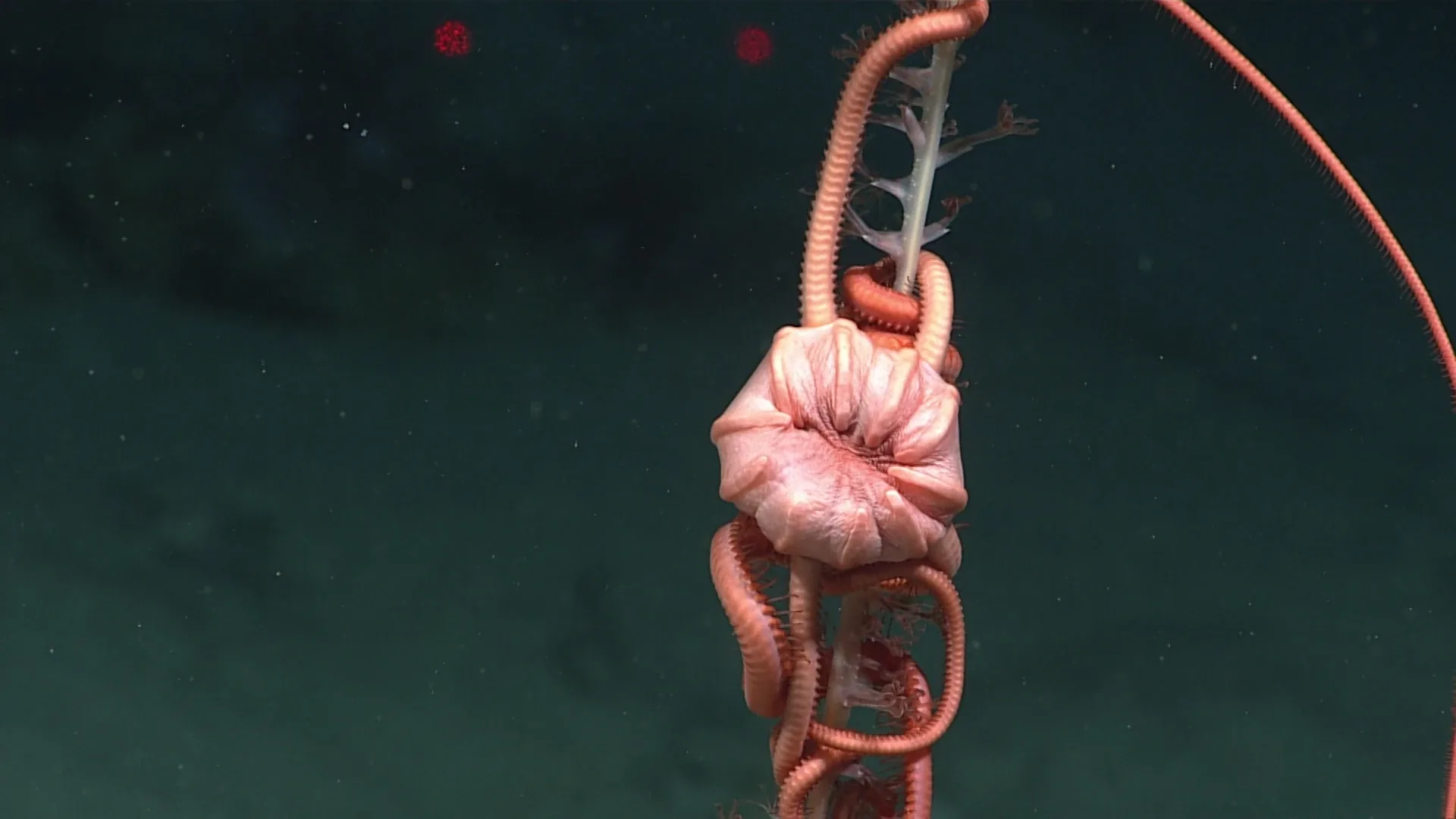
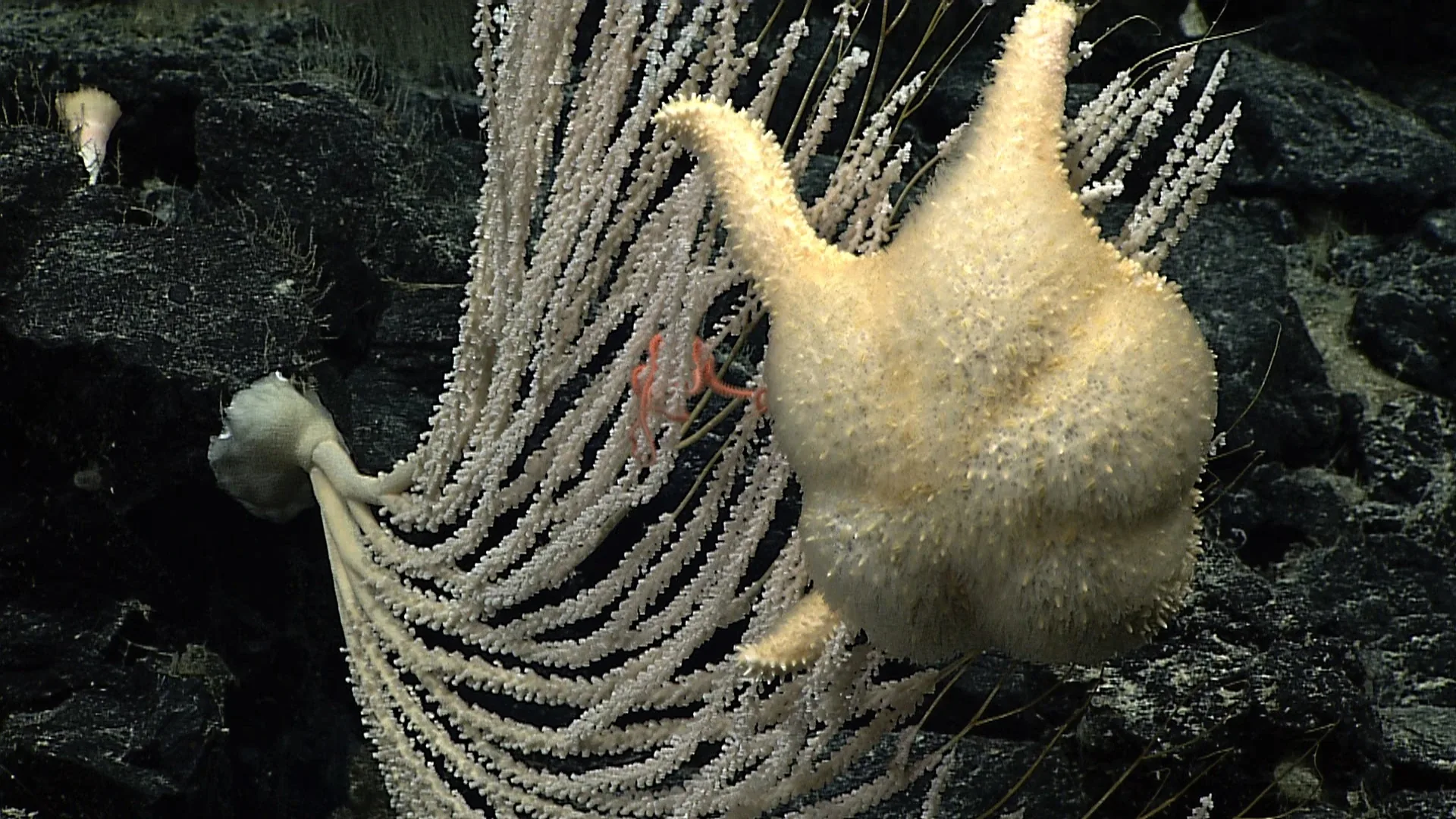
Asteronyx loveni can perch on sea pens and use free arms to intercept passing prey. Its posture links a small animal to the flow around a much larger colony.
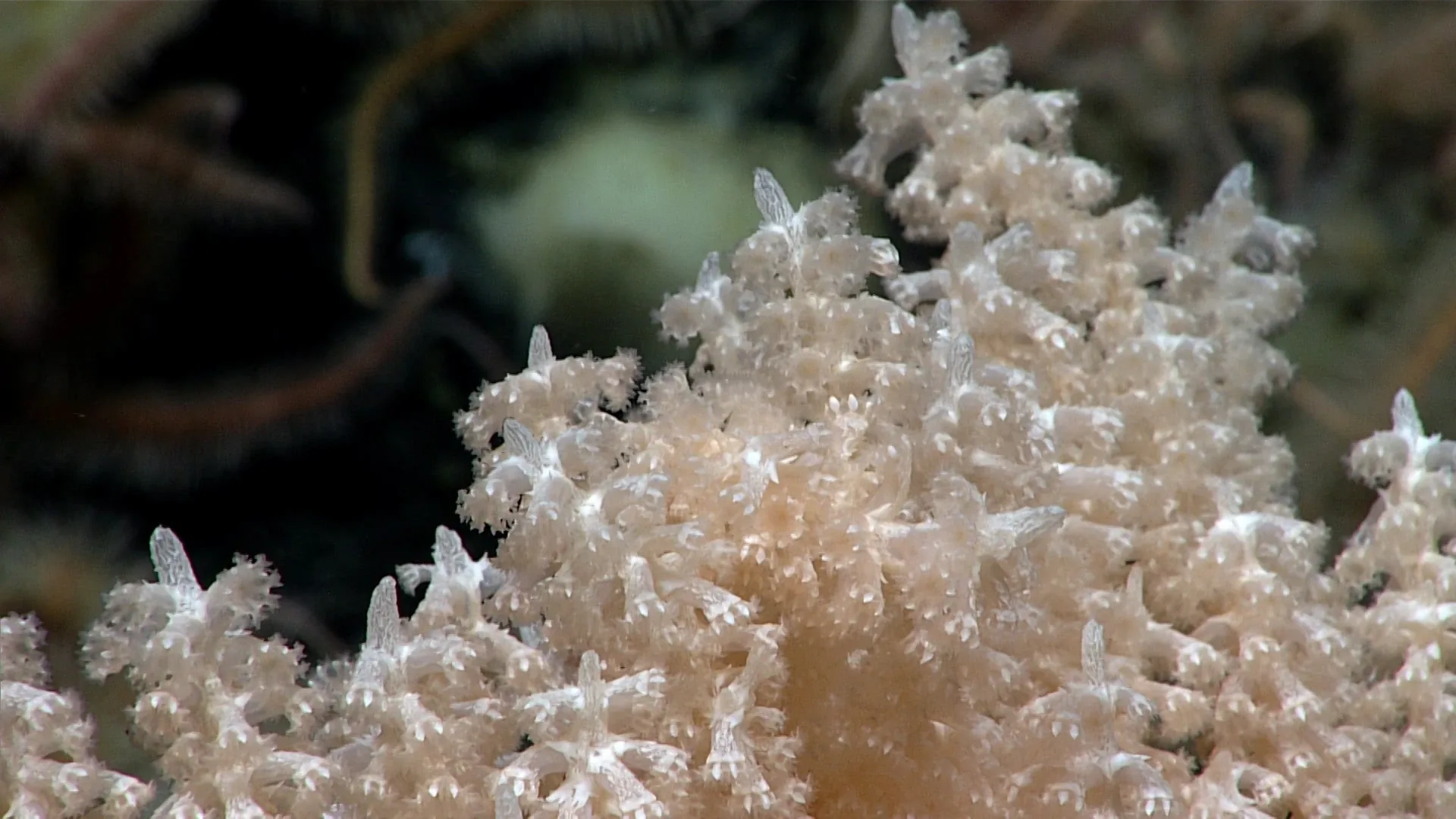
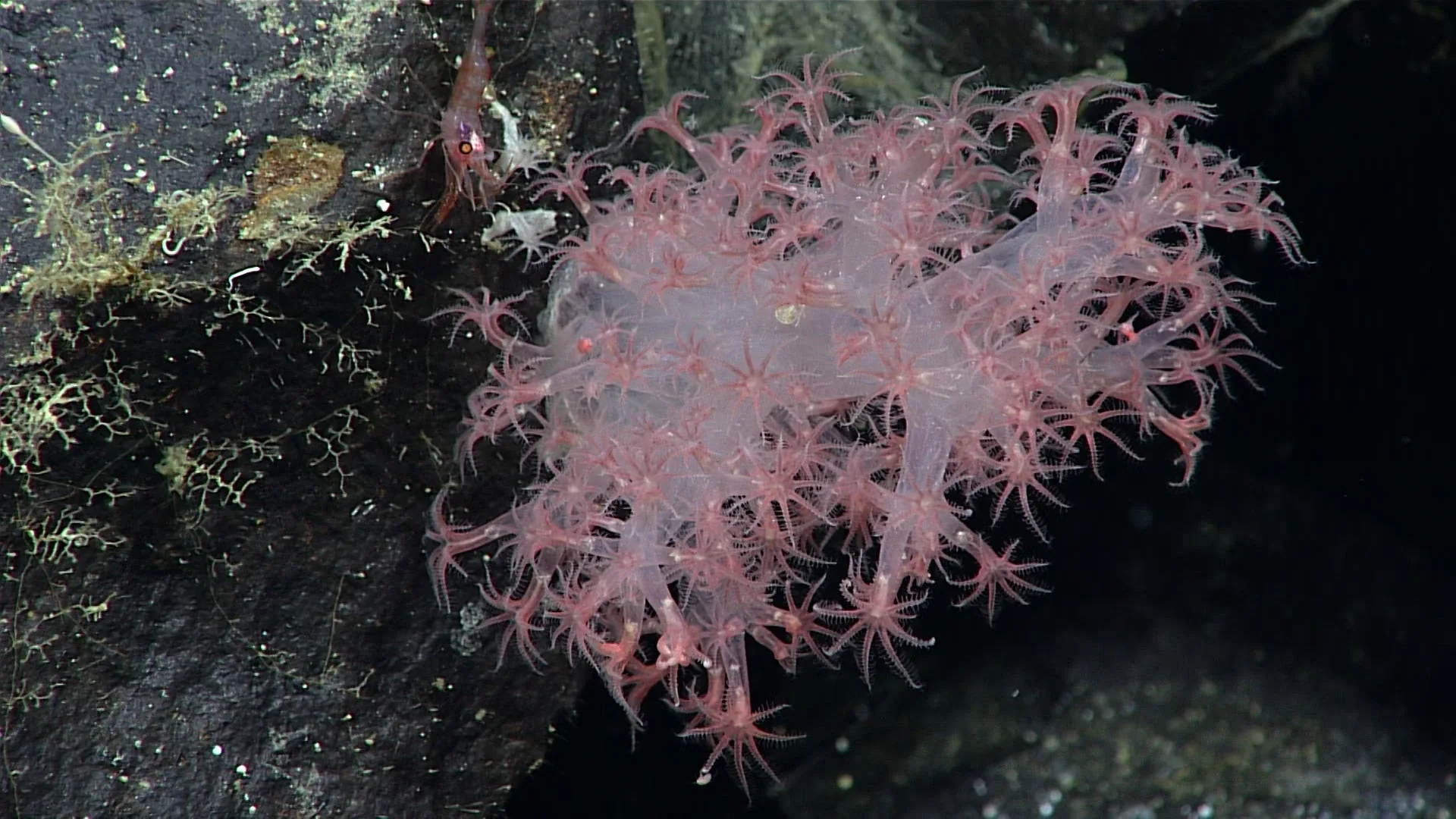
Soft coral colonies can add living texture to deep Pacific ridges. Their shape matters to nearby animals, but a photograph alone cannot show how the colony feeds.
The deepest record in this guide sits just above the commonly used 6,000-meter start of the hadal zone. That small difference matters when we name habitats.
Canyons connect shelves to deep water and can focus sediment and organic matter. Their walls also hold corals and animals that a map alone will not reveal.
Vents are geologic features and biological neighborhoods at once. The animals clustered there depend on chemical energy, but the fields are not all alike.
At a seep, chemical-rich fluids emerge near ambient temperature. The resulting communities can persist much longer than many hydrothermal vent assemblages.
Big eyes, light-sensitive pigments, and responses to bioluminescence solve different visual problems. The limits of each solution are as important as its advantages.
Water pressure rises steadily with depth, but living cells continue to work. Membranes, proteins, and body composition help explain the biological challenge.
A jelly-like body can reduce structural costs and change how an animal moves. It is not a universal deep-sea adaptation, and it does not make an animal fragile by default.
Many deep habitats receive less food than surface waters, but supply varies by place and season. Animals use different ways to cope with that uneven budget.
At vents and seeps, some animals rely on microbial partners that turn chemical energy into organic matter. The host–microbe relationship is specific, not a generic deep-sea trait.
Each day, many midwater organisms shift between depths. Sonar reveals a moving layer, while camera observations show only a small part of the community.
Carrion is rare and temporary, so scavengers need to detect it, reach it, and compete for it. Different animals approach the same food pulse in different ways.
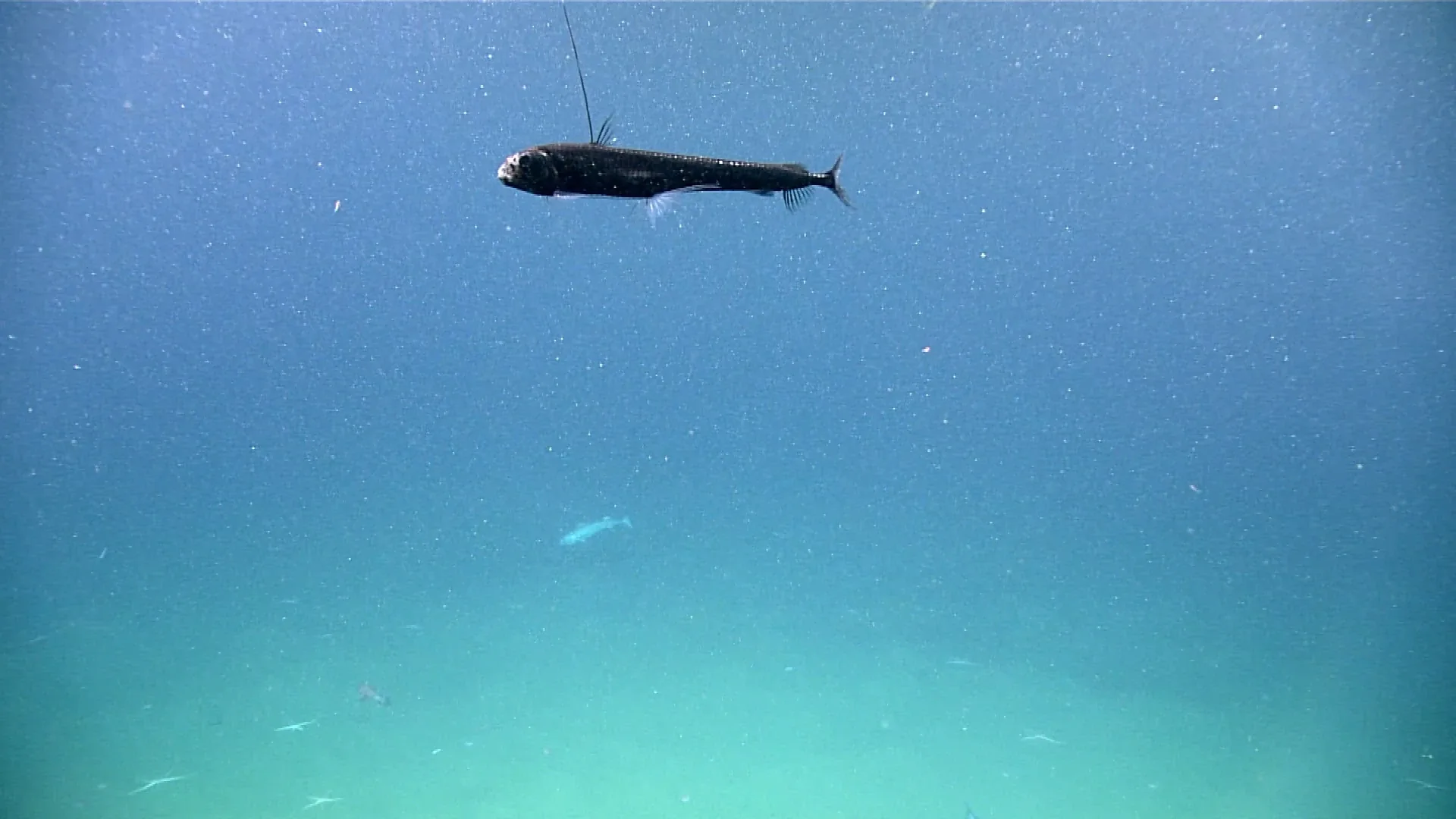
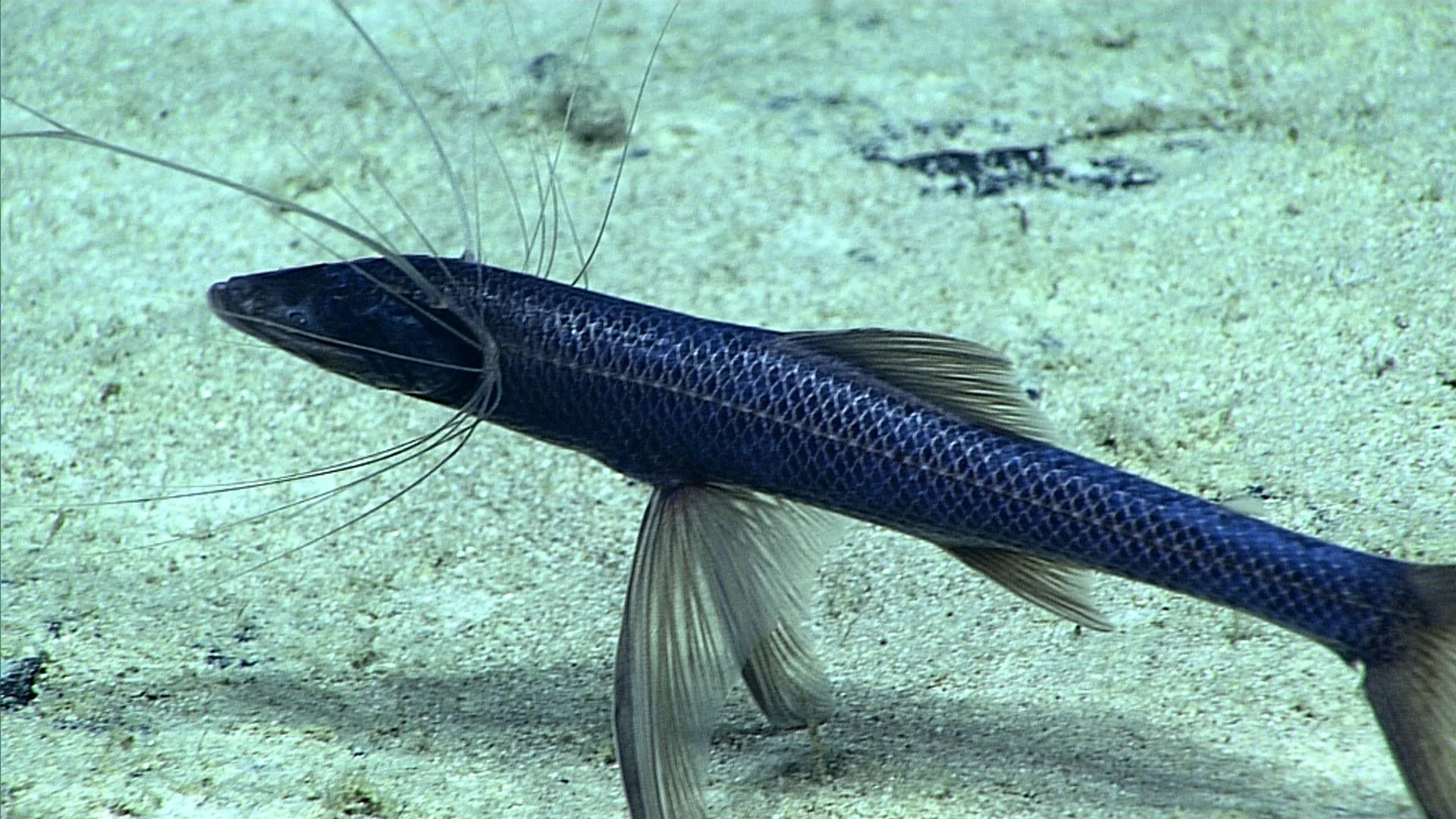
Deep-water predators do not all chase prey through black water. Some use ambush, sensory cues, or feeding structures that suit a low-encounter environment.
A coral colony alters local structure and provides attachment points, refuge, or feeding surfaces. Which benefits occur depends on the coral and its neighbors.
A branched coral can host animals that perch, cling, or feed nearby. The relationship should be described from observation, not inferred from proximity alone.
A camera dive preserves a view, a timestamp, a depth, and a location. It does not automatically reveal abundance, behavior, or how common an animal is.
One ROV encounter can confirm that an animal was present at a place and time. It cannot by itself establish population size, rarity, or absence elsewhere.
Mapped tracks and broad bathymetry do not mean continuous biological knowledge. Sampling is shaped by navigation, weather, equipment, and mission priorities.
DNA in water and sediment can detect traces of organisms without a camera encounter. It is powerful survey evidence, but it has its own limits and controls.
The deep ocean is not insulated from climate change, although its sampling gaps complicate local predictions. Heat and oxygen records must be read by depth and basin.
Potential impacts differ between nodules, seamount crusts, and vent sulfides. Baseline data, sediment disturbance, and recovery time are central questions.
Unknown species are not the only reason to protect a habitat. Structure, connectivity, and ecological function can matter while taxonomy is still catching up.
No field notes match that search. Try another species or topic.