Article · Field note 34
Camouflage depends on the viewer
In the ocean’s dim midwater, being hard to see can matter as much as seeing well. But “camouflage” is not one color or one body shape. A transparent animal, a red animal, a black fish, and a squid with light-emitting organs alter their visibility in different ways. Their success depends on the background, the direction of light, and what the observer’s eyes can detect.
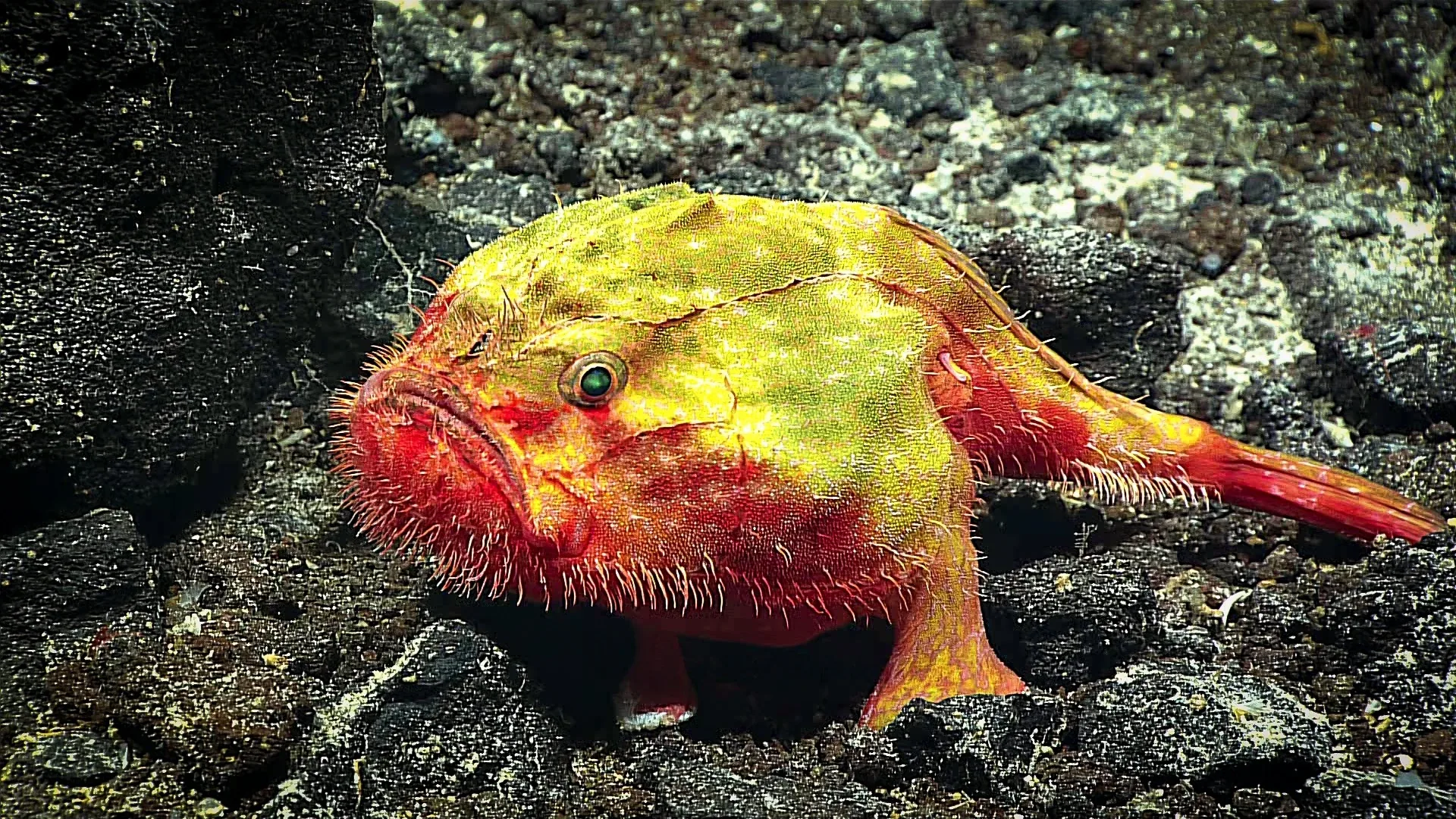
Sunlight entering the sea is filtered by water. Red wavelengths disappear relatively quickly, while blue light travels farther. NOAA’s animal-color explainer describes why a red animal can appear dark at depth: little red light is available to reflect. This can reduce contrast in some settings, but it is not a magic cloak. Near a white ROV lamp, red tissue may become obvious; the camera creates a different viewing environment from natural deep water.
Transparency and the problem of edges
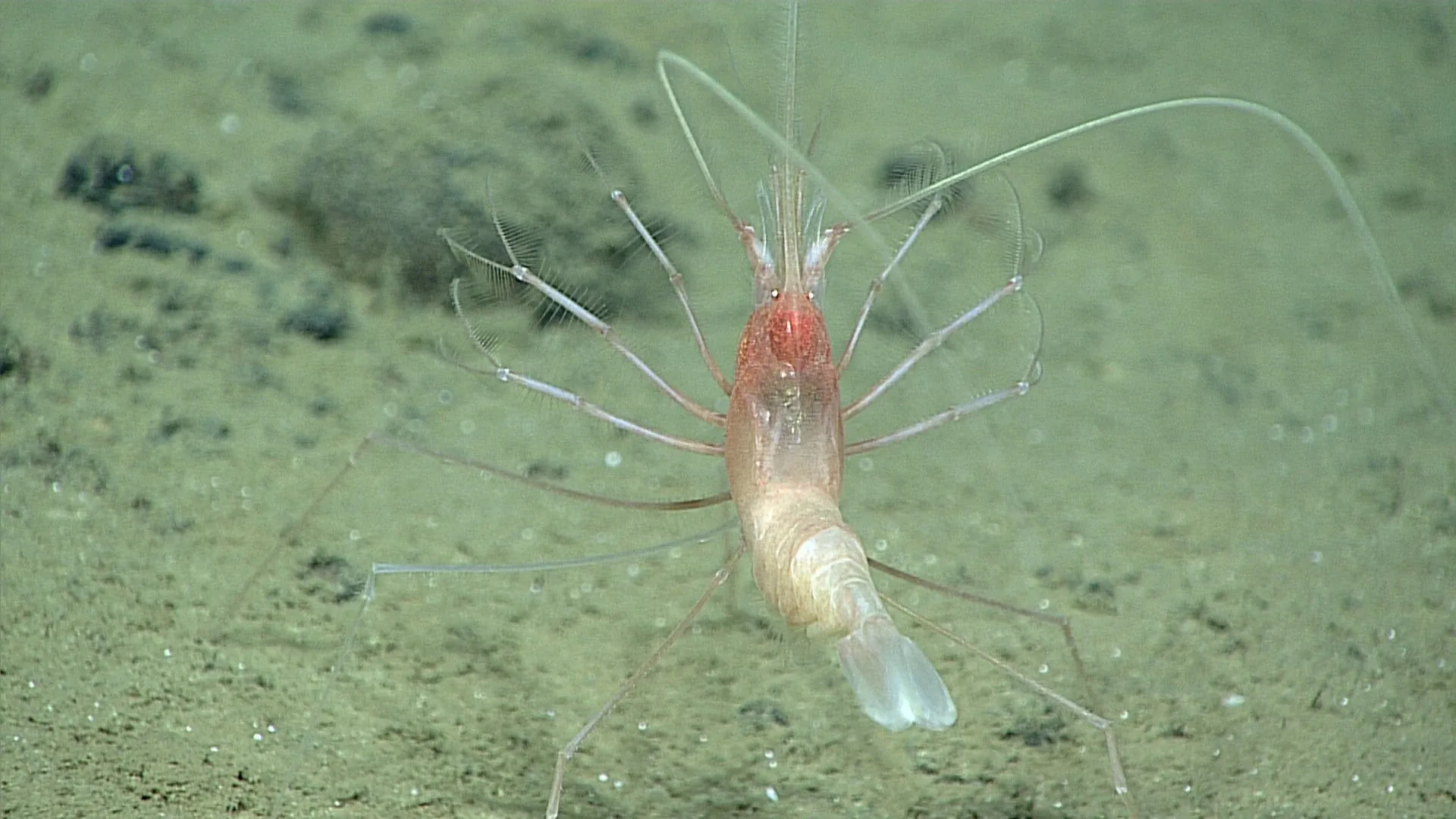
A transparent body allows much of the background light to pass through rather than reflect from a colored surface. This can reduce the animal’s outline, especially when the body is small and thin. Transparency is incomplete, though. Eyes, gut contents, muscles, and other structures may remain visible. Animals can minimize some of these features, orient their bodies, or use reflective surfaces to reduce contrast.
Transparency is especially common among pelagic organisms, but its value depends on where the animal lives. In open water, there is no seafloor to match; the background is a changing light field. An animal must also remain physiologically functional, so it cannot make every tissue optically invisible. Camera images may exaggerate transparency because the body is lit against a dark background, while focus and exposure make internal structures appear unusually sharp.
Darkness in a blue-lit world
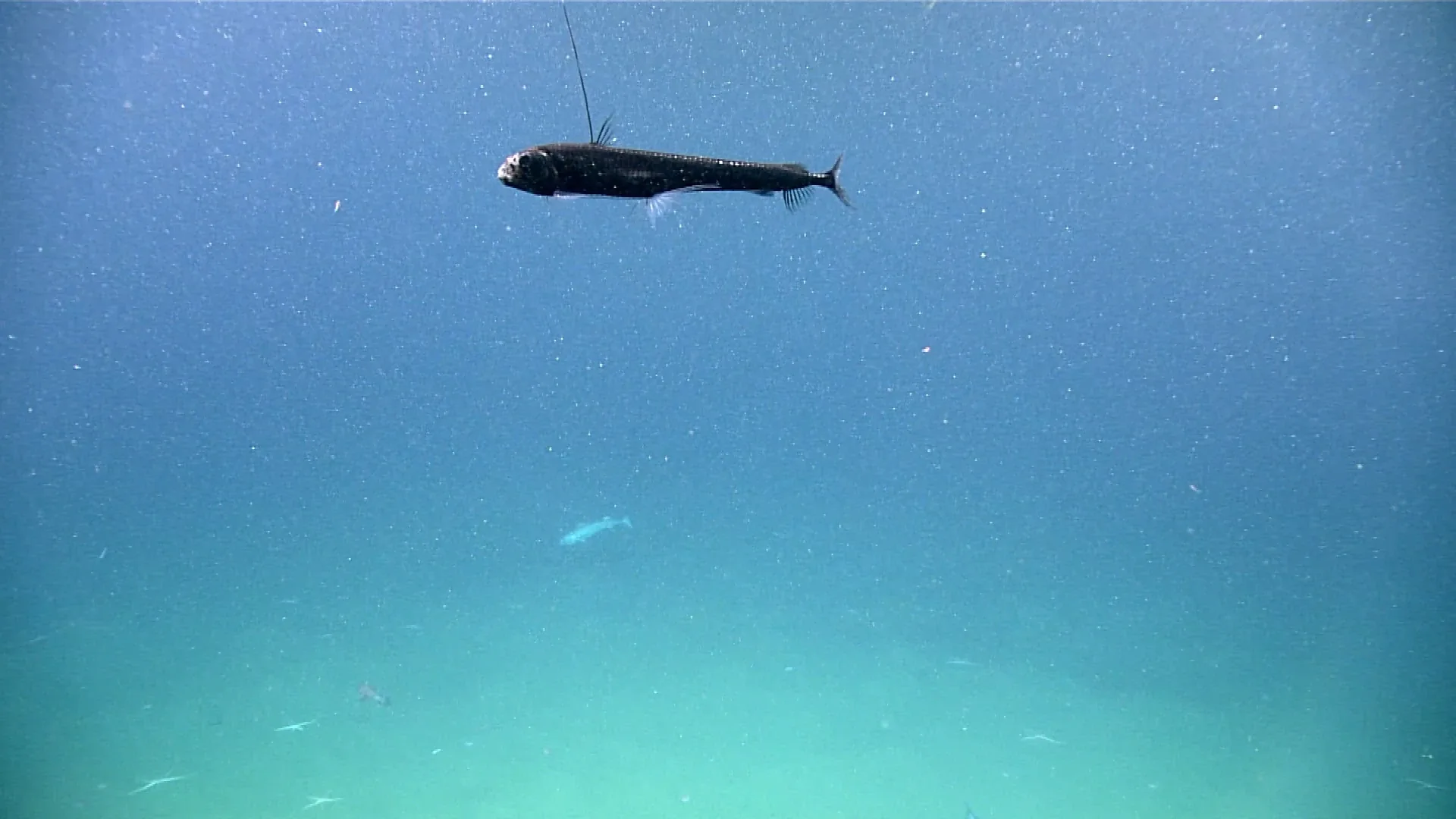
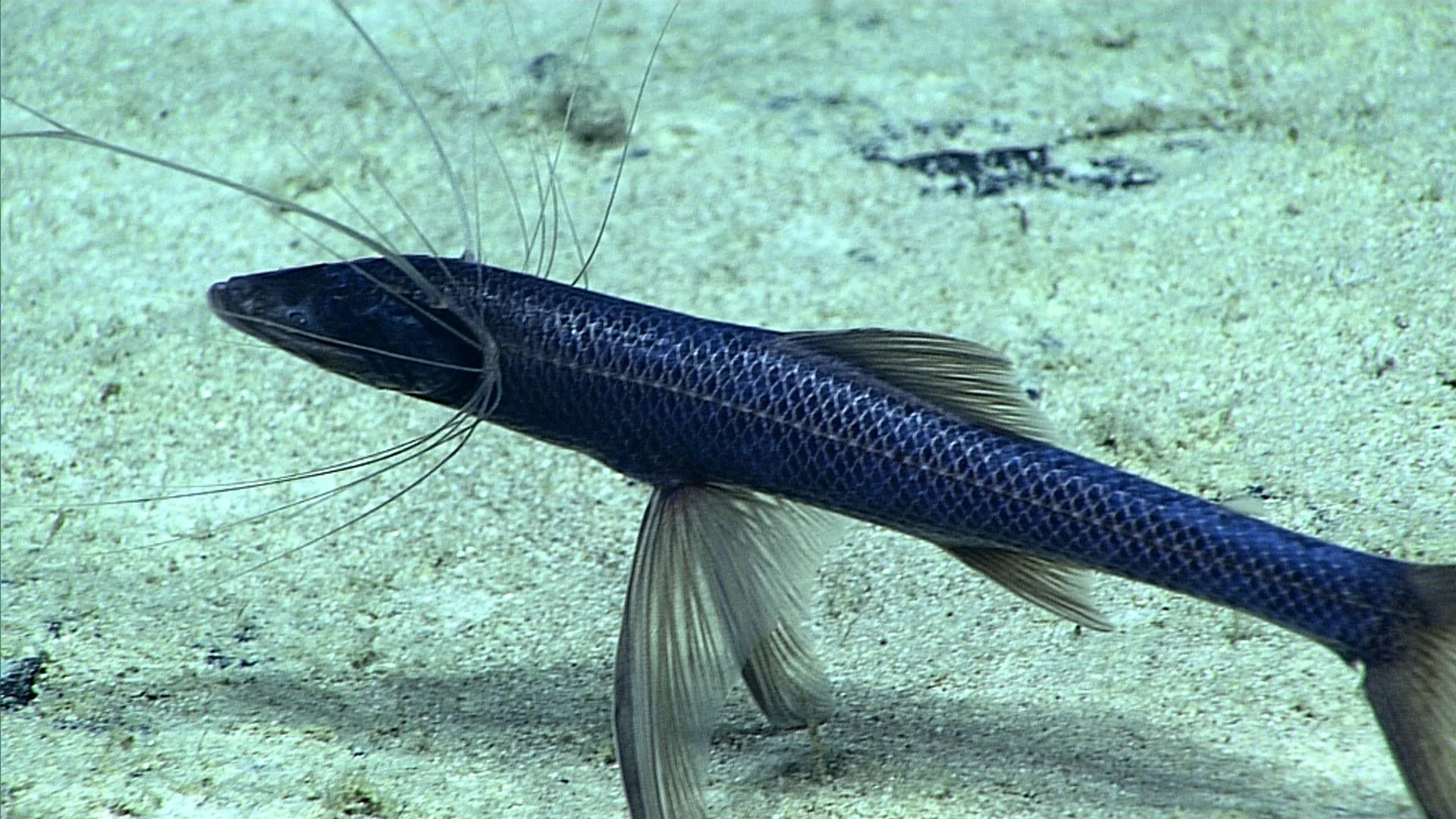
Black pigmentation can absorb light and reduce reflected flashes from nearby bioluminescent animals. A study of ultra-black deep-sea fishes measured exceptionally low reflectance in multiple species and considered how that surface might reduce visibility in a bioluminescent environment (primary study archived by NOAA). This is not the same problem as matching a bright reef. In the deep, a tiny reflected signal may be enough to reveal a predator or prey.
Red coloration works differently. Because red ambient light is filtered out at depth, a red surface may look black to animals that see mostly blue wavelengths. Some species may have visual sensitivities that extend into longer wavelengths, so red is not universally invisible. The camouflage is relative to the viewer’s sensory system and the light available at that moment.
Counterillumination erases a shadow
In the mesopelagic zone, residual sunlight can create a silhouette when an animal is viewed from below. Counterillumination uses bioluminescent photophores on the underside to match some of the downwelling light. Classic observations of squid showed that photophores can be oriented downward and that light output can respond to overhead illumination (experimental study). The strategy is not simply “glow so you disappear.” The animal must match intensity and sometimes color closely enough for a particular observer and viewing direction.
The match can fail if a predator views the animal from the side, if the water light changes, or if individual photophores stand out as separate points. Models of the squid Abralia veranyi and a lanternfish examined how viewer distance and visual acuity can reveal a counterilluminating signal (study record). Camouflage is an interaction between emitter and observer, not a trait that guarantees invisibility.
Some squid have specialized optical structures that guide light from photophores. A study of Galiteuthis investigated “leaky” light guides in photophores on the undersides of the eyes and how they could shape emitted radiance (open research article). Such work suggests that counterillumination can involve anatomy and optics as well as brightness control. The mechanism is species-specific; it should not be generalized to every luminous animal.
One body, several viewing conditions
Camouflage can be directional. A fish may be dark above and pale below; a transparent animal may present its thin edge to a predator; a squid may illuminate its underside while keeping its upper surface dark. A species that migrates vertically crosses changing light conditions and may need a different visual strategy at different depths. Color and behavior work together.
Light production itself can expose an animal. A flash may attract prey or a mate, but it could also draw a predator. A luminous cloud may redirect an attack only briefly. These opposing effects help explain why bioluminescence has multiple roles across the tree of life. NOAA’s bioluminescence fact page describes light as a widespread marine feature, while research reviews distinguish camouflage, defense, feeding, and communication hypotheses.
The observer changes the scene
An ROV’s lights can reveal color and body shape that would be difficult to see naturally. They may also prompt behavior or saturate a camera sensor. A bright photograph is not evidence that the animal is brightly colored in its normal environment. To understand appearance, scientists measure ambient light, camera illumination, reflectance, and the animal’s visual sensitivity. They may use filters or low-light cameras that reduce disturbance and improve interpretation.
There is a similar issue in field experiments. A model of how a predator sees an animal must assume a particular visual acuity, distance, and wavelength sensitivity. Those assumptions can be tested, but no single test covers every potential predator. Results are strongest when researchers specify the viewer and conditions rather than calling a signal universally invisible.