Article · Field note 33
A layer that moves while a ship watches
At dusk, parts of the ocean’s midwater community begin moving upward. Near dawn, many descend again. This recurring pattern is called diel vertical migration: “diel” refers to a 24-hour cycle. Sonar can register dense layers of organisms that shift with the time of day, which is why researchers call them deep scattering layers. A moving band on a screen may represent many kinds of animals, not one coordinated species or a solid layer of fish.
NOAA’s deep-scattering-layer explainer describes how organisms in these layers often remain deeper during daylight and move toward shallower water at night. The details vary by region, season, species, and depth. Some organisms migrate only part of the water column; others stay deeper or follow different schedules. A single acoustic record captures a moment in a larger rhythm.
Why move toward the surface?
Food is more abundant in sunlit waters because photosynthetic plankton use solar energy there. A midwater animal that rises at night can feed in productive surface layers while reducing its exposure to visually hunting predators. It may return to deeper water during daylight, where darkness offers cover. This is a common explanation for diel vertical migration, but the costs and benefits differ among organisms.
Movement itself uses energy. A migrant must tolerate changing temperature, pressure, light, and sometimes oxygen conditions. It may encounter different predators and prey as it travels. The migration pattern is therefore an ecological tradeoff, not a free trip to a buffet. For tiny organisms, swimming speed and water movement complicate whether the animal actively navigates or is carried by currents.
Research has revealed that the migration can be extensive in both number of organisms and vertical distance, but the phrase “largest migration on Earth” should be used carefully. It depends on how migration is defined and how biomass is estimated. NOAA calls it a major organized movement in its observations of scattering layers. Acoustic data provide an impressive view of the collective pattern while leaving many individual identities unresolved.
The sonar does not name the animal
Sound waves reflect from organisms, gas-filled structures, and other objects in the water. A sonar instrument detects the returned signal, and groups of animals can form layers with recognizable movement. But scattering strength varies with body size, shape, orientation, and internal structures. A strong echo does not necessarily mean a particular species is abundant. Researchers pair acoustics with nets, optical tools, cameras, and biological sampling to identify who is producing the signal.
Each method has bias. A net samples a narrow depth and may avoid fragile animals or strong currents. Cameras view a small field and can miss transparent or tiny organisms. Acoustics cover a broader volume but often cannot resolve species from echoes alone. Combining the methods helps connect the moving acoustic layer to living animals. Even then, estimates include uncertainty.
The layer can also change in response to environmental conditions. Moonlight, clouds, water clarity, predators, and food availability may affect when and how far organisms migrate. In some places, animals stop migrating or shift their depth range seasonally. Researchers therefore compare repeated observations over time rather than assuming one dusk profile describes an entire year.
A biological pump in motion
Migrating animals transport carbon and nutrients as they feed near the surface and then descend. Carbon can leave the surface ocean when animals respire at depth, excrete waste, or die. This process contributes to biological carbon transport. The effect depends on what species move, how much they eat, their migration depth, and the balance between respiration and waste export. A sound-scattering layer is not itself a carbon measurement.
This connection links a daily behavior to ocean chemistry. The same animals that cross a vertical distance can redistribute nutrients among water layers. Scientists estimate the transport using measurements of biomass, metabolism, fecal material, and depth movement. Models then combine those data with observations over larger areas. The result is a complex calculation, not a simple conversion from echo strength to climate effect.
There is more than one migrant
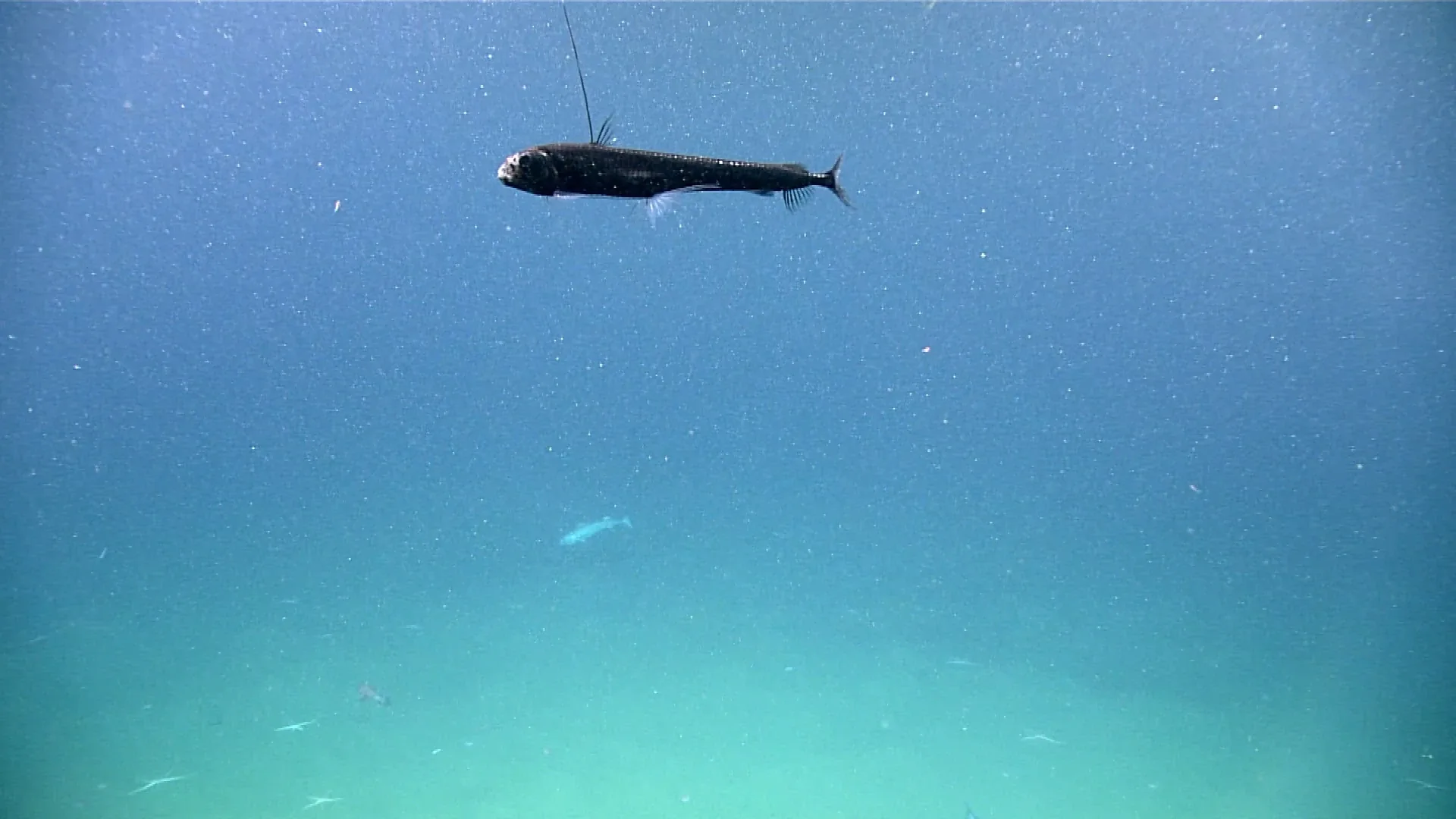
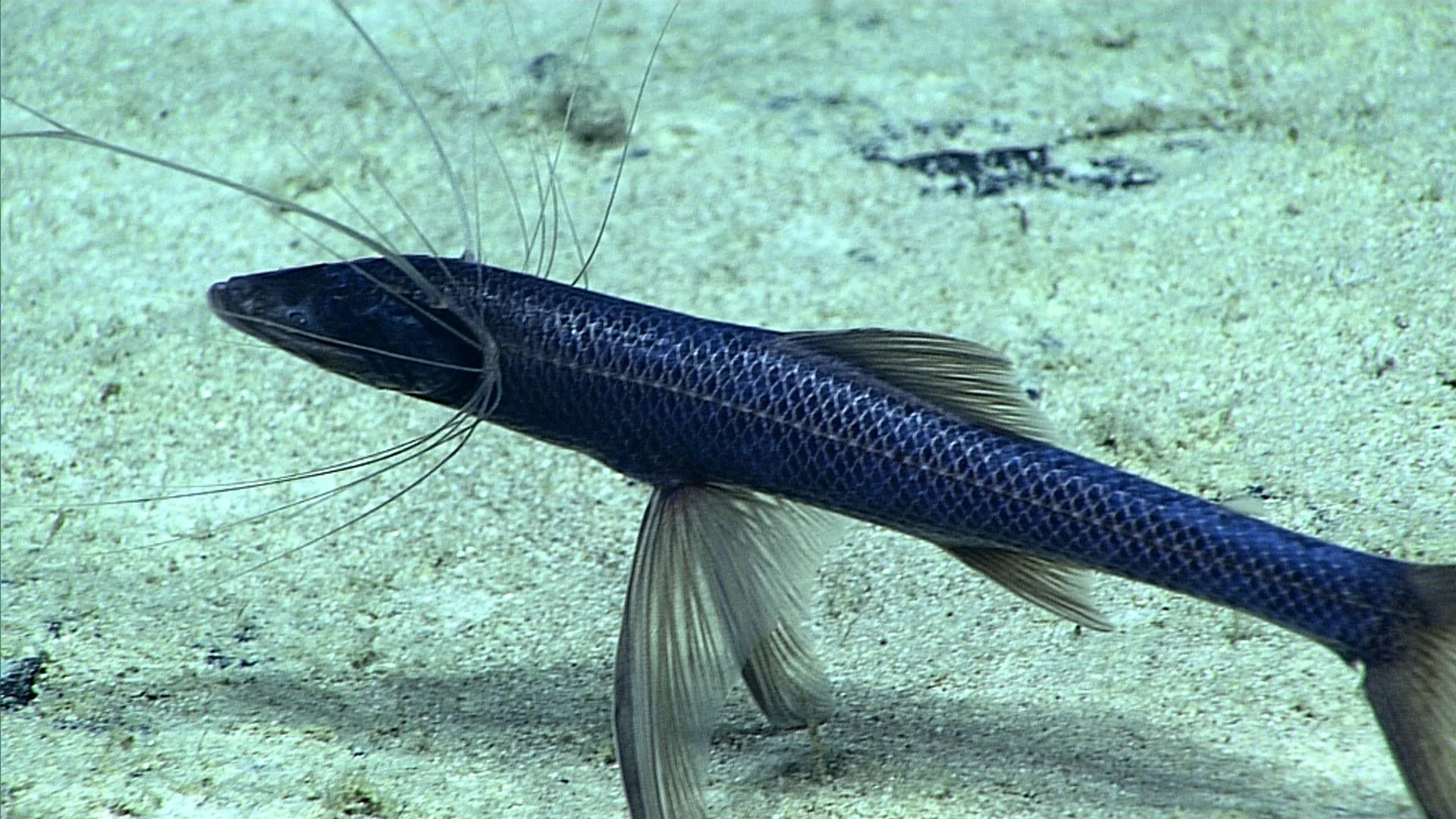
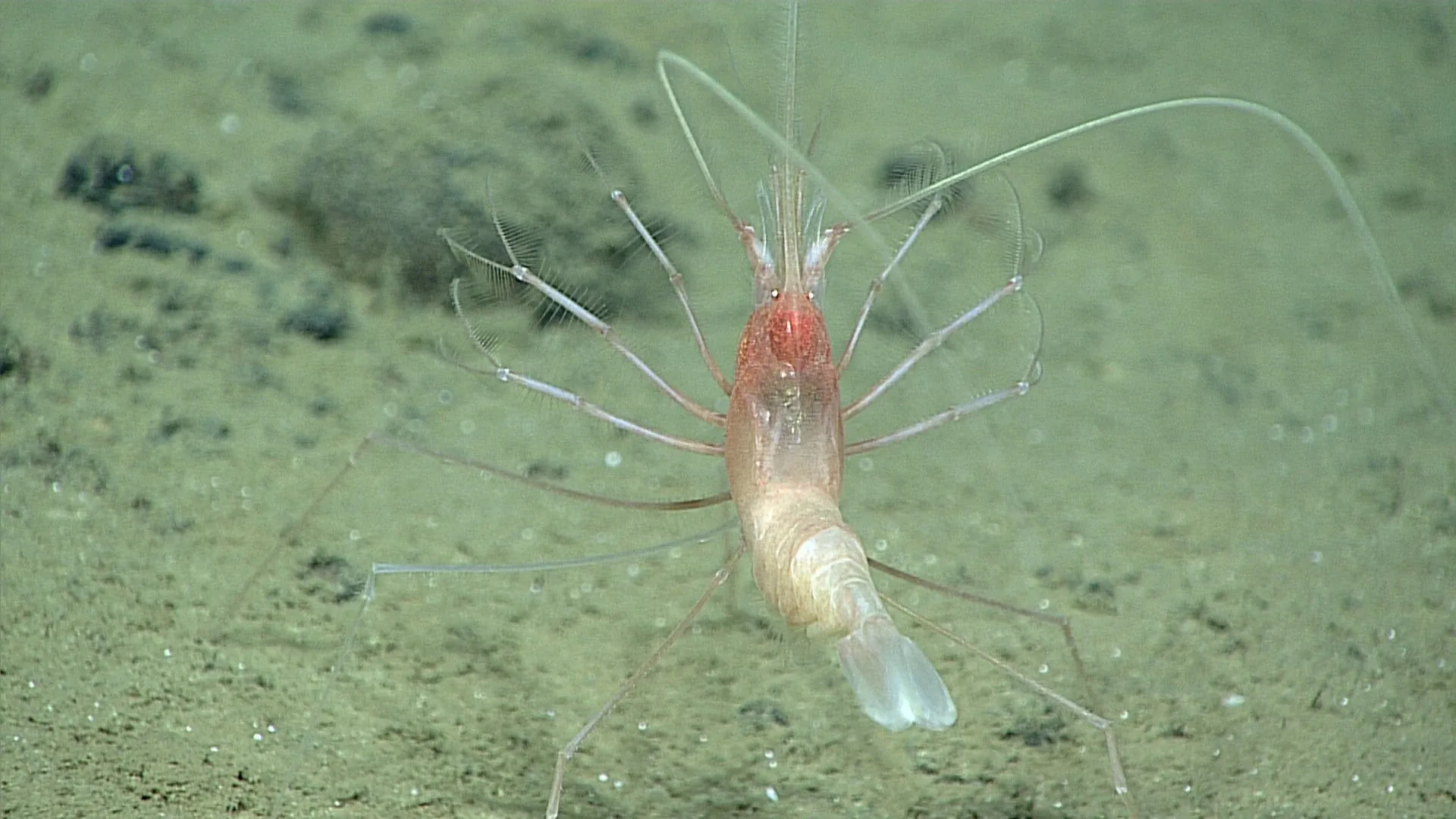
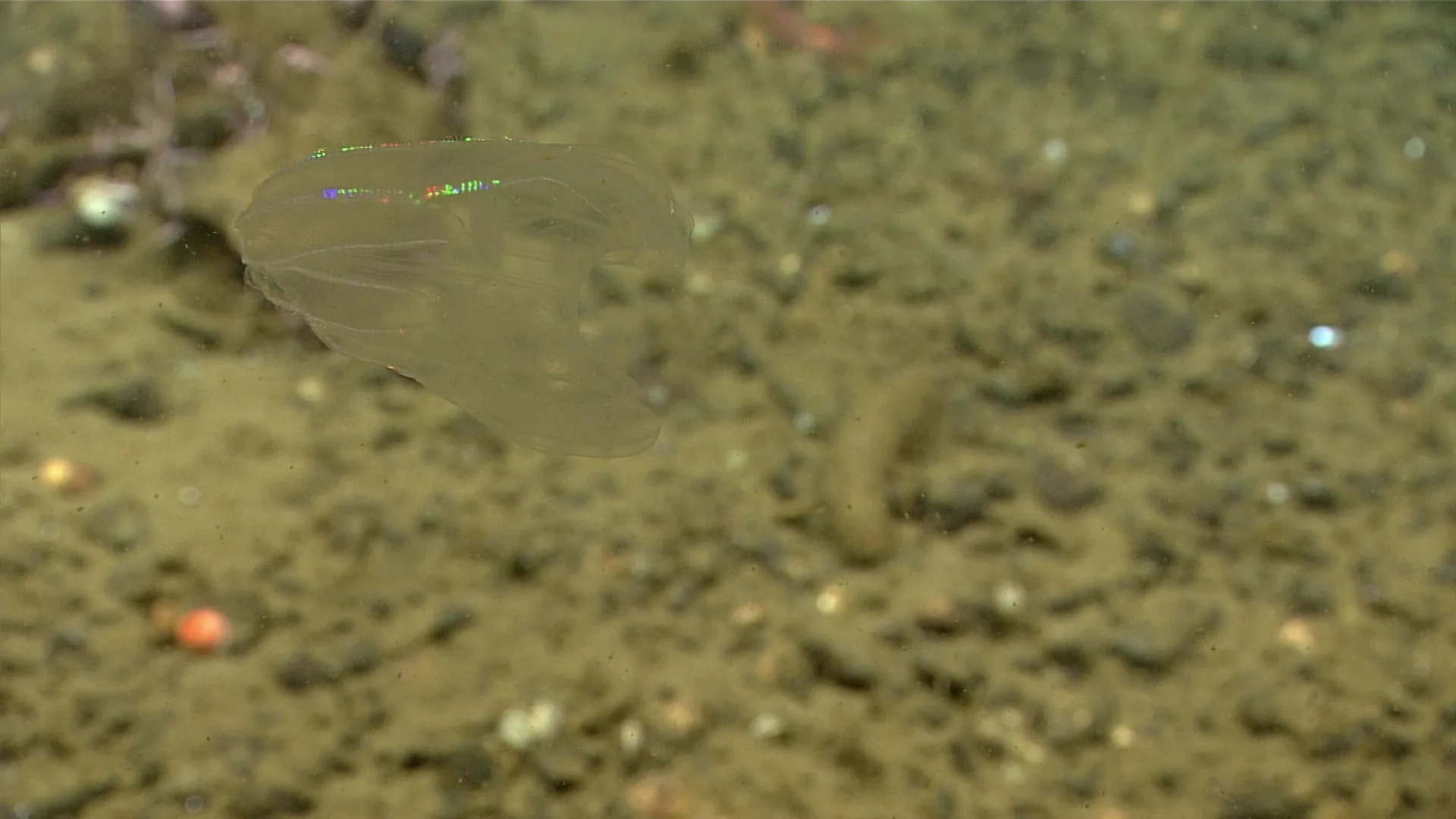
Fish, crustaceans, squid, gelatinous animals, and plankton can all participate in vertical movements, but not every member of those groups follows an identical pattern. A small crustacean may rise a few hundred meters; a fish may remain within one layer; a gelatinous predator may follow prey. Some species migrate in one direction while another community follows a different schedule.
For that reason, the term “deep scattering layer” describes an acoustic feature, while “diel vertical migration” describes a behavior observed in many organisms. The two concepts overlap but are not synonyms. A scattering layer can include non-migrating animals, and vertical migrants may not always form a sharply defined echo band.
How a dive sees a moving world
ROVs and other vehicles can visit different depths and record organisms in situ. Yet a remotely operated camera samples only a small slice of the water column, and its white lights can change the scene. A vehicle following a planned route may capture a migrant at one time of day but not reveal where it was several hours earlier. To describe movement, researchers need time series, tracking, acoustics, or repeated depth-resolved observations.