Article · Field note 42
A name starts as a claim
When a remotely operated vehicle captures an animal, the expedition team has to decide what it is. Some animals can be recognized from a clear view of diagnostic features. Others are too small, damaged, juvenile, or unfamiliar to identify beyond a broader group. A scientific name attached to an image is not just a label; it is a claim about which features and evidence support the identification.
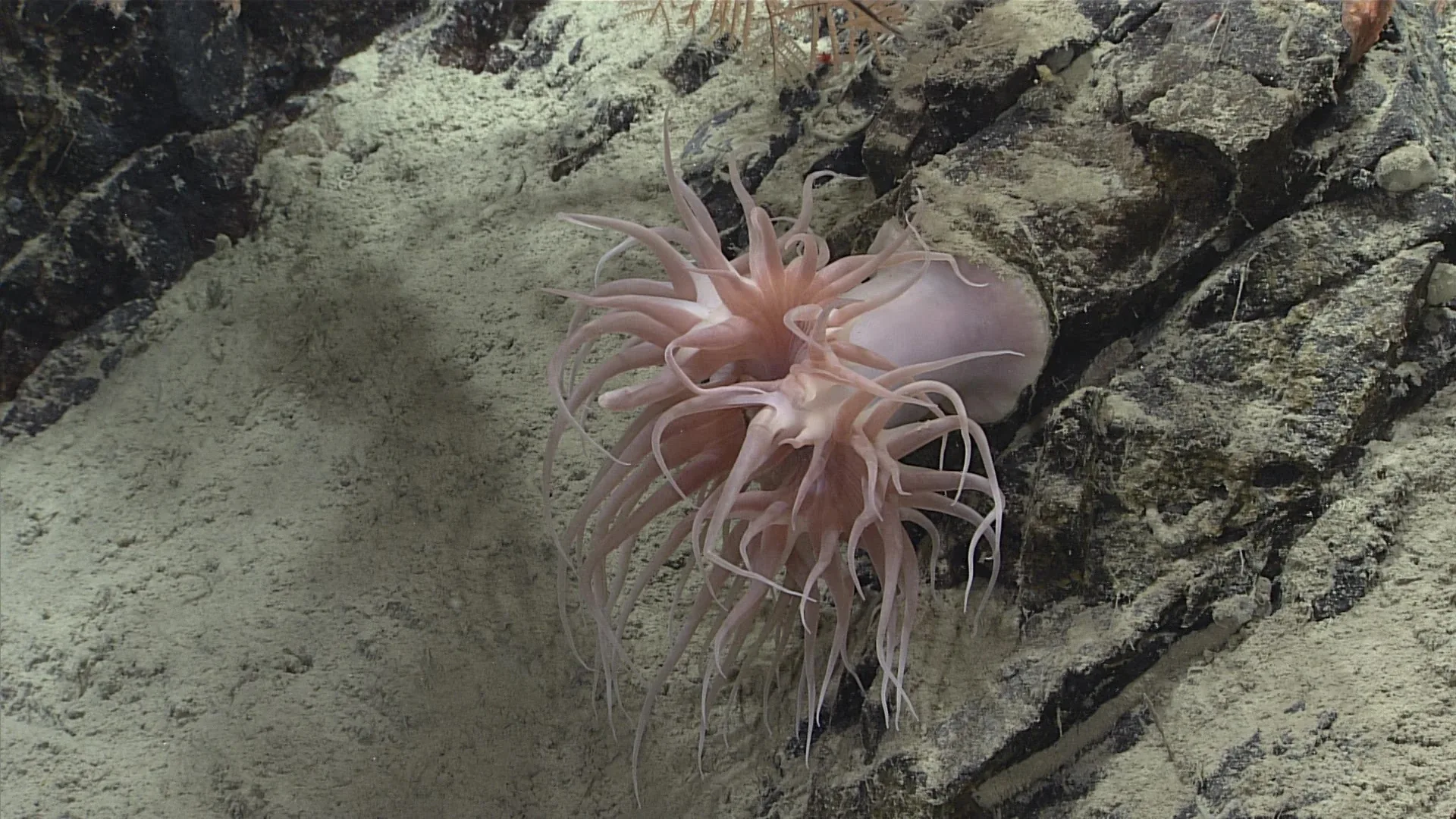
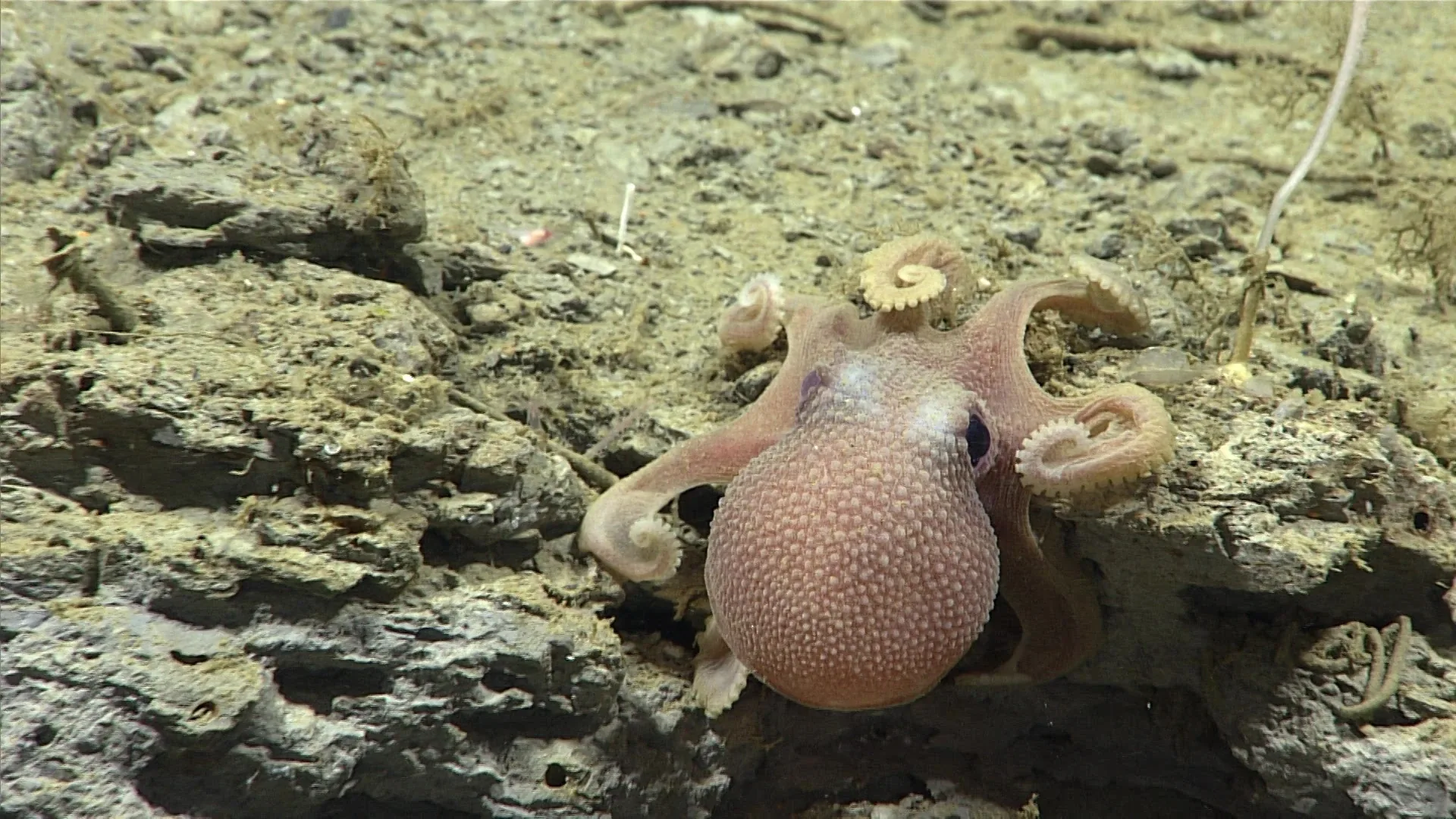
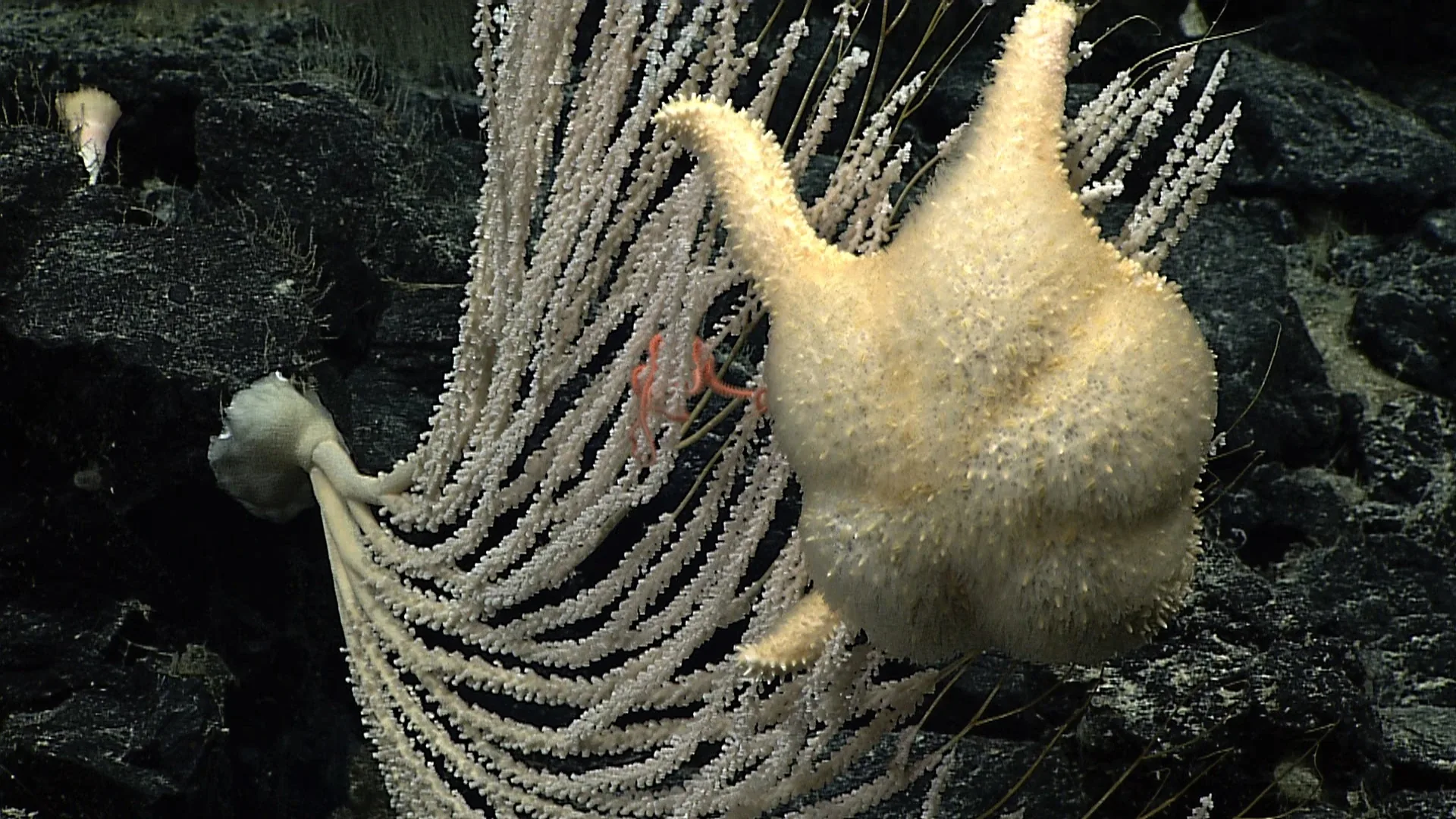
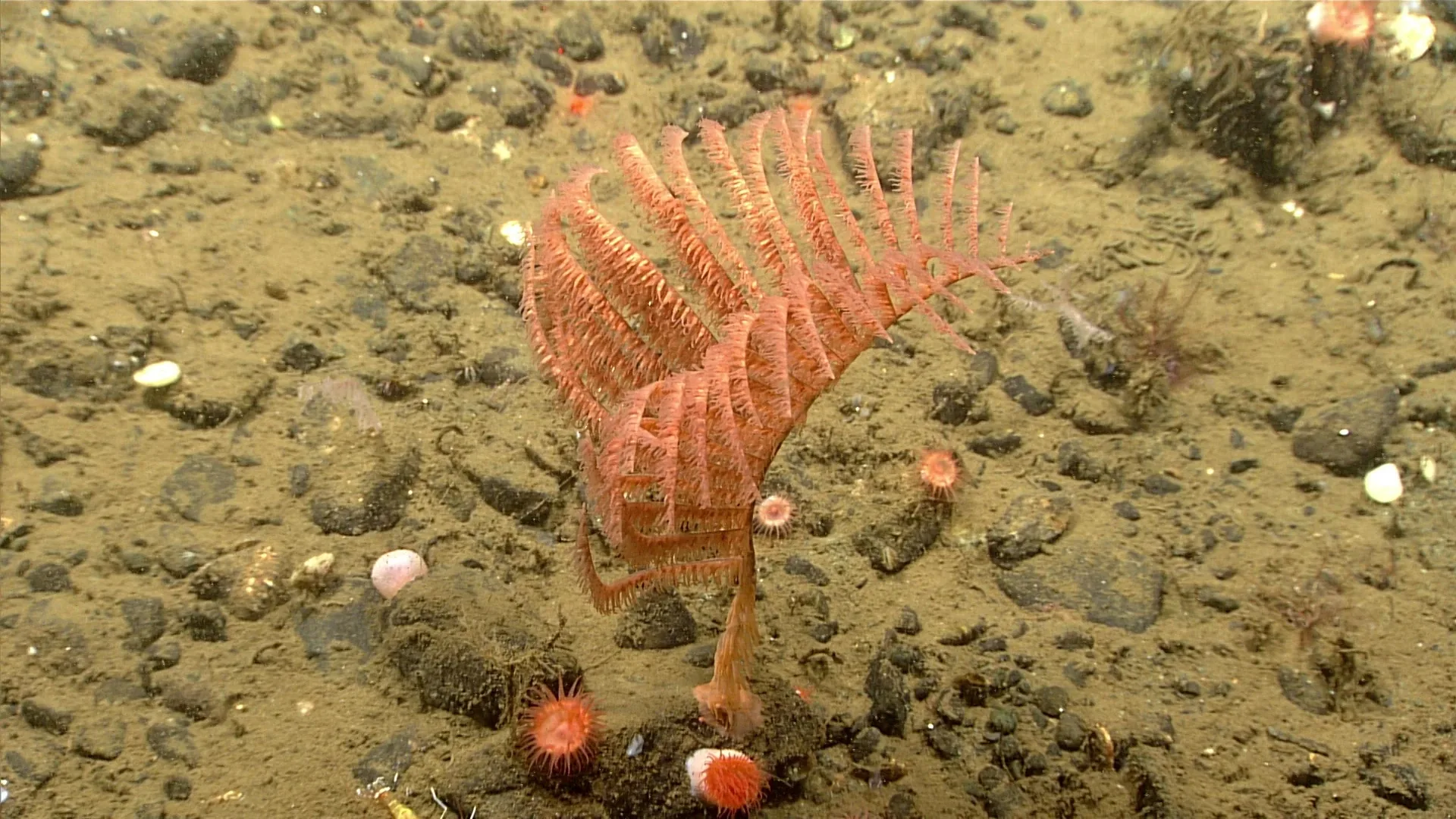
NOAA’s Benthic Deepwater Animal Identification Guide compiles in-situ images from Okeanos Explorer dives and organizes identifications according to World Register of Marine Species taxonomy. The guide can include a species name when specialists support it, but an image collection is not a universal taxonomic authority. Names may be revised as experts compare the image with specimens, descriptions, or genetic data.
What a camera frame shows—and hides
An identification can rely on body shape, appendages, color patterns, surface texture, symmetry, and visible structures. The camera angle and distance affect whether those traits can be seen. ROV lamps can change color; particles can obscure edges; the animal may be partly buried or turned away. A frame that looks clear to a casual viewer may lack the detail needed to distinguish two related species.
Some taxa have features that are diagnostic only after close examination. A fish may need counts of fin rays or scale patterns; a coral may require skeletal details; a sponge may need spicules examined under a microscope. In those cases, an image may justify a family or genus identification but not a species. That is why labels such as “cf.”, “sp.”, or “unidentified” can be more scientifically useful than a confident guess.
Age and life stage also matter. Juveniles may not yet display the adult traits used in field guides. Two species can share a similar juvenile form and diverge as they grow. An image record might therefore change after a specimen is compared with a known developmental series.
The taxonomic ladder
Taxonomy offers nested levels: phylum, class, order, family, genus, and species. If a dive annotation identifies an animal as a sea star but cannot determine its genus, the observation still contributes information. The correct level depends on what can be supported. A broader identification is not less valuable when it accurately describes the evidence.
Species names themselves can change. Researchers may discover that one named species contains several distinct lineages, or that two names refer to the same species. Online guides and databases should reflect revisions while preserving the historical label used at the time of observation. A record that keeps both the original identification and later correction remains traceable.
Experts compare records
Expedition scientists often watch a live video feed together. A specialist may notice a trait another observer misses; someone on shore can compare the frame with museum collections or regional records. This collaborative process can produce a provisional identification during a dive. Later review can refine it.
NOAA’s exploration workflow uses real-time science annotations and searchable dive records (annotation system overview). Time-stamped notes help locate an observation within long video files. This is important because an expedition may collect thousands of hours of footage. An annotation is an entry point for review, not a substitute for the video or specimen.
Taxonomic work benefits from voucher specimens: preserved examples that allow researchers to examine diagnostic features later. Genetic sequences can distinguish cryptic species, but they require a reliable reference database and careful sample handling. A sequence is not automatically a correct name; it is compared against a reference, and the quality of that reference matters. A specimen plus morphology and DNA can provide stronger evidence than any one source alone.
Confidence should be visible
An identification system can communicate confidence through named categories or notes. The exact terminology differs among expeditions. The important principle is to show when a determination is provisional, uncertain, or based only on a visual match. The source record should say what experts actually identified rather than making the article appear more precise than its evidence.
Confidence is not simply a percentage attached after the fact. It is grounded in which traits were visible, how distinctive they are, whether another species could look the same, and what independent evidence exists. A large, unobstructed animal with a distinctive pattern may be easier to identify than a small fragment of coral. A familiar taxon can still be misidentified if the image lacks key features.
The cost of a wrong name
Misidentification can spread. A distribution map may gain a false point; an ecological paper may attribute a behavior to the wrong species; a conservation assessment may overestimate or underestimate a range. This is why transparent uncertainty is useful. It allows future users to filter observations by confidence and prevents one uncertain frame from becoming established fact through repetition.
Images can help resolve disagreements. Researchers can revisit the original video, zoom in, check surrounding context, and compare with updated descriptions. If new evidence changes a name, the old label should not disappear without explanation; preserving the revision history helps others follow the reasoning.
A field name is not a final description
The name on a screen during an expedition may be a working identification. The final scientific description can require a specimen, a formal comparison with related species, measurements, and publication in a taxonomic venue. Not every interesting animal becomes a new species, and a new species is not established simply because no one recognizes an image.