Article · Field note 31
An uneven food budget
The deep ocean is often described as a place of scarce food. That is broadly useful, but it can mislead if it suggests that every animal survives by moving slowly or that food arrives at the same rate everywhere. Organic material from surface waters sinks, currents transport particles, animals migrate through the water column, and occasional carcasses create concentrated patches. A deep-sea food budget is therefore uneven in both space and time.
On a remote abyssal plain, small particles can be the most regular source of new organic matter. NOAA’s overview of marine life describes marine snow as material that drifts down from upper waters. Some reaches the bottom as particles; much is consumed or decomposed on the way. A carcass can deliver a different scale of food, attracting scavengers in a short-lived pulse. Near vents and seeps, chemical energy can support microbial production that is independent of fresh surface particles. These settings share darkness but not the same energy pathway.
The slow-metabolism shortcut
It is tempting to conclude that deep-sea animals simply have low metabolic rates because food is limited. Temperature, body size, activity, oxygen availability, and evolutionary history also influence metabolism. A major review of marine animal metabolism concluded that depth-related patterns vary among groups and that the familiar food-limitation explanation has not held up as a universal rule (review in Philosophical Transactions of the Royal Society B). Some species use energy at rates comparable to related shallower animals when their ecology demands it.
“Slow is a strategy” can describe particular animals, but it should not be a blanket profile for every deep-sea life form. A gelatinous animal may drift and filter; an active predator may swim to catch prey; a scavenger may move quickly toward an odor plume. The energy cost of locomotion is relevant, but an animal’s behavior and metabolism should be measured rather than inferred from depth alone.
Wait, search, or build a filter
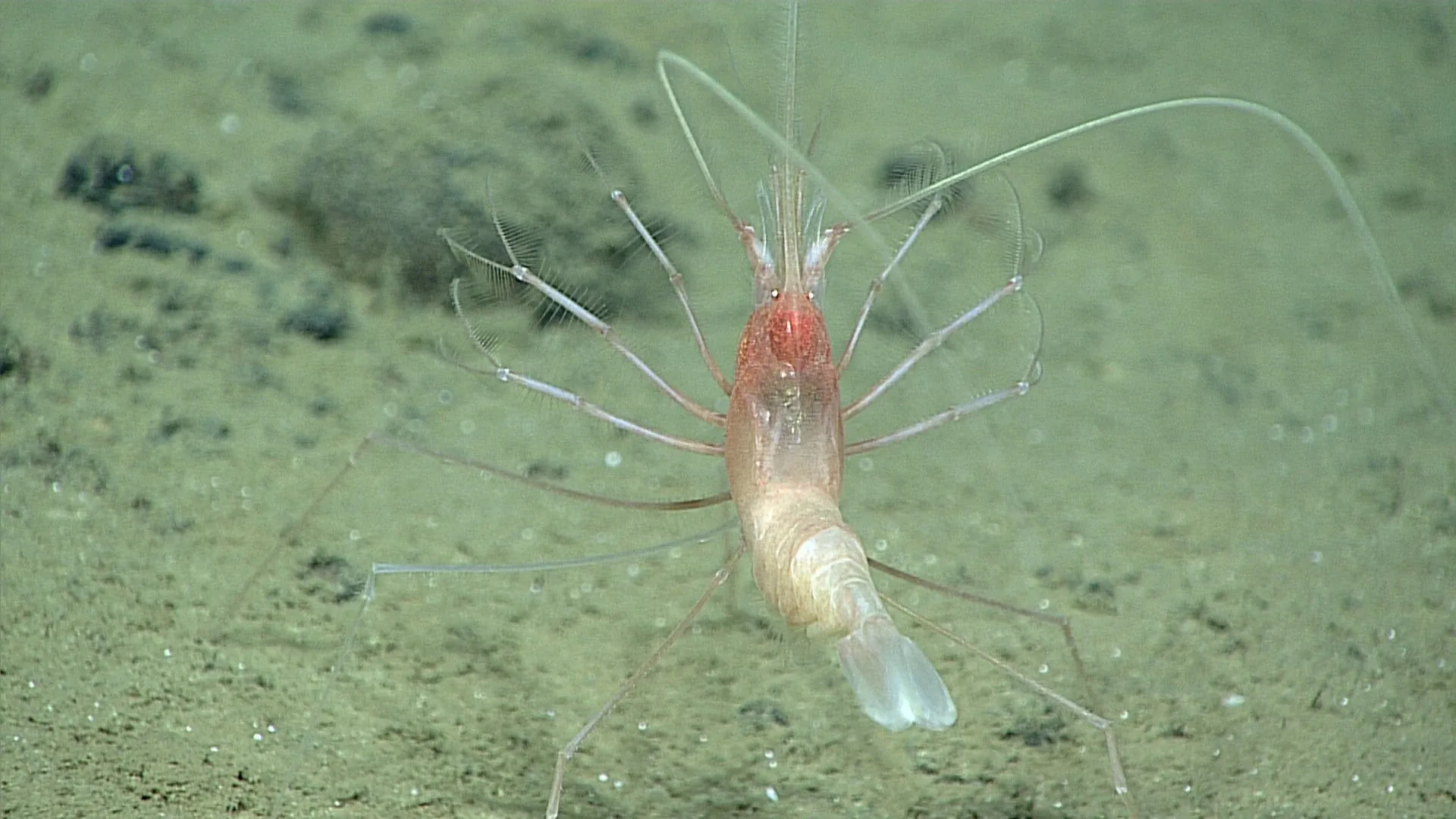
Animals encounter dispersed food in several ways. A sea cucumber may ingest sediment containing organic material. A coral or sponge can intercept particles carried by a current. A predator may wait near a feature where prey pass, then strike. A mobile scavenger may follow dissolved chemicals released by carrion. Those behaviors differ because an animal’s body plan and sensory systems fit different types of food.
In a particle-rich current, a filter feeder can gain access to a moving supply without chasing individual prey. But the current also determines which particles reach the animal, and the organism must process water or mucus at a cost. A coral colony extending into flow may feed differently from one tucked behind a rock. Such differences mean that habitat geometry can shape the effective food budget even for animals living at the same depth.
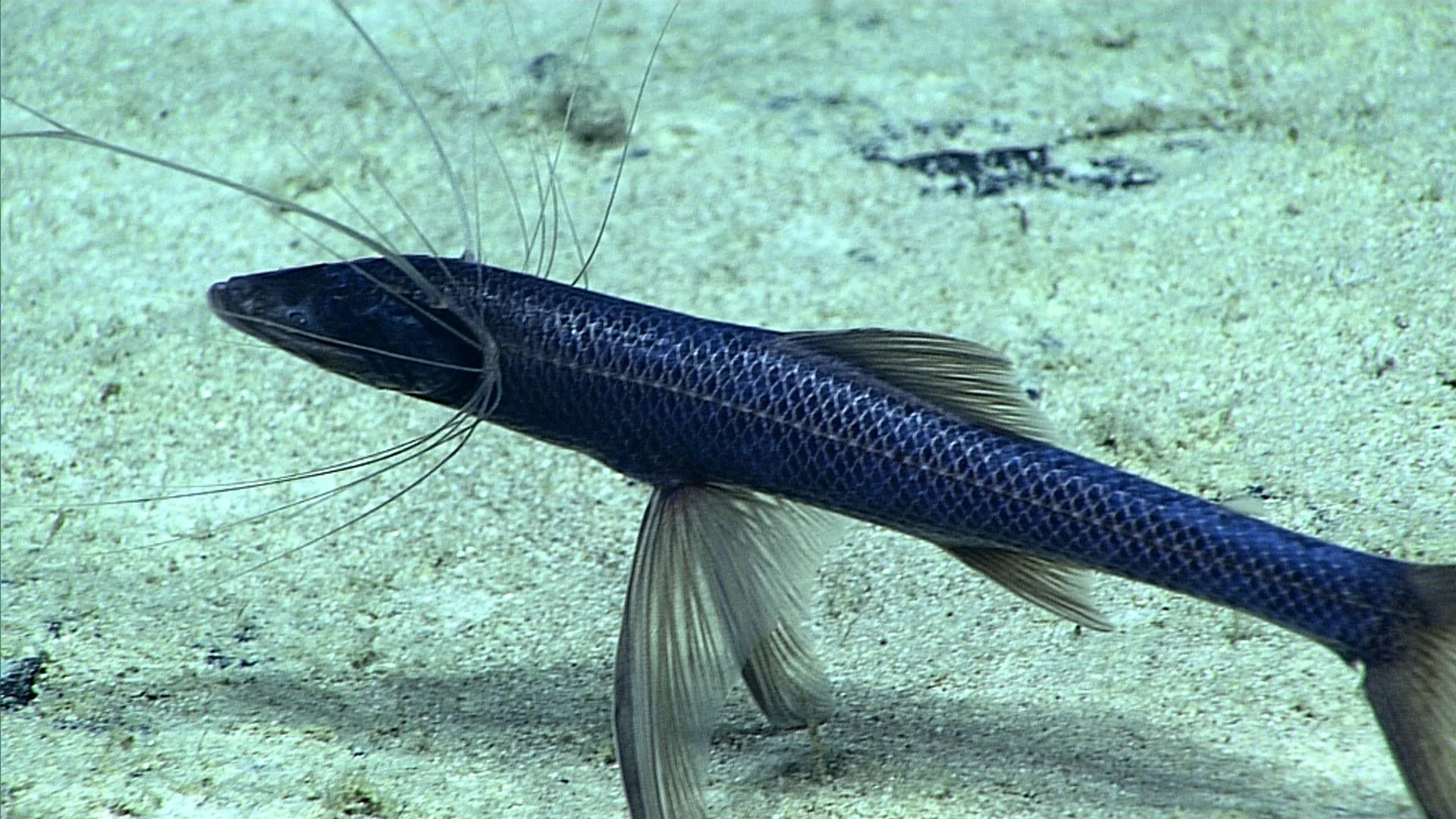
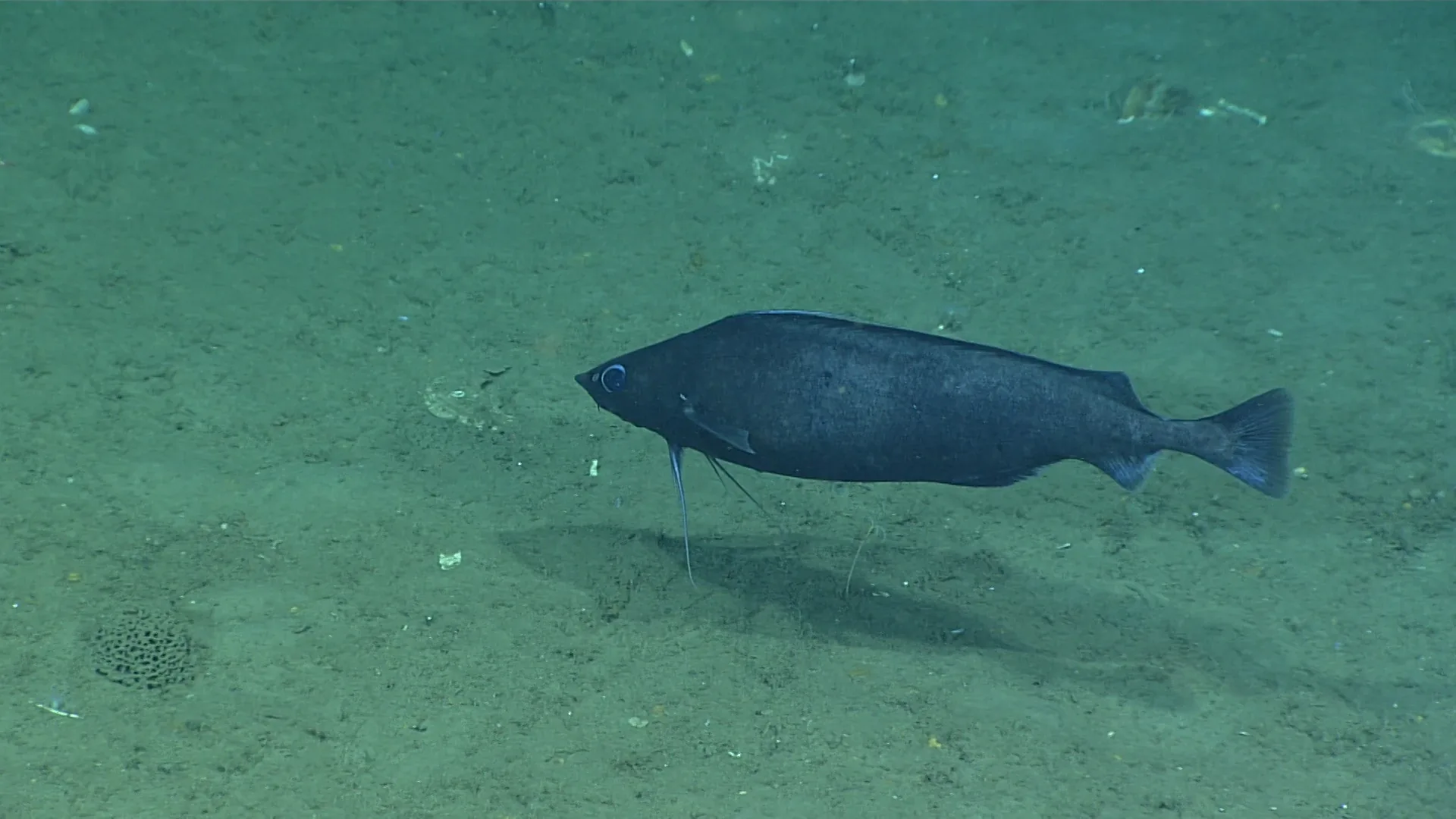
Scavenging turns a rare event into a temporary gathering. Experimental deployments show how quickly some fish and amphipods arrive at carrion and how the community can change as the bait is consumed. In one abyssal whale-carcass study, grenadiers and amphipods arrived early, while other species appeared later (time-lapse observations). The sequence depended on the carcass, location, and study conditions, not on a universal timetable.
Surface migrations connect habitats
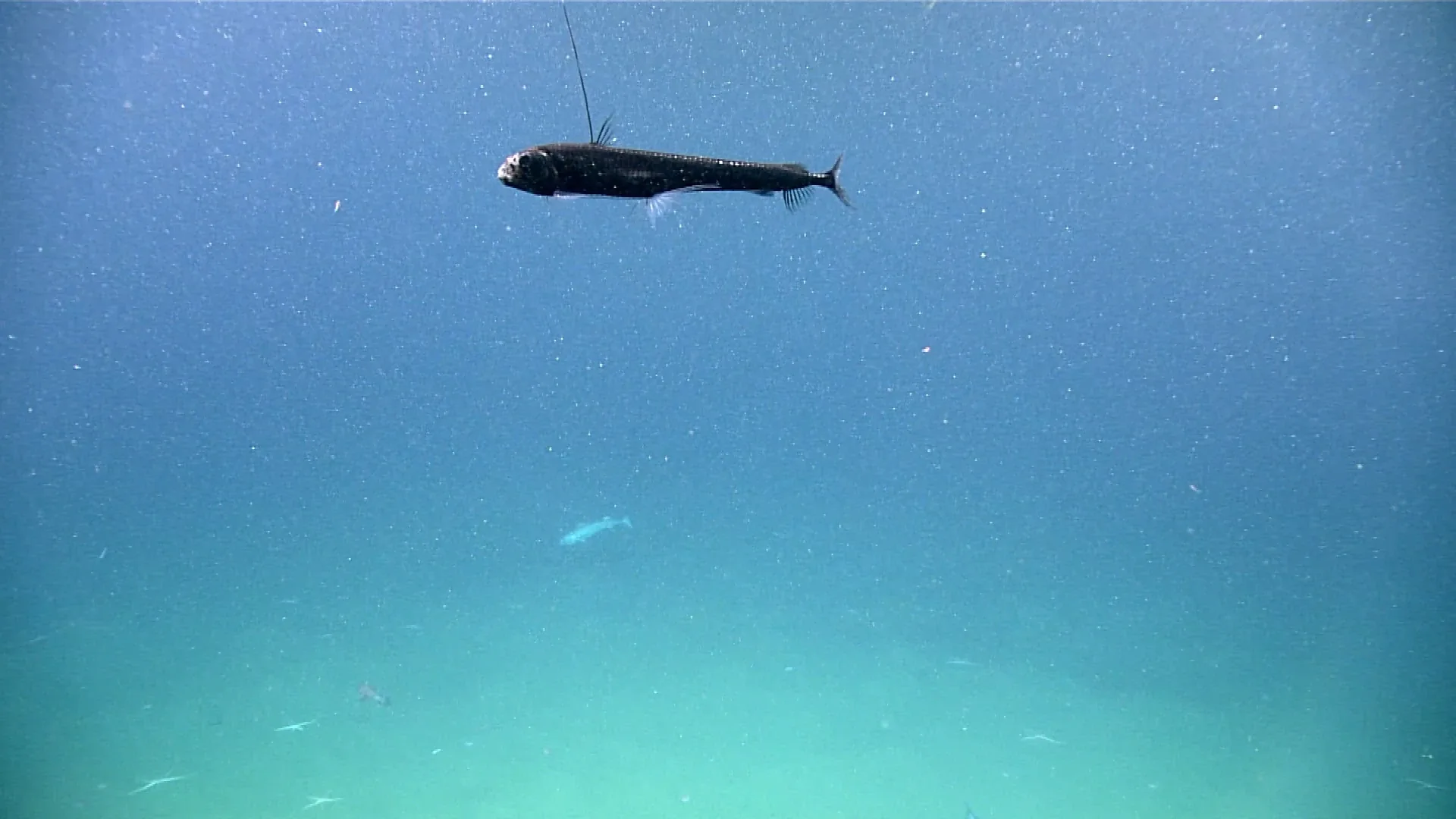
Many midwater animals move vertically over the day. A fish or crustacean may spend daylight at depth and rise toward food in the upper ocean at night, then return downward. This daily vertical migration can make a depth range a temporary feeding route rather than a permanent home. It can also transport organic carbon as animals feed at one depth and respire or excrete at another.
The amount of biomass involved is hard to measure. Acoustic instruments detect layers that scatter sound; nets, optical instruments, and cameras sample parts of the community. Each method has biases. The NOAA deep-scattering-layer explainer explains that many organisms in these layers undergo diel vertical migration. It does not imply that every species moves, or that one acoustic layer contains only one kind of animal.
A feast can alter the local ecology
Food falls change the conditions around them. A whale carcass, a dead fish, or a mass of jellyfish can attract mobile scavengers, feed microbes, and later support animals adapted to particular chemical stages. The duration and succession depend on carcass size, depth, currents, and the organisms present. A camera experiment may show a vivid local event, yet it still cannot measure how often food falls occur across an entire basin.
Resource strategies have tradeoffs
An animal that waits can spend less energy moving, but it may wait a long time. A fast swimmer can search more water, but movement costs energy. A filter feeder can capture many small particles, but it depends on currents and enough flow. A scavenger can exploit a large meal, but cannot schedule when carrion will arrive. No single strategy eliminates uncertainty.
These tradeoffs help explain why deep-sea communities include both low-activity forms and active animals. The setting determines which strategy can pay off. An organism that lives in the open water column faces different prey and flow from one embedded in sediment. Even within the same region, two species may divide habitat by depth, substrate, or food size.