Article · Field note 49
The gear touches more than the target fish
Bottom trawling uses a net towed along or close to the seafloor. The gear is designed to catch fish and invertebrates, but contact with the bottom can also disturb sediment, break fragile organisms, or displace animals. The effect depends on gear design, substrate, towing intensity, and habitat. A sandy bottom and a coral garden do not respond in the same way.
NOAA Fisheries describes deep-sea corals as slow-growing structure that can be damaged by bottom trawls, and notes that lost branches may take a long time to replace (NOAA deep-sea coral habitat page). Sponges can also be affected. NOAA observations in Alaska found direct removal, displacement, and tissue damage to large erect sponges in trawled areas compared with reference areas (NOAA study overview). These are documented effects on particular habitats, not a claim that every trawl has the same footprint.
Structure is built slowly
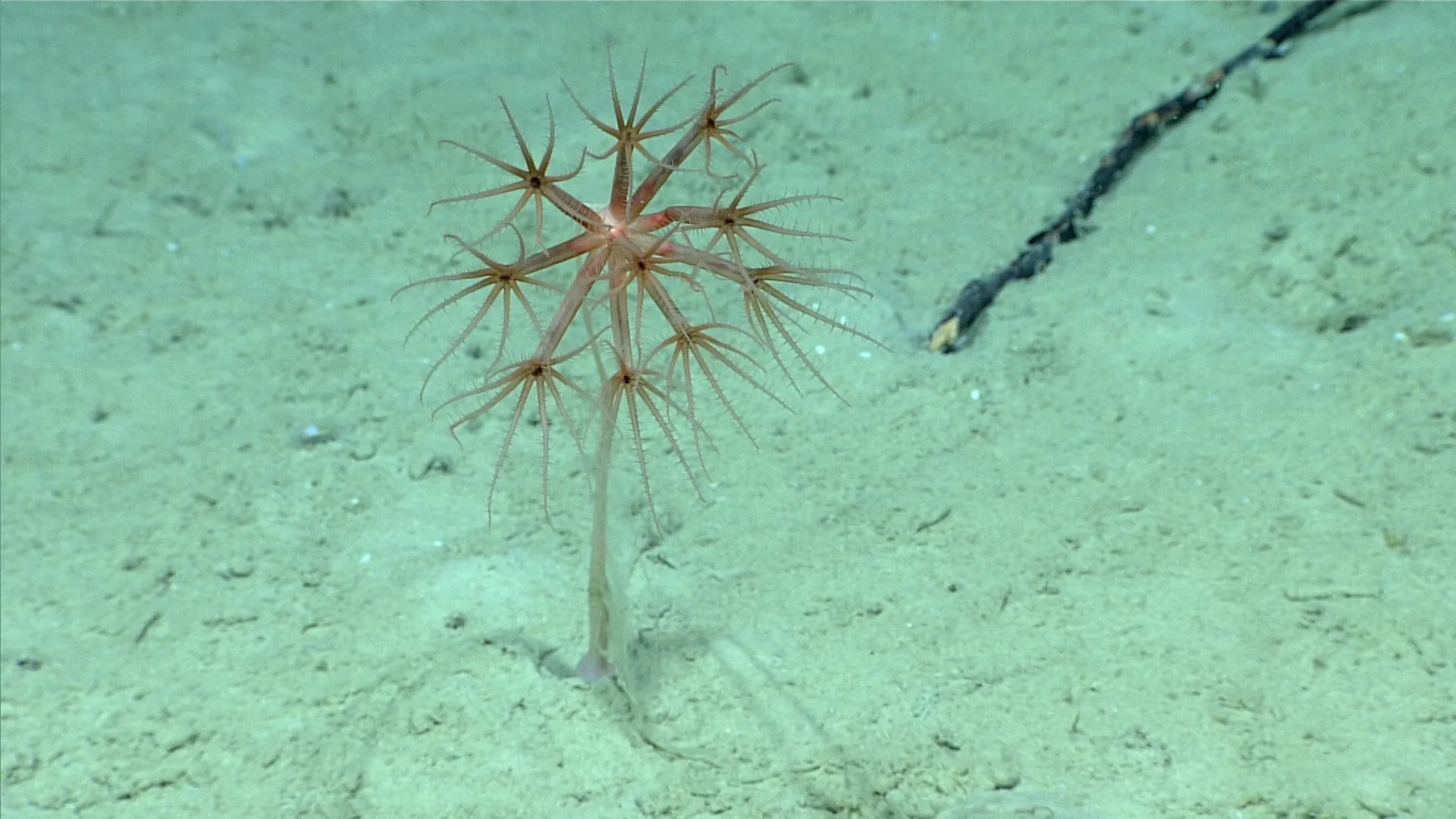
Many deep-water corals grow a few millimeters per year, though growth varies with species and conditions. A branching colony may take a long time to create three-dimensional structure. A trawl can damage that structure in a single pass. The difference between the pace of disturbance and the pace of rebuilding is central to the concern.
Long-term surveys of precious corals on seamounts in the Northwestern Hawaiian Islands and Emperor Seamount Chain compared still-fished, historically trawled, and never-trawled areas. The researchers found evidence of slow recovery at some protected sites over decades and ongoing difficulty recovering where fishing continued (study archived by NOAA). The results relate to the species and locations studied; they do not establish a universal recovery time for every deep-sea coral.
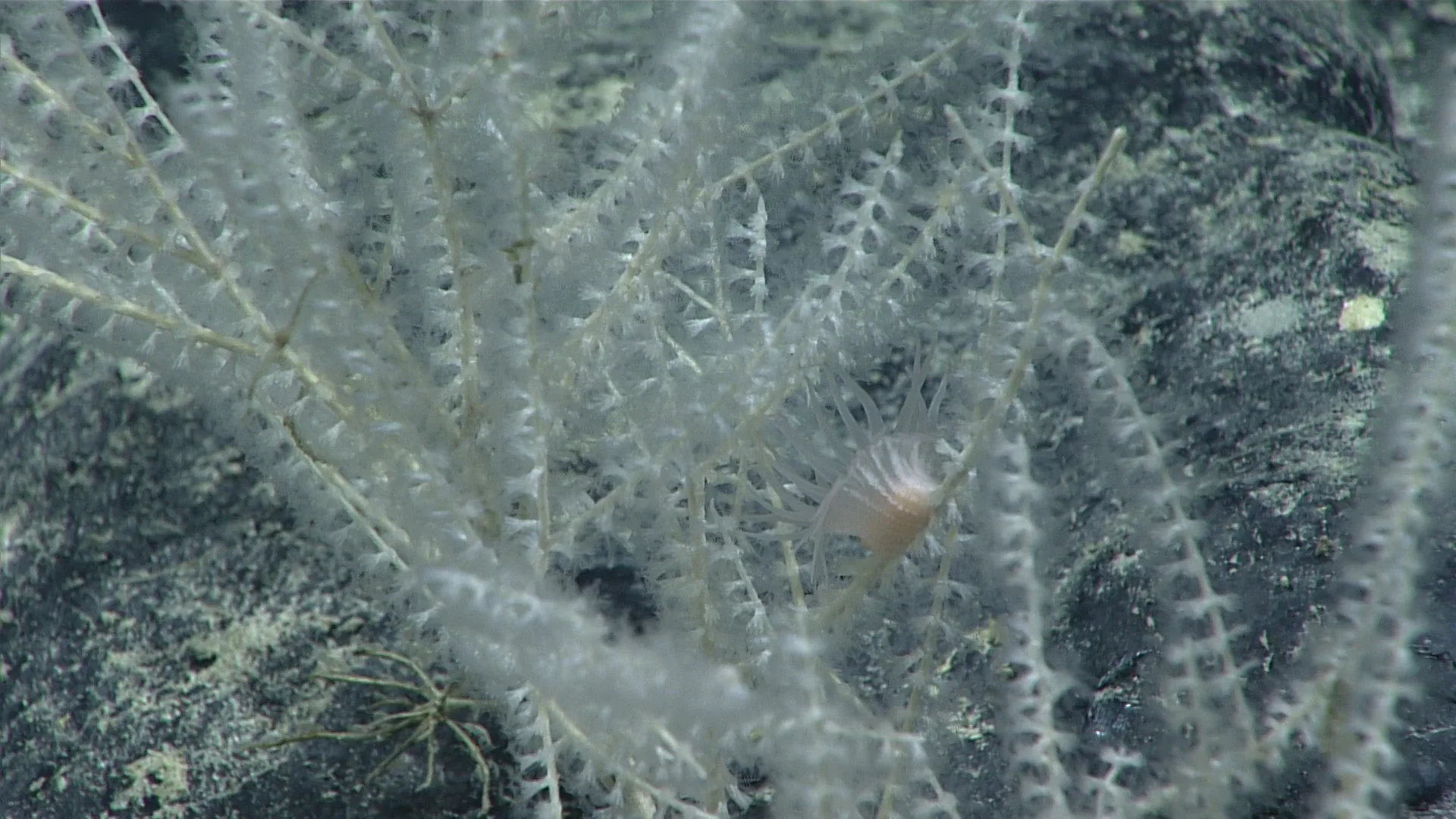
The habitat is not only the coral skeleton. Branches can provide attachment points, refuges, and surfaces for feeding. Sponges filter water and add shape to the seafloor. Small invertebrates may use the colony itself. When a structure is removed or broken, the effects can extend to organisms that were not the target of fishing.
A trawl mark is not the whole impact
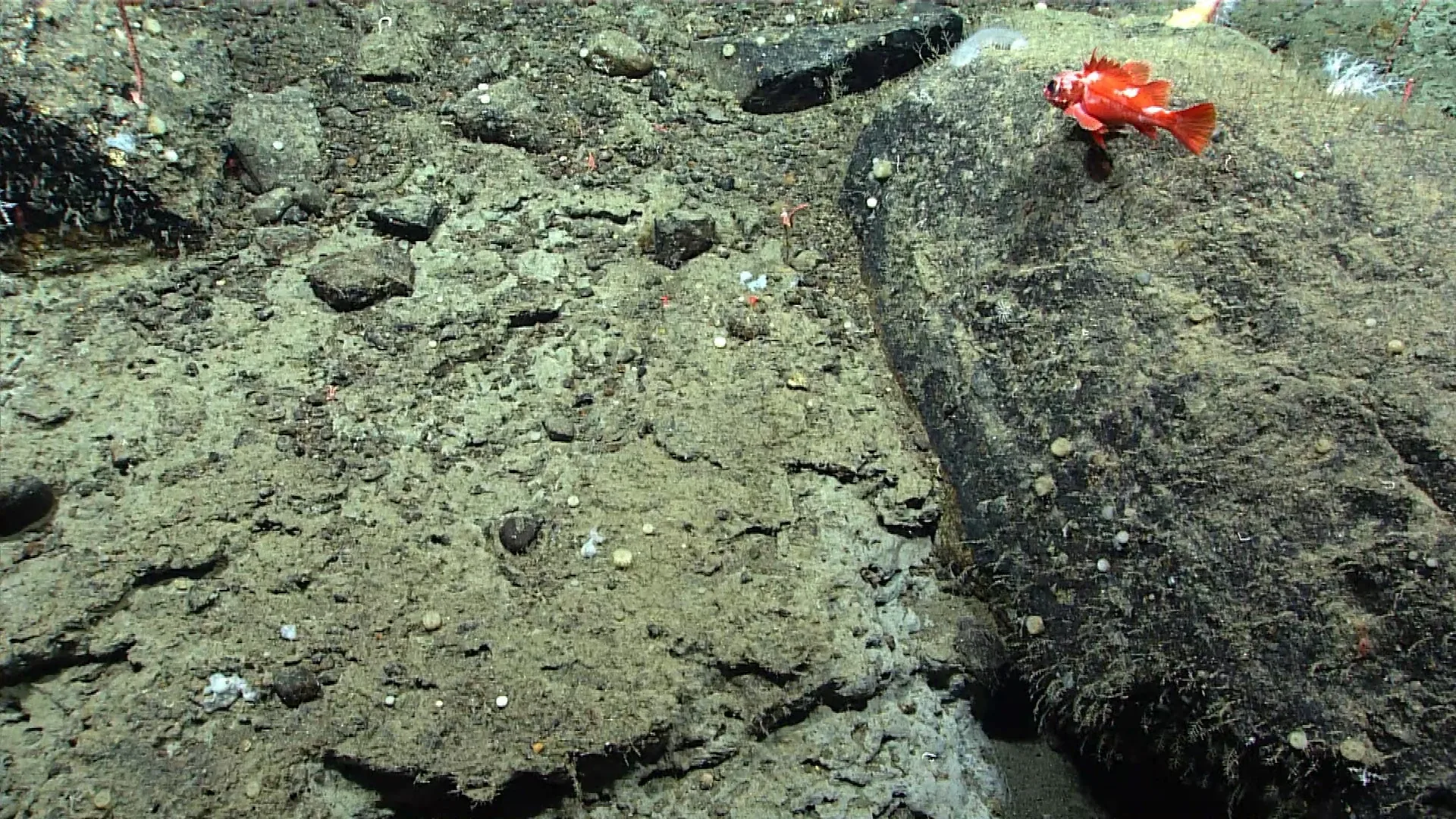
Researchers can identify scars, broken colonies, sediment tracks, and displaced sponges in imagery. Those visible effects are important, but they do not account for every response. A coral may survive with tissue damage; a sponge may be removed; small organisms may be buried; currents may redistribute sediment. The footprint depends on depth, terrain, and the gear’s path.
Repeated imagery can measure change over time. NOAA-supported work has documented recovery signs on some seamounts after fishing restrictions, while other areas continue to experience fishing and show little evidence of recovery. A time series lets researchers distinguish an immediate impact from long-term change. It also reveals that recovery can be partial: some animals return without recreating the original structure or species composition.
There may be several disturbances at once. Fishing pressure can interact with warming, oxygen changes, or ocean chemistry. If a coral already experiences environmental stress, rebuilding after physical damage may be more difficult. NOAA research on Alaskan corals reports that warmer conditions can reduce growth in one studied species, which may affect its ability to recover (NOAA Fisheries feature). That result should be applied to its study context, not extrapolated to every coral species.
What management can measure
Managers can map known vulnerable habitats, restrict bottom-contact gear in selected areas, or require spatial reporting and monitoring. Mapping is a prerequisite but not a guarantee that all habitat is known. ROV and AUV surveys identify coral and sponge grounds; acoustic data locate terrain; fishery records show where gear has been used. Overlaying the data helps locate overlap, but coverage and resolution vary.
NOAA’s coral and sponge maps include confirmed observations and modeled habitat suitability. A suitable area is a reason to investigate, not proof of a coral garden; a blank area may reflect missing surveys. Management plans need uncertainty layers so users do not confuse the absence of data with evidence of no habitat.
Recovery has several meanings
After a disturbance, mobile animals can recolonize sooner than long-lived corals and sponges rebuild structure. A survey that counts only mobile fauna might suggest a return while the habitat remains physically altered. Researchers should measure colony density, size distribution, species composition, and structural complexity when those are the restoration goals.
Even protected areas may not recover quickly. Currents can transport larvae and fragments from neighboring grounds, but connectivity differs by species and geography. Some colonies may persist in nearby refuges; others may have no source population close enough to reseed damaged terrain. Understanding connectivity can guide the size and placement of protected zones.
The fishing path through a coral garden
The most direct way to understand gear impact is to compare areas before and after fishing or to use matched reference sites. Scientists may photograph a transect, measure coral condition, and document gear marks. A decades-long seamount study shows why that time horizon matters: some signs of recovery only become visible after many years, and active fishing can prevent a comparable rebound.
It is important to distinguish bottom trawling from every other fishery. Longlines, traps, and pots have different gear footprints, though they can still interact with habitat. A trawl is not simply any fishing activity near the bottom. Precision about gear avoids attributing one method’s impact to another.