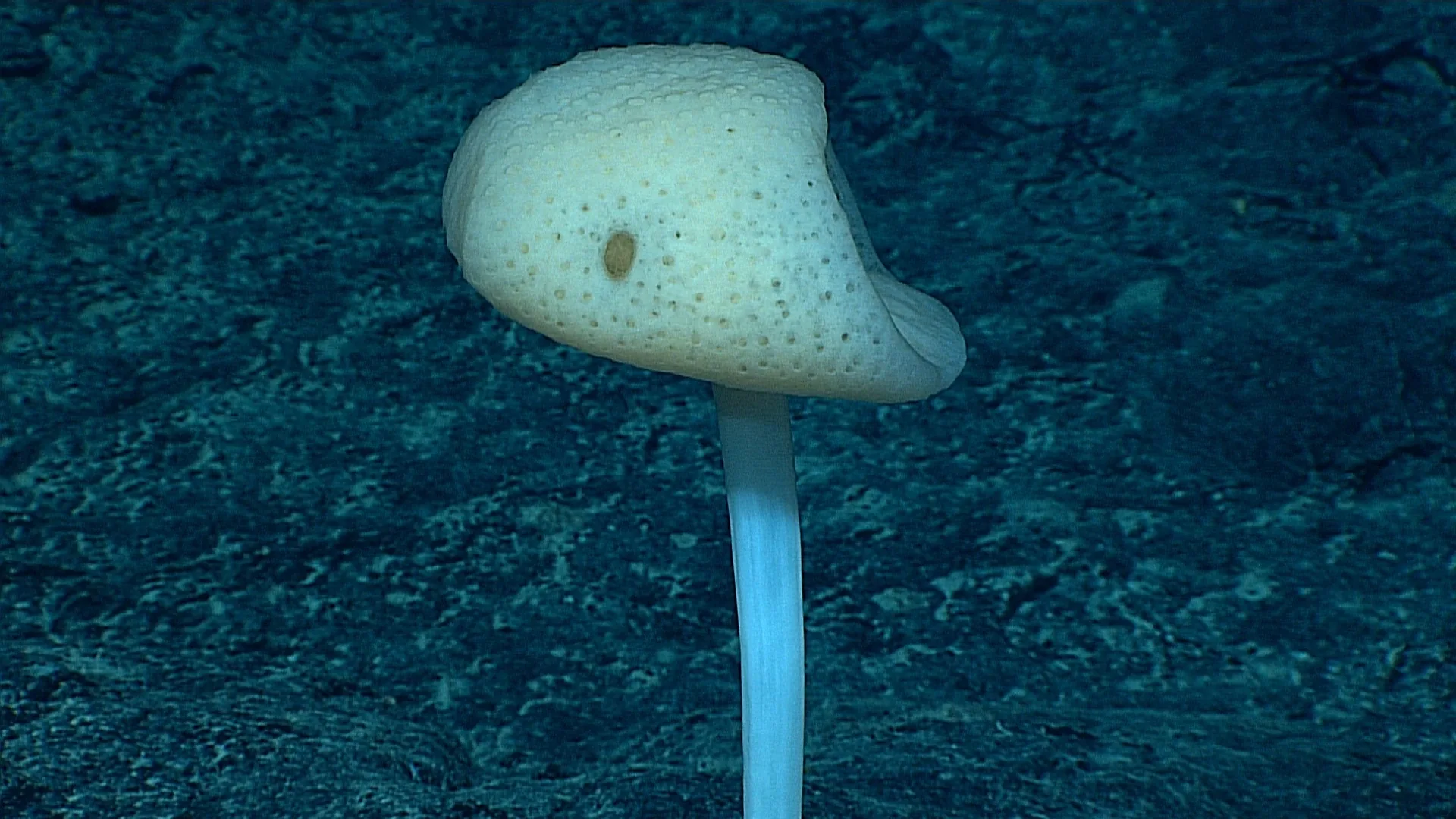
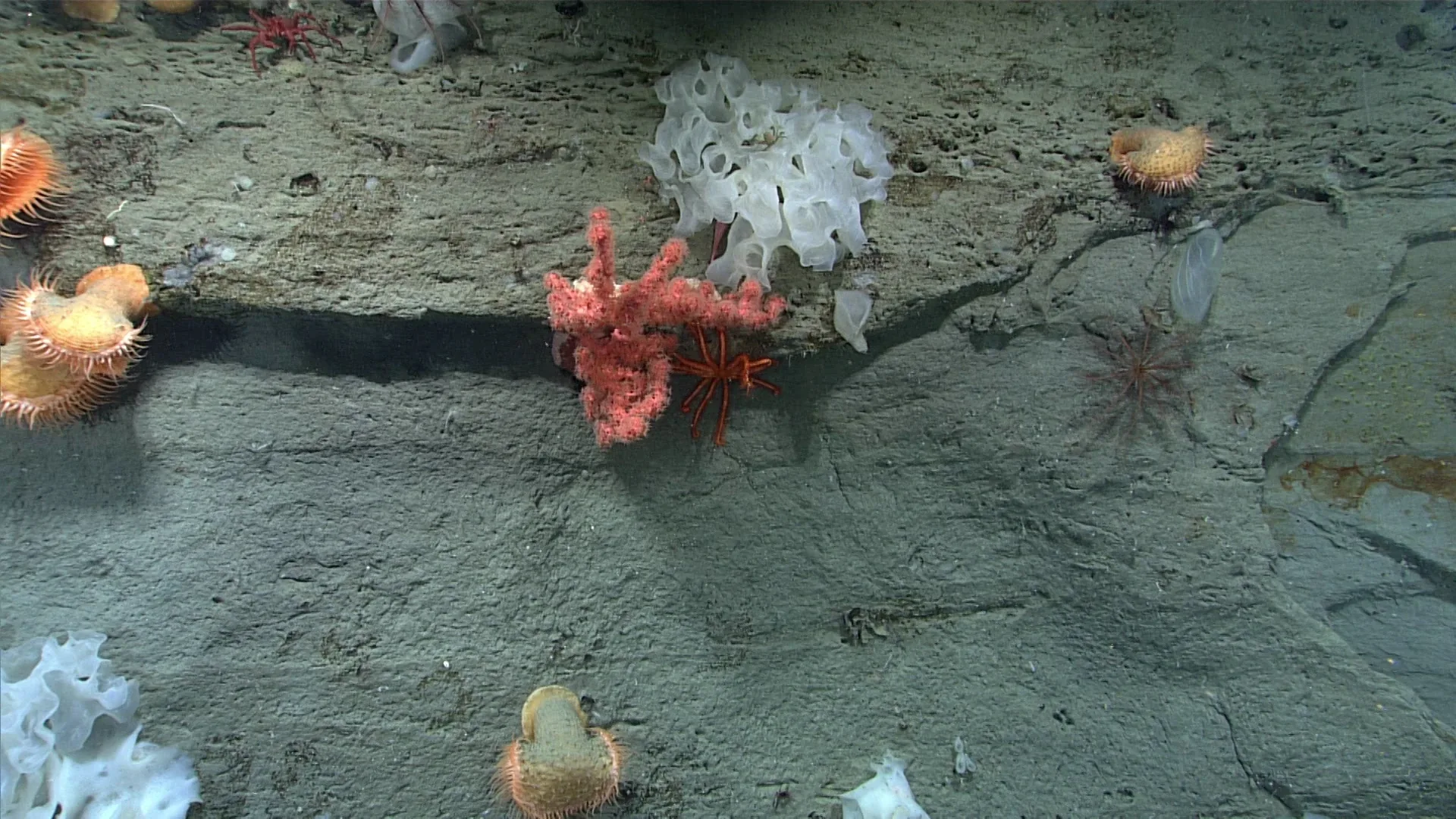
A glass sponge’s nickname is memorable. Its scientific story is more useful: repeated observations, a collected specimen, and a description that made the name testable.
A glass sponge’s nickname is memorable. Its scientific story is more useful: repeated observations, a collected specimen, and a description that made the name testable.
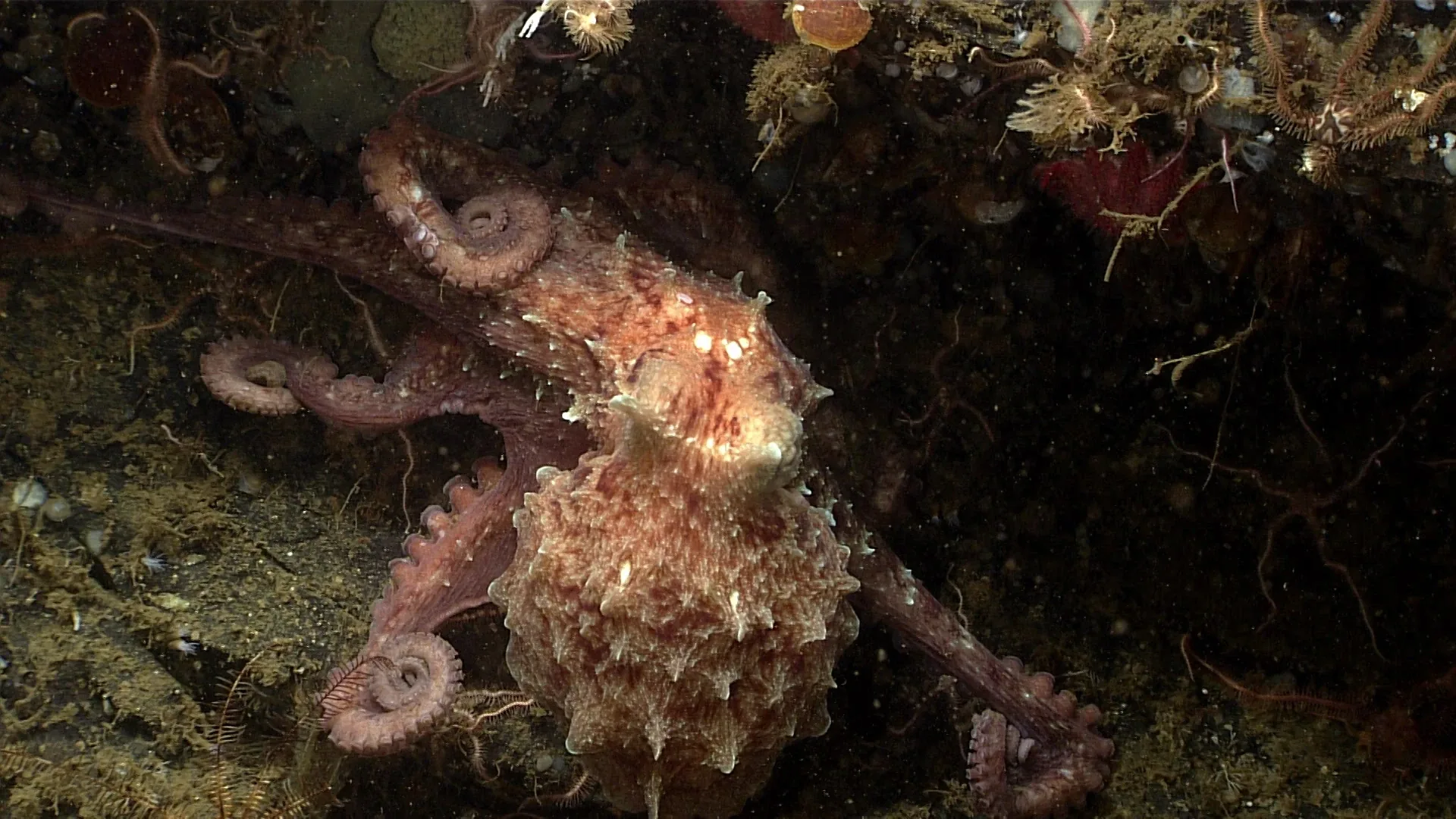
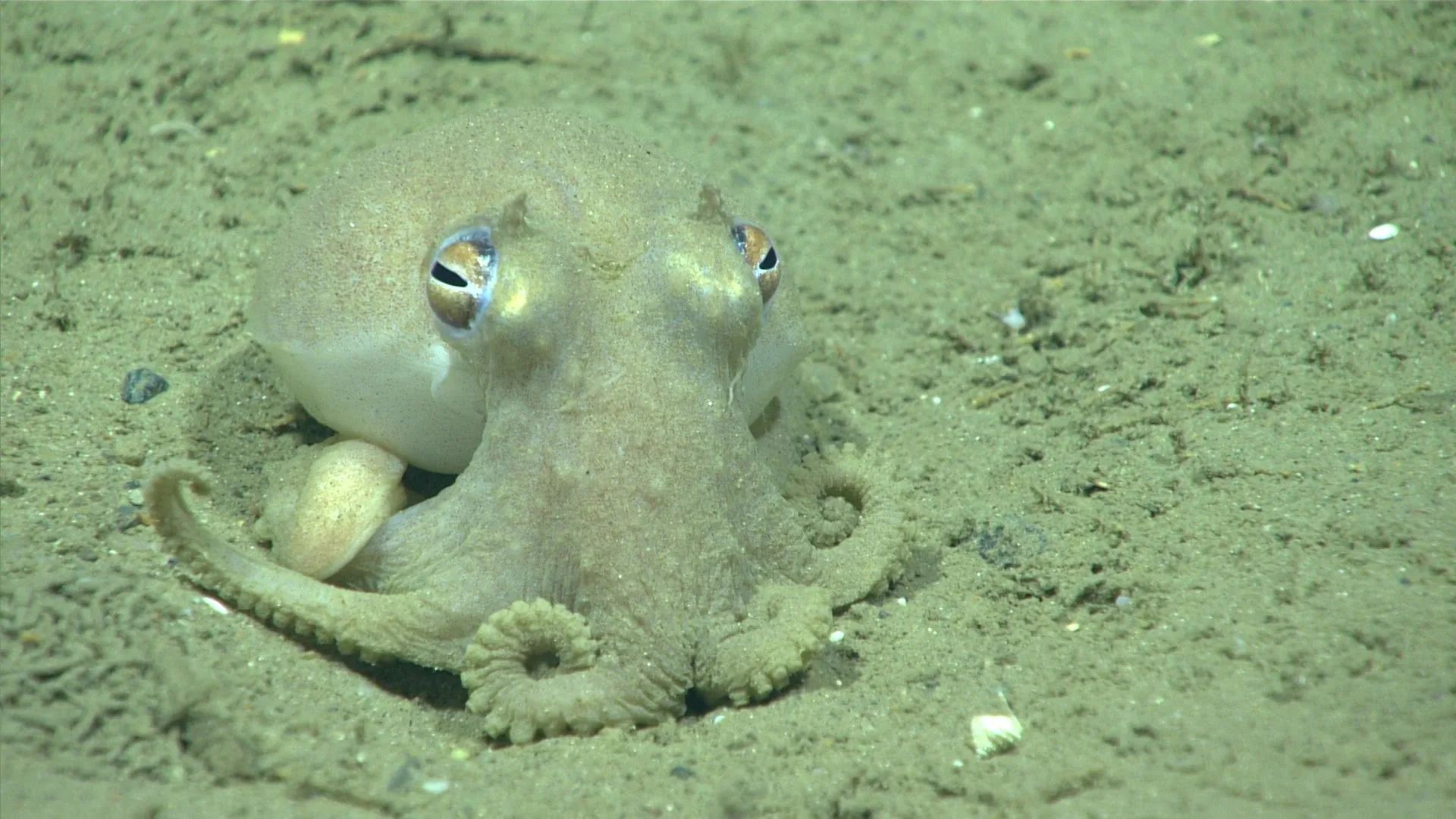
A familiar Pacific octopus can occupy a much larger depth range than a shore-side encounter suggests. Here is how to separate its well-known coastal life from a deep observation.
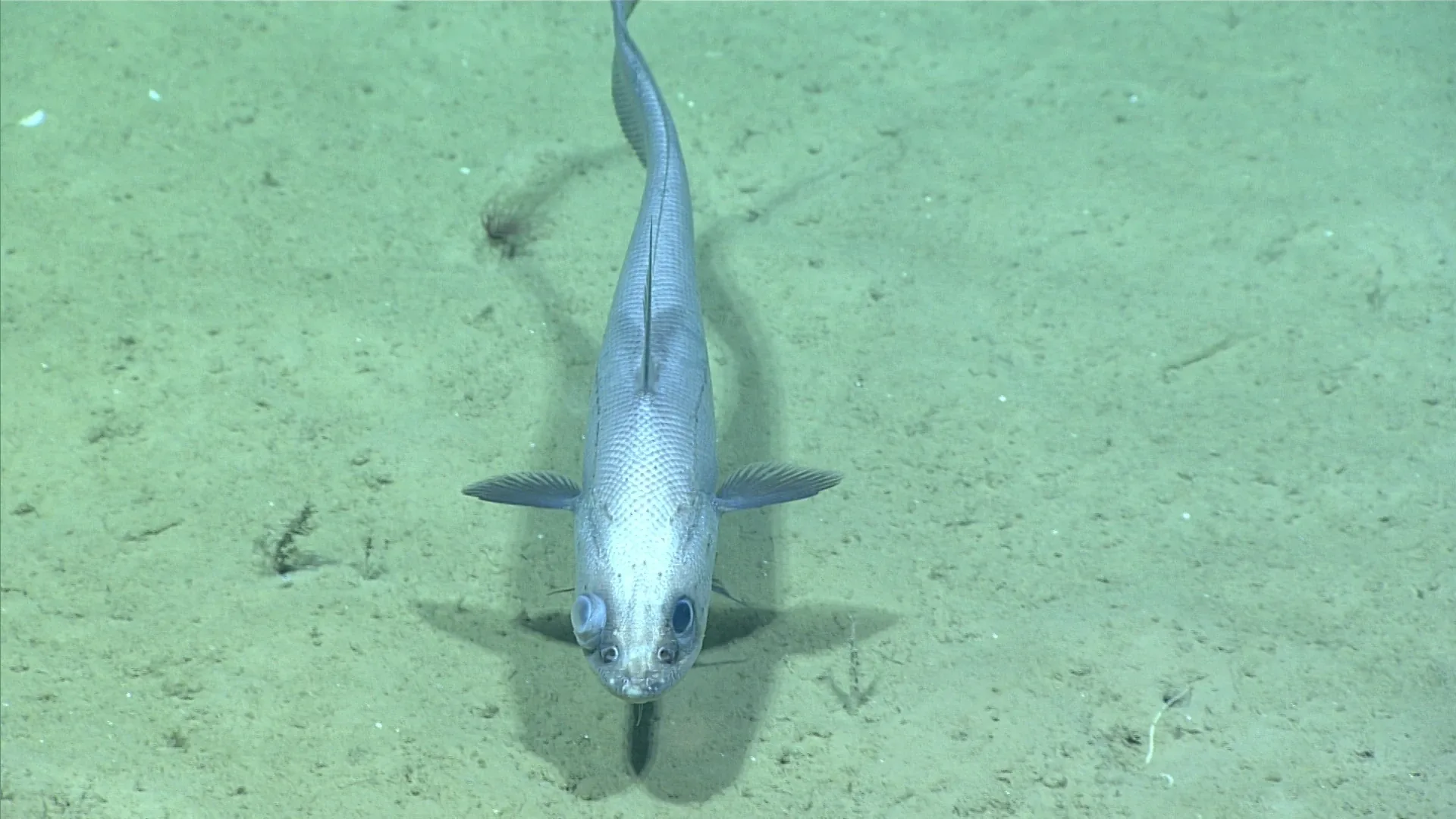
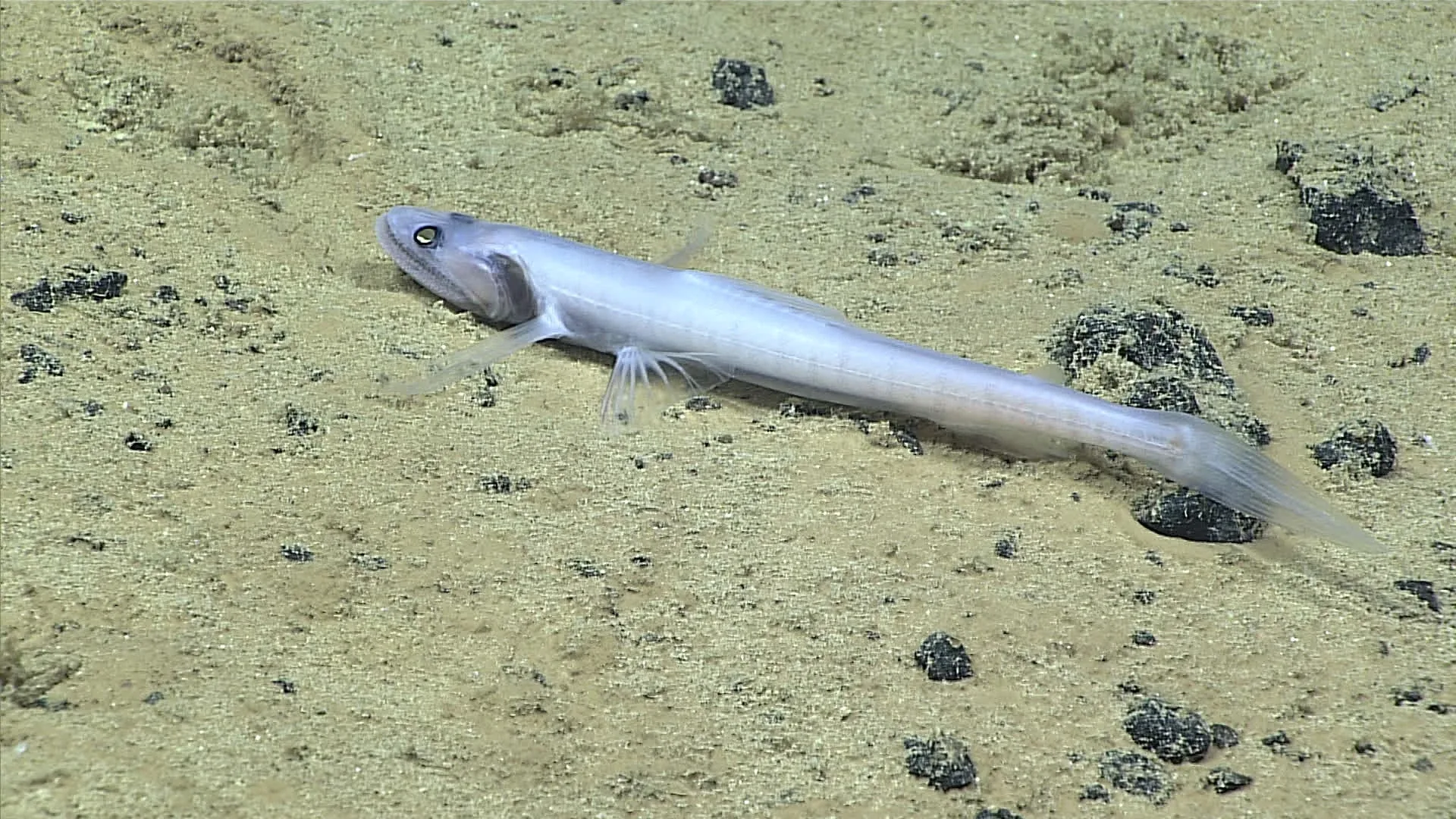
A grenadier photographed on the slope invites questions about energy, movement, and scavenging. The image is a documented encounter, not a complete account of its life.
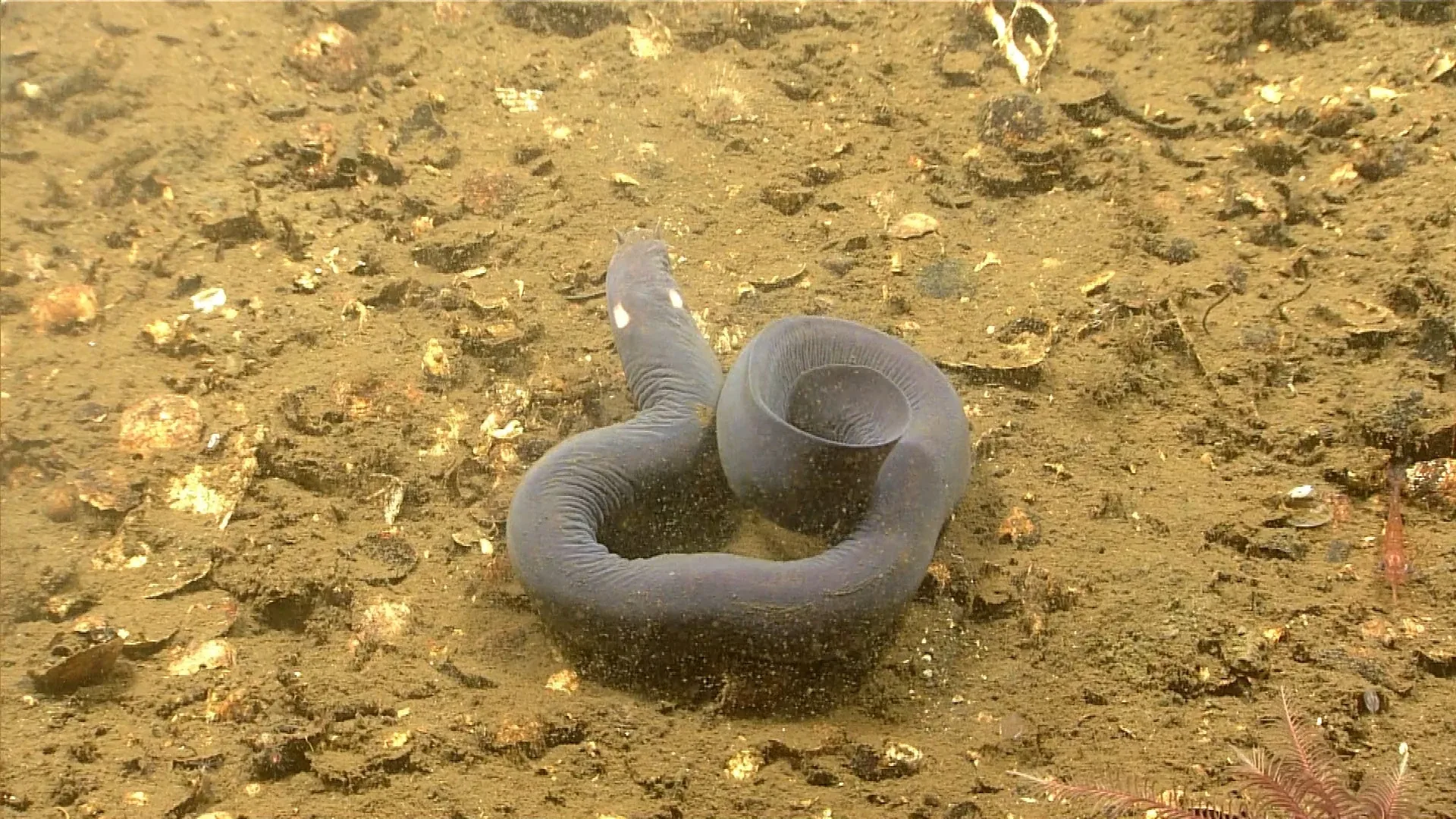
Eptatretus deani is the black hagfish. Its feeding mechanics and a related species’ slime experiments reveal different solutions to life near the bottom.
Paragorgia arborea can look like a shrub in a still image. Its branches are living coral tissue, and their shape changes the way other animals use a deep reef.
Primnoa pacifica is a deep-water octocoral whose branches become part of the seafloor habitat. A careful profile distinguishes the colony from the community around it.
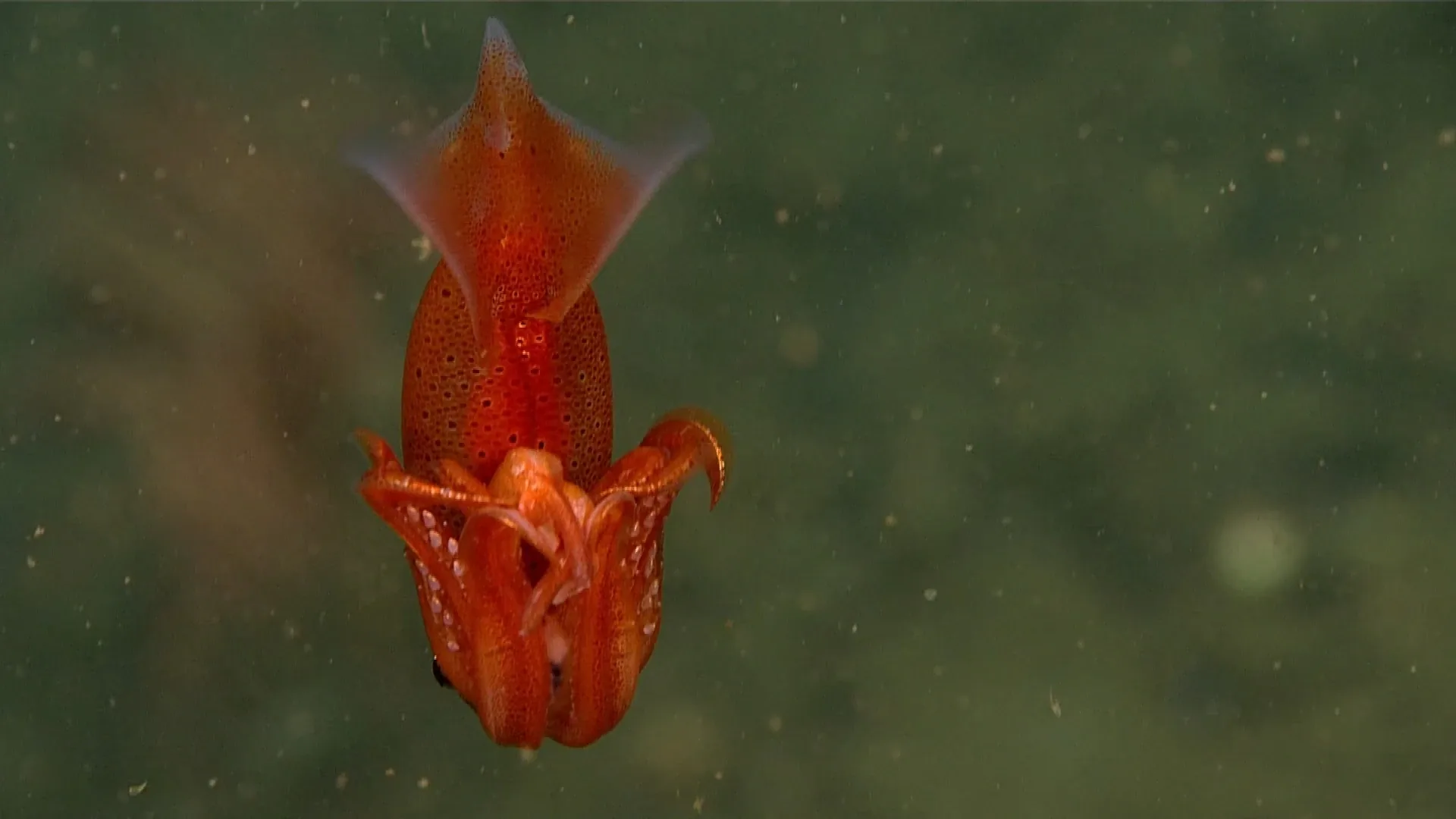
A squid can pass through an ROV’s field of view without becoming a benthic resident. The NOAA record for Gonatus pyros is a useful lesson in habitat labels and camera encounters.
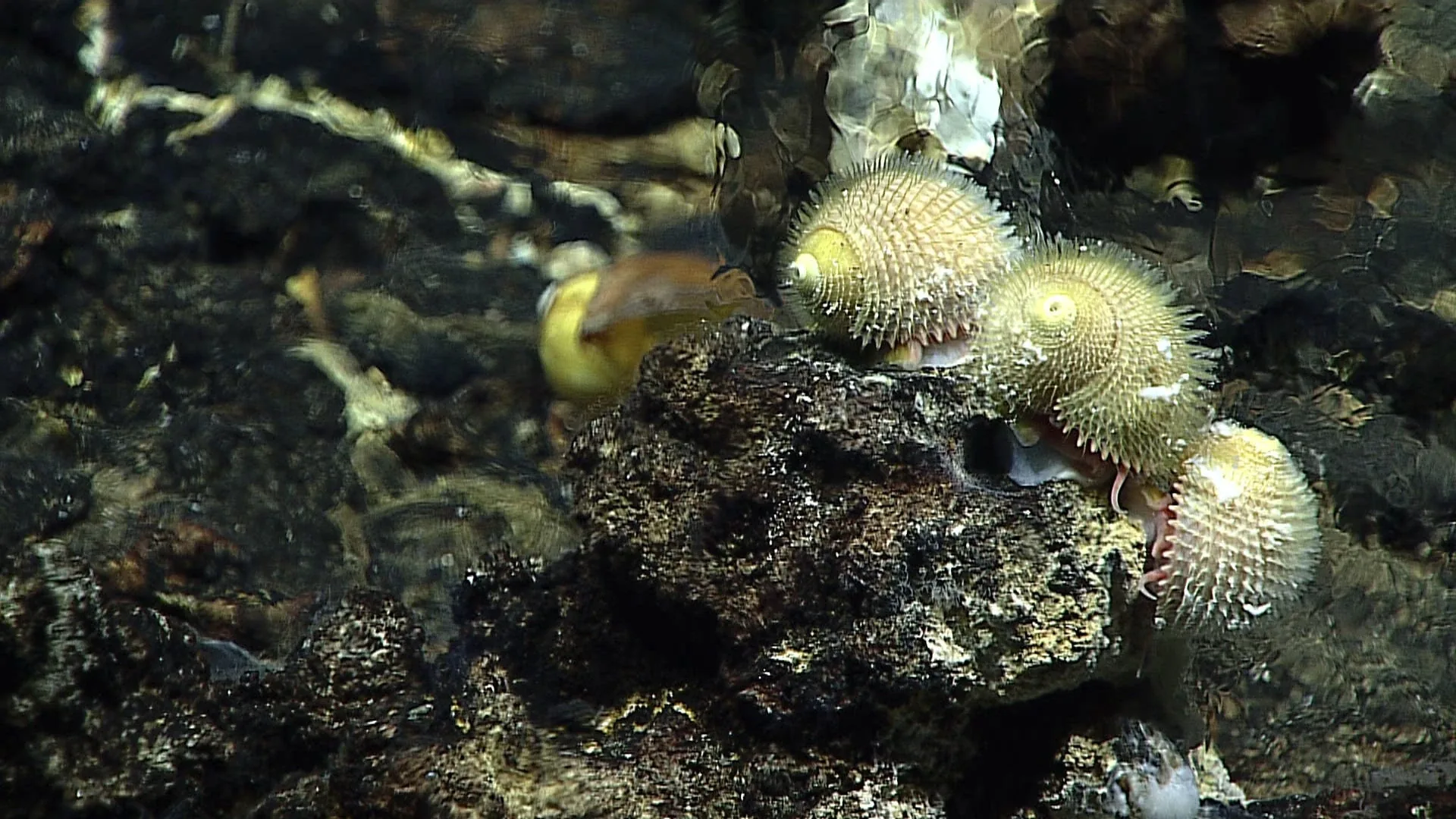
The NOAA image record locates this vent-associated snail at Chamorro Seamount. Its more remarkable story involves microbial partners and a food web that does not begin with sunlight.
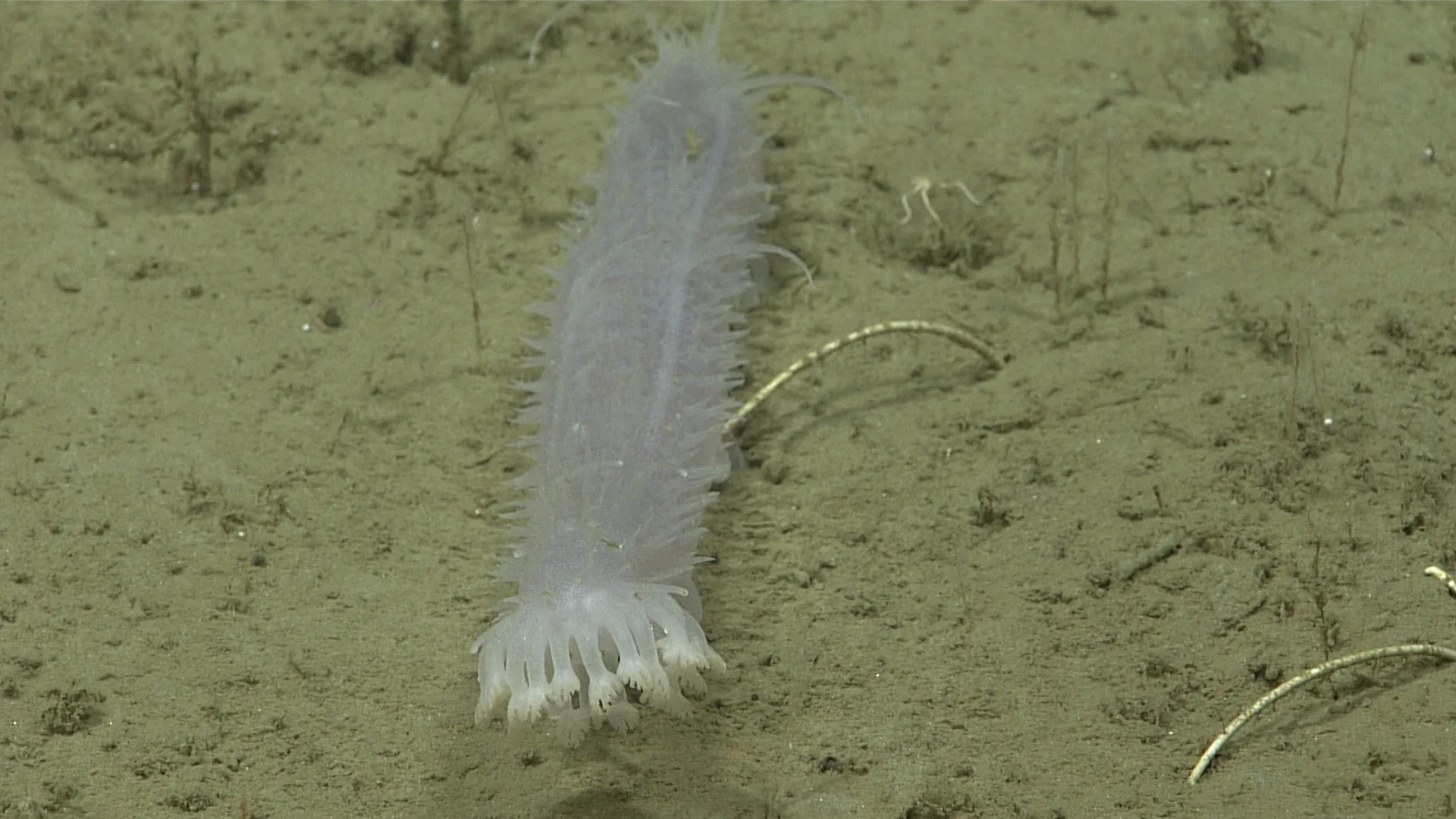
Pannychia moseleyi is an elasipod sea cucumber. Its profile connects the unusual form of deep-sea holothurians to the slow arrival of food on the bottom.
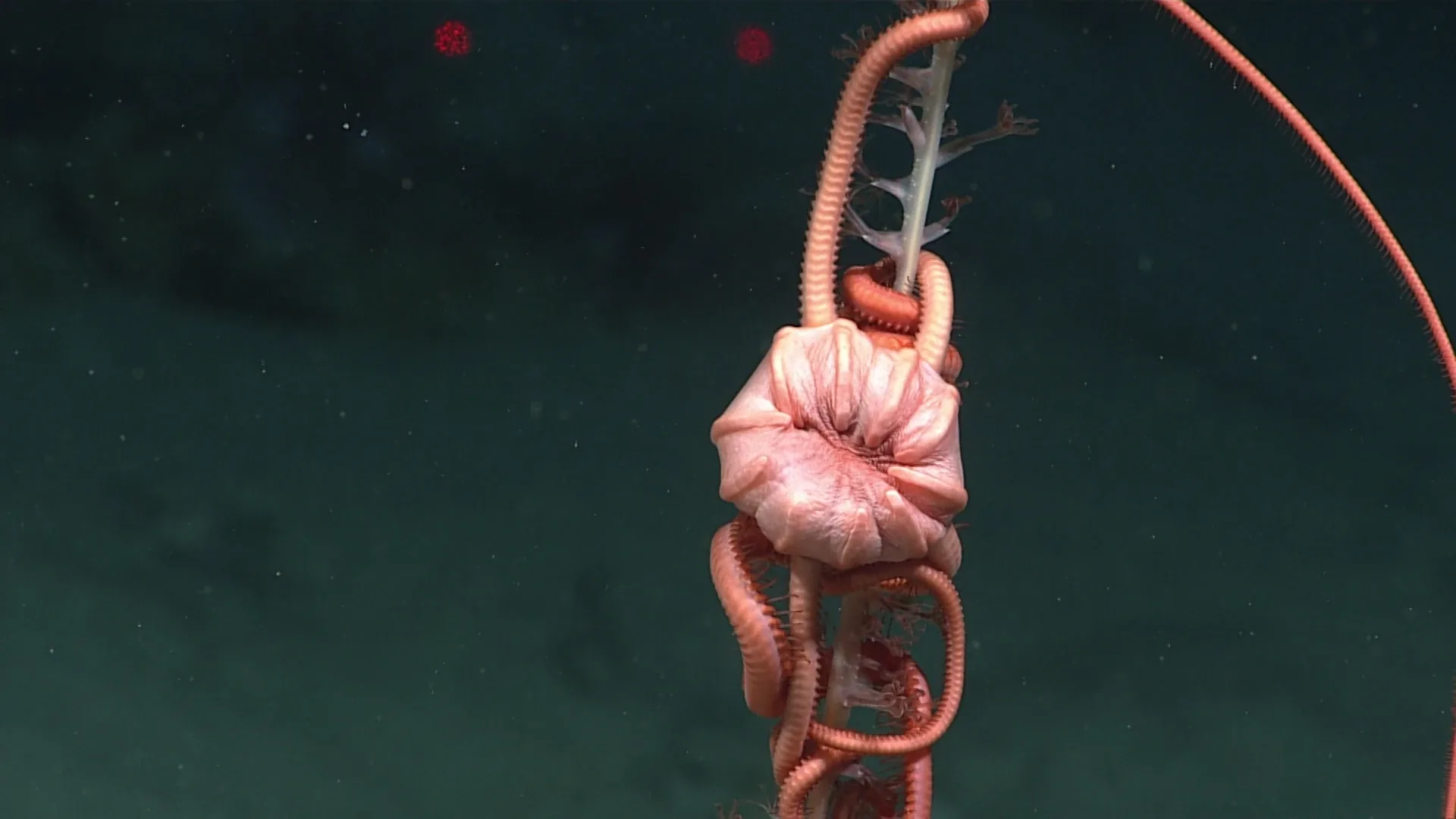
Asteronyx loveni can perch on sea pens and use free arms to intercept passing prey. Its posture links a small animal to the flow around a much larger colony.
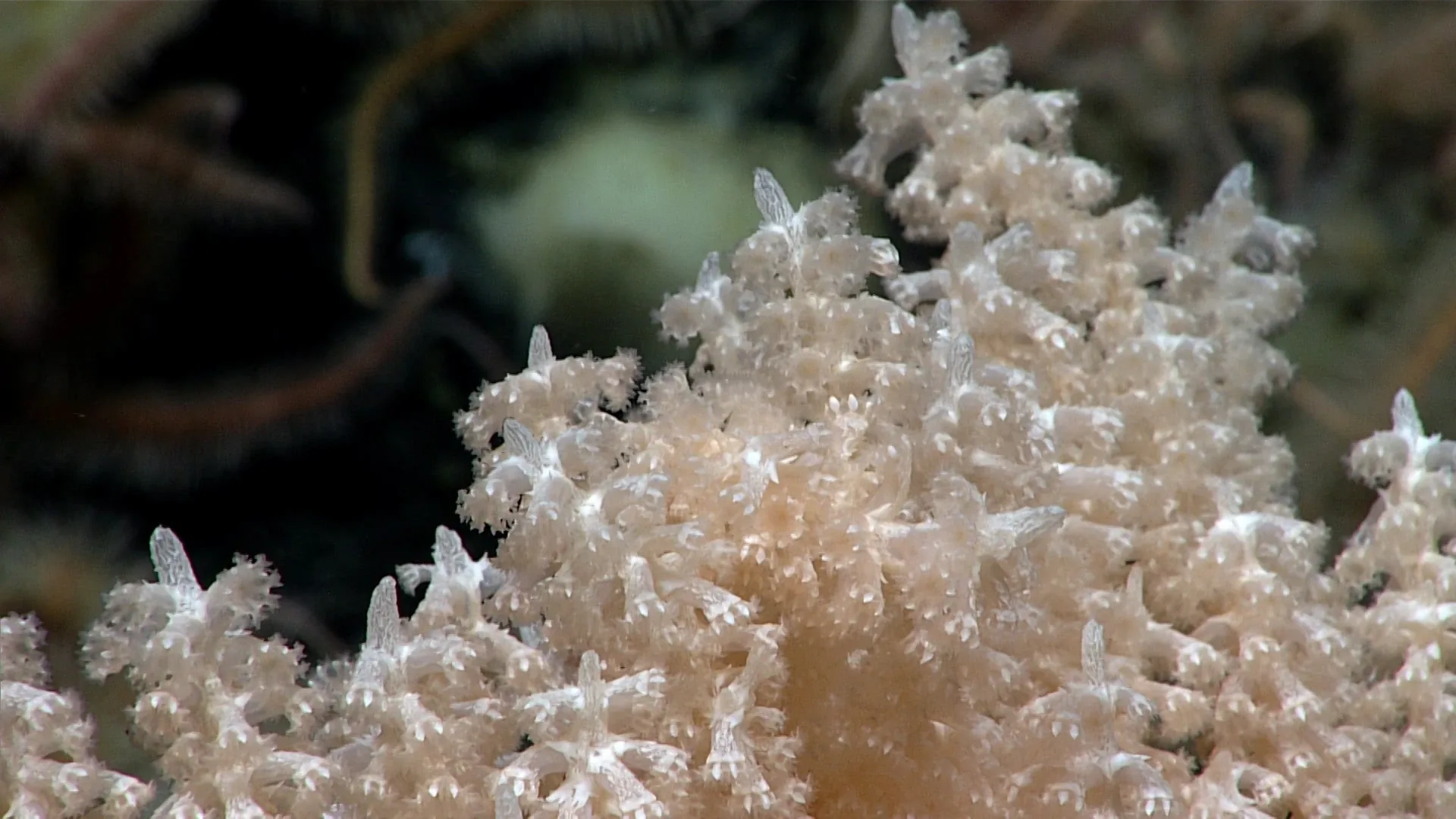
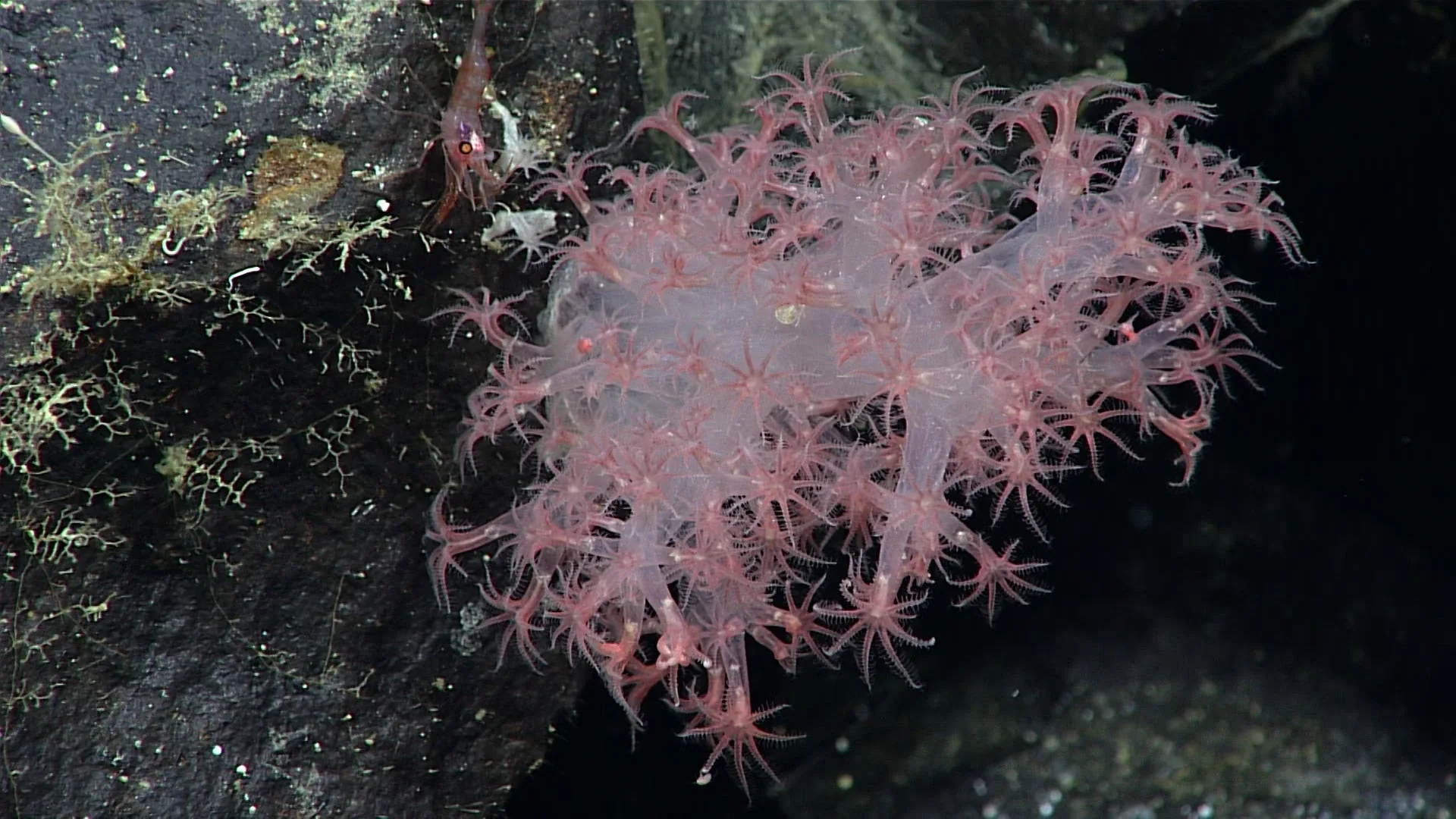
Soft coral colonies can add living texture to deep Pacific ridges. Their shape matters to nearby animals, but a photograph alone cannot show how the colony feeds.